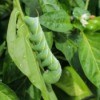
When my father-in-law was alive and gardening, he used to put something around tomato plants and other plants to keep cutworms away. I cannot remember what it was. If anyone out there could help me remember, it would be greatly appreciated.
Add your voice! Click below to answer. ThriftyFun is powered by your wisdom!
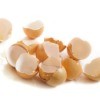
Could be either a newspaper strip and/or crushed eggshells. The narrow strip (perhaps 2"x2") of newspaper wrapped directly around the stem so that some of the newspaper is below and above ground when the tomato is planted will thwart cutworms because their body can't get a firm hold on the stem to squeeze and cut through it. I also add a pretty good sprinkling of cleaned crushed eggshell around the base of the plant in a consistent circle so that cutworms and then slugs can't get to the plant. Any ground-crawling invader with a soft underbelly can't navigate the sharpness of the egg shell. The egg shells are washed thoroughly with water (making sure to remove the membrane inside) and then air-dried upside down until absolutely dry and brittle. Then lightly crush and store in the freezer until ready to use in the garden. I do this with my eggshells all winter long so I have plenty to work with in the spring.
you may use dixie wax paper cups. Put the plant in
the cup and cut off the bottom. Plant directly in the cup in the ground. Works great. Good Luck.
My Father-in-law, 95 years old, has put out a garden for years. He puts popsicle or craft sticks on each side of the plant to keep the worms from getting into them.
My parents always slid a nail down into the dirt right up next to the tomato plant stem. We do the same thing. Cutworms can't wrap themselves around and cut off the plant.
I've read that aluminum foil wrapped around the plant when planted at the base will prevent cutworms
from the plant.bjm
We used ashes from the fireplace. It did the job. Good for radishes too.
I use 1 litre plastic milk cartons with the top and bottom cut off. This leaves a square bottomless container about 6 inches high, 12 of which fit neatly into a seed tray. Plant 2-3 seeds to each and remove the weakest as they grow. Allow the strong one to grow on until it is well advanced. When its about 4-5 inches high, dig a hole, slip your fingers under the base to pick up and then drop into the hole leaving 1-2 inches of the plastic below the surface.
Regards
Jo
I put about a 2-3" strip of newspaper around the stem of the tomato plant, at the soil level, half under the soil and half above.
I was always told to place a matchstick (or similar sized stick) against the trunk to prevent the worm from wrapping around the trunk, which apparently is necessary for them to cause damage.
Add your voice! Click below to answer. ThriftyFun is powered by your wisdom!