| Botanical Name: |
| Melissa officinalis |
| Common names: |
| Lemon Balm |
| Description: |
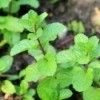
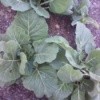
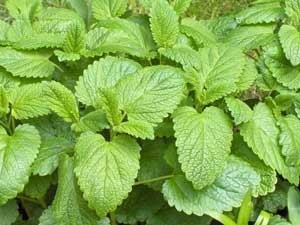
| Like its name suggests, Lemon Balm has a strong and invigorating lemon scent. Its decorative appearance includes clusters of tiny white flowers, and vein-filled, oval-shaped leaves that contain lemon-scented oils. Lemon Balm grows to a height of 3 feet and gives the best show when planted along borders or in front of shrubs. Varieties are available to compliment every plant in the garden, including cultivars for shade with bright, golden-yellow leaves, and sun-lovers with leaves splashed in lime-green and gold. Lemon Balm flowers are attractive to bees, so avoid using them directly along paths and walkways. |
| Life Cycle: |
| hardy perennial |
| Exposure: |
| full sun to partial shade |
| Cultivation: |
| Lemon Balm seeds are tiny and slow to germinate, but once established, the plants will eventually reseed themselves. Sow seeds in the spring in a location with moist, fertile soil or start with cuttings that have been rooted in water. A sunny site and moist soil are best for producing quality oils with a strong fragrance, although the plants do not tolerate high humidly well. Cut plants back to the soil level in the fall to encourage bushier growth. Plants can be divided in spring and relocated to other parts of the garden. Plants lose their tidy compact shape as they age and may need to be replaced. |
| Propagation: |
| cuttings, division and seeds |
| Parts Used: |
| leaves |
| Harvesting and Storage: |
| Cut leaves from plants as needed. Gently crush the leaves to release their scented oils. Oils are at their highest concentrations in the leaves during the early evening hours. |
| Medicinal Uses: |
| headaches; insomnia; nervousness; coughs; insect bites; aromatherapy |
| Culinary Uses |
| vegetable dishes, milk custards |
| Other Uses: |
| laundry rinse; potpourri; furniture polish; hair and skin care; oils. |
Add your voice! Click below to comment. ThriftyFun is powered by your wisdom!