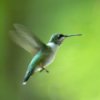
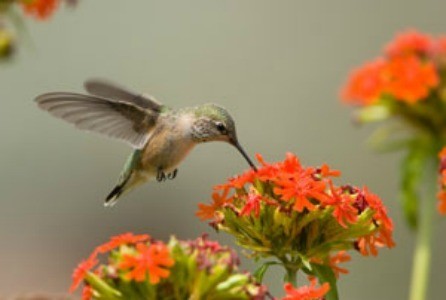
One of the greatest joys of having a flower garden is watching the hummingbirds dart from flower to flower-wings buzzing away while their tiny bodies hover in mid air. Late winter signals the start of the hummingbird migration as they head back to their breeding grounds in the United States and Canada. The males will return first, with the females arriving a few days behind them. Here are some tips for attracting hummers to your garden this year.
Hummingbirds play a vital role in garden ecology. Because of their fast metabolism (some say 100 times faster than an elephant) they need to eat constantly. As they fly from to flower to flower to feed, they pollinate the plants. In fact, without the hummingbirds help, some flowers would be incapable of reproducing. Here is a list of flowers and plants that most hummingbirds find irresistible:
Trees & Shrubs
Abelia, Azalea, Bottle Brush, Butterfly Bush (Buddleia), Cape Honeysuckle, Catoneaster, Hibiscus, Flame Acanthus, Flowering Current, Flowering Quince, Lantana, Lilac, Manzanita, Mimosa, Red Buckeye, Tree Tobacco, Turk's Cap, Weigela.
Vines
Bougainvillea, Coral Honeysuckle, Cypress Vine, Morning Glory, Rosary Vines, Scarlet Runner Bean, Trumpet Creeper, Trumpet Vines.
Flowers
Perennials: Bee Balm (Monarda), Canna, Cardinal Flower, Columbine, Coral Bells, Gladiolus, Four-O-Clocks, Foxglove, Iris, Hosta, Hummingbird Mint (Agastache), Little Cigar, Lupine, Penstemon, Yucca
Annuals: Beard tongue, Firespike, Fuchsia, Impatiens, Jacobiana, Jewelweed, Nasturtium, Petunia, Salvia, Shrimp Plant, Spider Flower, Zinnia.
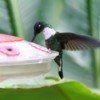
Many gardeners choose to supplement the diets of neighborhood hummingbirds by offering them sweetened water from a feeder. Feeders are widely available at discount stores and garden centers. Most common are the plastic inverted bottle-style feeders and basin feeders. When selecting a feeder, look for one that is easy to clean and maintain, and preferably, one that offers perches.
Ideally, feeders should be hung near windows-close enough to watch the action. Cutouts of predatory birds or partially closed vertical blinds will prevent bird strikes on windows, although that seldom seems to be a concern with hummingbirds. It isn't uncommon for hungry hummers to empty feeders quickly so check them daily. Also, be aware that in some areas (parts of the southwest), sugar loving bats also like hummingbird feeders and may empty them overnight. These bats are important pollinators to desert plants, so don't harm them, just bring your feeder indoors for the night.
Recipe for artificial nectar:
Boiling this syrup is not necessary. Fermentation problems are caused by organisms on the bird's own beaks, not by the water. Unused syrup can be stored in the refrigerator for up to 2 weeks. Syrup will spoil quickly in warm weather so discard any unused portions after a few days and refill with fresh syrup.
Do not use Jell-O, honey, brown sugar, or fruit in your feeder. These can harm, and in some cases even kill hummingbirds. Do not use distilled water (it lacks important trace minerals) or red dye to color the water in your feeder (the base of most feeders are colored and if not, hummingbirds are smart enough to figure it out anyway).
About The Author: Ellen Brown is an environmental writer and photographer and the owner of Sustainable Media, an environmental media company that specializes in helping businesses and organizations promote eco-friendly products and services. Contact her on the web at http://www.sustainable-media.com
Add your voice! Click below to comment. ThriftyFun is powered by your wisdom!
Ellen a wonderful artical - but I would like to add - The picuter that you used is of a hummer on a Maltese Cross - I have quite a few in my yard and my hummers just love them. and for the feeders, when temps reach over 60 degrees, pathogens tend to multiply rapidly. Also place feeders in open space so that cats cannot hide in wait. Anything RED will attract Hummers, while bees on the other hand don't see red and use fragrance to find flowers. Hummers on average make 5-8 feeding forays per hour, but only for about 30-60 seconds at a time. Often hummers will buzz about defending their territory from other hummingbirds. (I have even been buzzed when getting to close to a feeding space when working in my garden. I just find another place to weed or prune for a while). Feeders are not nutritionally perfect for hummers, but do make a sufficient substitute if their favorite flowers are unavailable. NEVER substitute honey for sugar, as it can transmit a tongue fungus to birds. Saccharine or artificial sweeneners should never be used as they can cause malnutrition in the birds. Use of color additives such as red food coloring is not recommended, as it may prove harmful to the birds over time. If you feeder does not have red on it - a red ribbon tied on will chatch their eye. There is no need to keep feeders completely full, as it is better to keep the mixture fresh and refrigerated, and refill feeders more often.
There's a good website for tracking the northern migration of the Hummers in spring: www.hummingbirds.net/
Be selective when you buy your feeders. I bought a couple that when it rains, the rainwater enters the feeder through the tubes and dilutes the nectar. I solved the problem by poking a small hole in the center of a Styrofoam picnic plate and threading the hanger through. The plate acts as an "umbrella".
Our hummingbirds returned a little early last Spring, and the feeders weren't out yet. One morning as I was at my kitchen window, one little bird just flew right up to the glass and peered in at me as if to say, "I'm here and I'm hungry!" Make sure you don't hang your feeder too close to trees. The squirrels will jump onto them and empty them, or the raccoons will knock them down and carry them off into the woods. We also have a red-bellied woodpecker that loves the nectar.
Harlean from Arkansas
Ellen what a wonderful article! I love hummingbirds and enjoy feeding and watching them all summer here in the Colorado foothills. Everybody else that added info thank you too, I can never read to much on what they like and doing my part to keep them healthy at my feeders. Everybody enjoy the rest of your summer. It's always sad for me when they leave for the winter but gives me something to look forward to in the spring. :)
Linda
Bailey, Colorado
I never could attract very many hummingbirds until we moved to AZ. Now we have them all the time. We have two feeders. One has a place for them to perch but the second does not. They much prefer the one where they can rest.
Add your voice! Click below to comment. ThriftyFun is powered by your wisdom!