 Buying pots and planters can be expensive, especially if you find yourself having to replace them every few years due to breakage. Like some plants, not all pots and planters are hardy enough to survive the winter if left outdoors. If not properly protected, many will succumb to the freeze/thaw cycles of winter and end up cracked and broken by spring.
The first step in winterizing your pots and planters is to give them a good cleaning-unless of course, they remain planted. Start by removing any remaining plant material and tossing the old soil into your compost pile. Clean the insides thoroughly by scrubing them with a solution of 1 part bleach (preferrable non-chlorine) to 10 parts water. Once the empty pots are completely dry, they are ready for winter storage.
Ideally, all pots and planters should be stored indoors over the winter. Even if they are made from materials that can withstand the elements, the extra protection will likely add years to their life. If left outdoors, always flip empty pots over (drainge holes up) and use bricks, pot feet, or pieces of wood to keep them from coming into contact with the ground. Pots that remain planted are often too large to move. These should be wrapped in layers of bubble wrap to help insulate both the pot and the roots of the plant.
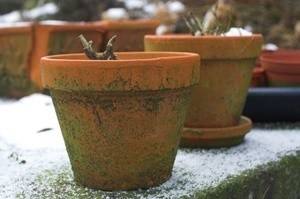
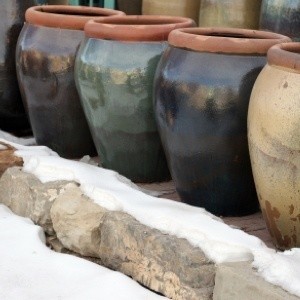
Terra cotta pots are made from clay, which is like a sponge when it comes to soaking up water. Leave these pots outdoors and they will almost certainly crack when temperatures drop below freezing. Glazed terra cotta pots are nearly as problamatic--especially if only glazed on the outside. Other porous materials include cast stone, glass, and ceramic. If you absolutely can't bring these pots indoors, you'll need to get them off the ground and cover them with a waterproof tarp to prevent snow from acculuating on them. Group them together and place them along a south facing wall under an overhang. Keep in mind that changes in temperature and humidity may still wreak havoc on them even if protected.
Pots and planters made from wood, cast iron, polyuyrethane, fiberglass, and non-porous plastic composites can be safely left outdoors over winter. When shopping for plastic/composite containers, always look for materials that are UV resistant. Over time sunlight degrades plastic, causing it to fade in color and become brittle and crack.
Some pots and planters are labeled by the manufacturer as being "frost-proof." Unless the label clearly states that they are guaranteed to withstand specific sub-zero temperatures, it's best to assume the materials are actually only "frost-proof" in relatively mild climates like Texas, Arizona, and parts of California.
This page contains the following solutions.
I love my flower and vegetable pots. As I've gotten older, growing my favorites in pots helps make gardening easier and lower maintenance. I like to buy used and even damaged pots at garage sales, cheap, and restore them with glue, paint, and TLC.
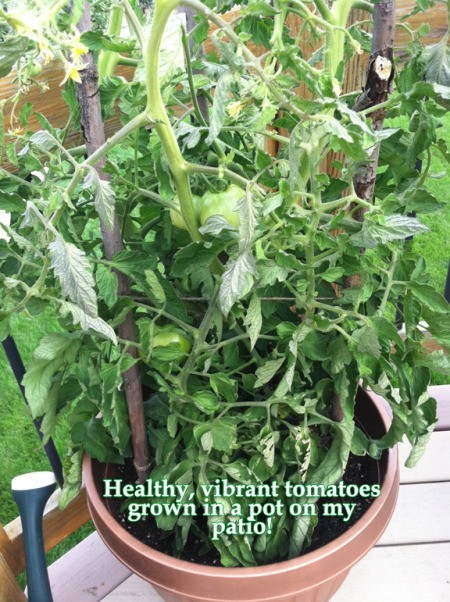
No one enjoys lugging tender potted perennials indoors and out each fall and spring, least of all your back. The good news is, if given the proper protection, many (although not all) potted plants can be left outdoors successfully over the winter.