 If a statement or idea is repeated or passed on long enough, eventually it will be taken as fact. This is true, even when there is little evidence or proof to support the idea. Gardening lore is no exception to this phenomena, and several misconceptions seem as persistent as some perennial weeds. Here are the surprising facts behind 10 common gardening myths.
Organic fertilizers (manure, compost, bloodmeal, bone meal, etc.) do offer certain advantages over synthetically produced fertilizers. They release nutrients more slowly, which reduces the chance of over-fertilization.
They also improve the overall structure of the soil (adding microorganisms, texture, air and water absorbing capacity) and in many cases, they can be obtained more cheaply than commercial fertilizers.
There are also disadvantages to organic fertilizers. Because they release nutrients more slowly, they cannot always meet a plant's nutritional needs as immediately as a commercial fertilizer. It's also not always possible to know exactly how much or which nutrients you are applying (e.g. compost), because some types of organic fertilizers lack labels.
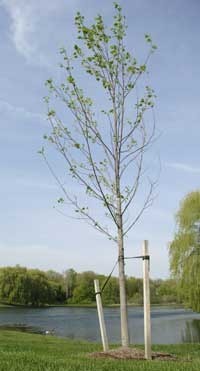
Staking a young tree denies them the ability to develop naturally, and all too often stakes and ties are forgotten or used improperly and end up causing damage to growing trees or interrupt sap flow.
A better strategy is to plant trees small enough to not require support.
The pH of the soil depends on several factors. One is the type of vegetation growing on it, and another is the mineral content of the soil. In some instances, you'll find that the soil under pines trees is actually neutral or alkaline.
The reason plants don't grow well under evergreen trees is usually because these large trees suck up all the moisture and nutrients available, leaving very little to support other types of growth.
The word organic means "of or relating to or derived from living organisms." Certain organic pesticides made from botanical extracts (e.g. pyrethrins) are highly toxic to aquatic life. Others can be harmful to human health (rotenone has been linked to Parkinson's disease).
Even seemingly benign household products like salt, vinegar, dish soap or borax can harm microorganisms, alter soil pH and pollute groundwater systems.
Although some organic pesticides are considered safer for the environment than certain synthetic pesticides, the best and least toxic gardening practices are those that use no chemicals at all.
A good time to prune most deciduous trees and shrubs is in the late winter or early spring when they are dormant. In the fall, branches and leaves store a certain amount of food materials and removing them can reduce their cold hardiness.
Shrubs that bloom in the spring set their buds in the fall, so pruning should be done immediately after they bloom each year to avoid removing their flower buds.
Also, it isn't necessary to apply paint or tar to tree limbs after pruning (that's another myth). Even larger cuts left by pruning will heal just fine on their own.
Like other plant organisms, lichen needs light to grow. You often see them growing on the dead or decaying tree branches where thinned out canopies don't block out the light.
If you see lichen growing on a dying tree, it was already in a state of decline when the lichen arrived. They are simply taking advantage of the good growing conditions.
Yes, it's true that it is better to water in the morning, because wet leaves combined with cooler nighttime temperatures can help promote certain types of diseases. Less water will also be lost to evaporation if you avoid watering during the heat of the day.
That said, if your plants are dying of thirst, water them-and quickly!
Drought tolerant means a plant can tolerate a period of time without water. Over time, these plants have genetically adapted (or been genetically changed) to survive short periods of time without water.
Drought resistant plants are plants like cacti, who by nature's own design, are naturally able to live and survive very long periods of time without water.
Fertilizers and chemical controls can allow you to temporarily treat the symptoms of "sick" soil, but they can never make up for poor soil structure or provide soil with the microorganisms needed to support the growth of plants.
Healthy soil allows nutrients, air and water to flow freely between layers and allows a plant's roots to penetrate easily.
In the long run, relying on fertilizers and chemical controls to make up for poor quality soil only increases the need for more fertilizers and chemical controls.
Gardens are like people, they're all unique. What works for one, may not work for another. Still, as gardeners, we can share our experiences with others, in the hopes that what we have learned will help someone grow a more beautiful, bountiful garden.
Excellent article, Ellen. Glad to see Myth #7: Watering during the heat of the day will "burn" plants.
I've lived too many years and seen too many plants totally wet by a shower only to be baked by the hot Sun minutes later, and never get burned!
Good to see the organic myth debunked; their chief benefit is good soil structure,more nutrition and far far less pesticides.
Good article Ellen, but there are a few things that I don't agree with.
Myth # 1 Every molecule has a right and a left form. Organic molecules have the left form; synthetically created molecules have 50% of the left form, 50% of the right form. Plants know what to do with the left form, the right form, like a mirror image is an unknown, and of no use to plants. So organic fertilizers are significantly better than synthetic.
Myth # 3 Plants do poorly under evergreens because these trees suck up all the water and nutrients. Generally plants do poorly under evergreens because the depth of mulch from the needles is much greater under the evergreens, water is generally shed to the outside of the crown, and the intensity of shade is sufficient that very, very few plants can tolerate these exacerbating conditions -- especially for spruce, firs, hemlocks, cedars and some Junipers. Pines not so much.
Myth # 5 Shrubs that bloom in the spring set their flower buds in the fall. Most -- if not all -- plants that flower in the spring, set their flower buds at the end of the spring season when the soil is still relatively damp, and plenty of moisture is available for the formation of buds, and fruit to develop.
Myth # 6 Lichen doesn't harm trees. In fact, the preponderance of lichen on tree trunks covers over the lenticels on the trunks of trees. These lenticels allow the trunk to breathe, and take in some moisture. When the lichen grows over the lenticels, the tree starts to suffocate, loses vigour, and as the lichen gets thicker and thicker, the tree gets weaker and weaker.
Myth # 2 I agree, that staking trees should only be done for the first year, until the tree's roots can establish itself in its new place, and then removed. Planting smaller trees doesn't necessarily make them stronger, just more easily missed, and perhaps damaged.
Otherwise. good article.
My thoughts exactly.
Marg from England.