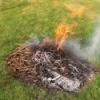
I grew up in a rural community in the 1970s and 80s with a burn barrel in the backyard. Like most of our neighbors, our family burned trash in an effort to minimize costly trips to the dump. As a kid, it was one of my favorite chores. I mean, what kid doesn't like being asked to light stuff on fire?
Why We Burn
Burning garbage has long been an acceptable way to dispose of waste in America, especially in small rural communities. In the past, it was literally the only way some people could get rid of their household waste. Today however, residents in every community and rural area have access to either a landfill or a waste collection service. Yet despite this fact, the use of burn barrels is still widely practiced in many parts of the United States. Studies indicate that some people burn their garbage to avoid the cost of waste removal or the inconvenience of dumping at landfills. Others believe that by burning their garbage, they are reducing the amount of waste that ends up in landfills. Most are simply not aware of the dangers that burning household waste creates.
The Burning Facts
Burning paper, plastic and food scraps seems harmless enough, but the truth is that burning garbage-even paper-poses serious risks to human health, property and the environment. And it's not just the eye, throat and respiratory problems from smoke. As garbage burns, toxic chemicals are released including, arsenic, mercury, formaldehyde, hydrochloric acid, lead, and many others.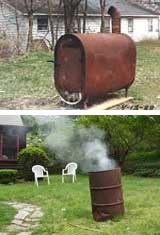
Burning garbage also releases dioxins, a known carcinogen. Dioxins are produced when materials containing chlorine (like most paper and many plastics) are burned. When garbage is burned, these heavy metals and chemicals are released, unfiltered, into the air. They build up in the soil and water in our environment and make their way into our bodies through the foods we eat and the water we drink, causing serious health concerns for our children and ourselves.
And then there are the fire dangers. A fire hazard exists as long as a burn barrel is burning and the ashes continue to smolder. Even a small pile of smoldering ash can start a wildfire days after the garbage was initially burned.
Alternatives to Burning
As of 2005, burning household waste in burn barrels has only been banned in 17 states. Several local laws may also prohibit using burn barrels, but that still leaves 33 states where burn barrels are either legal or regulated. If you or someone you know still practices burning household garbage, consider these safer alternatives:
Dispose of Waste Safely-Have your waste picked up by a licensed waste removal company or take it to a local landfill, transfer station, or a drop-off center. Your local environmental or waste management department will be able to help you find a hauler and locate a nearby landfill.
Become an Advocate for Reducing Waste: Manufacturers listen to their customers. Write them and tell them they have lost your business until they stop using excess packaging or non recyclable/reusable materials. Educate your family and neighbors about the danger of burn barrels.
About The Author: Ellen Brown is an environmental writer and photographer and the owner of Sustainable Media, an environmental media company that specializes in helping businesses and organizations promote eco-friendly products and services. Contact her on the web at http://www.sustainable-media.com
Add your voice! Click below to comment. ThriftyFun is powered by your wisdom!
I am one of those people that burn trash as i live out in the country we dont have trash pickups and its over 25 miles to the nearest dump I use cans of every size. tires and plastic bottles in the ditches to stop my land from washing away .I dont buy arsol cans i get the pump spray and i wash them all out before disposing them as i dont wont to hurt the wildlife that comes onto my land I am a widow on a fixed income and the dumps cost to get rid of your trash
What states ban backyard burning?
Editor's Note: It may not be a state thing as much as a local area thing. Check in your local area to see if the allow or don't allow backyard burning.
Add your voice! Click below to comment. ThriftyFun is powered by your wisdom!