
Cucurbitaceae family
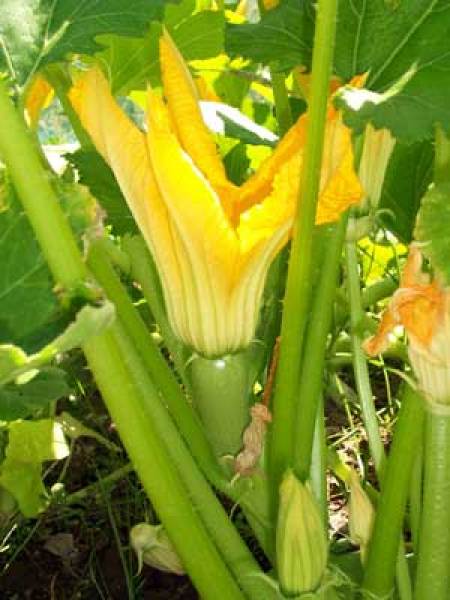
Zucchini is a fast growing member of the squash family (cucurbitaceae) with a long, cylindrical shape, smooth, dark green (sometimes yellow) skin and creamy white-green, milky-flavored flesh. Zuccini are also referred to as courgette, especially in Europe
n/a
Plant when soil has warmed to at least 60ºF and all danger of frost has passed.
full sun
average, well-drained soil
Keep soil evenly moist (not wet) to prevent fruit from falling off due to inadequate watering. Leaves may wilt during prolonged heat and can be revived with water.
Zucchini is a voracious feeder and will appreciate nutrient-rich soil and an occasional boost of compost tea or well-rotted manure. Control garden weeds to help minimize the risk of disease and cultivate carefully around shallow roots.
Harvest zucchini when they reach the preferred size for use. Fruits usually taste best when they reach 4 to 6 inches in length. Frequent harvesting will encourage more fruit.
Good cultivation practices will go along way to preventing common problems like powdery mildew and mosaic virus. Control weeds and keep the garden free of dead plant debris. Avoid handling plants when leaves are wet and plant them far enough from other plants so they receive adequate air circulation.
Add your voice! Click below to comment. ThriftyFun is powered by your wisdom!
Zucchini is an annual vegetable. It is not hardy in all zones. Hardiness refers to the zone it can be grown in as a perennial. In fact it cannot take any frost of any kind, any frozen parts of the plant will turn black and die.
Add your voice! Click below to comment. ThriftyFun is powered by your wisdom!