This page contains the following solutions.
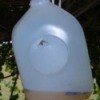
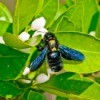
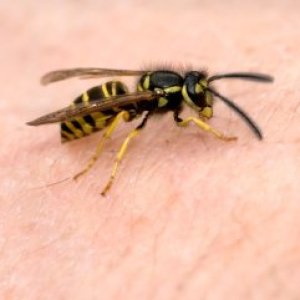
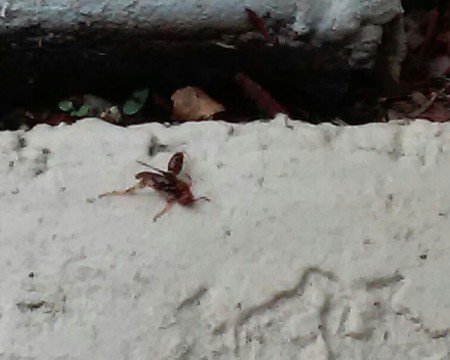
This one is easy. To keep wasps from setting up a home near your front door or around your home - mix 2-3 tablespoons of Dawn dishsoap and about 2-3 cups of water. Put into a spray bottle, I bought mine at Walmart for $1; shake and that's it. Spray where they keep coming back to, to make a new nest. This will also kill them and drop them like a hat. Just be sure to put the spray bottle on stream not spray. The one pictured I nailed on a plant. He dropped off and was dead in less than a minute.
There is something in the Dawn that not only drops them, but kills them too. The soap also stops them from making the wasp nest to begin with, the nest will not adhere to where the soap is. You might need to try and see how long it takes for them to come back, then just use as maintenance to keep them at bay. It is a lot cheaper than those bug sprays, but more importantly- a whole lot safer!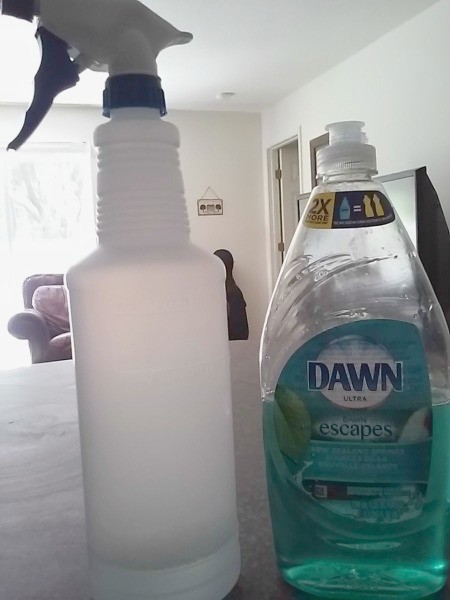
Here are the questions asked by community members. Read on to see the answers provided by the ThriftyFun community.
Wasps seek me out? I cannot go outside without being swooped at. I went outside today for about 10-15 mins. and I was "swooped" at enough for the folks I was with were startled (6-7x).
Is there something that attracts them and is there something that will deter them?Are you wearing cologne? Hair spray? Scented lotion? Wasps love these things.
If you're not using any of these, I guess you're just an especially sweet person!
Often bees and other bugs are attracted to what we use in our hair. I tell my friends when we go hiking, "No hair products!"
I do not know about wasps but I remember when I was little that my mom could step out the door and mosquittos would come after her from nowhere. They not be bothering anybody else but her. She went to the doctor and asked him about it. The doctor told her that she was lacking in some type of vitamin. She went and bought that vitamin and started taking it. NO MORE MOSQUITTOs. It was like a miracle.
One thing that attracks wasps is meat and the smell of bbq. They also seem to like sweet drinks. Also don't wear any perfumes outside at all or any scented hair products.
You might try wearing a bug spray outside to try and detract them, one with very little scent. Also do you have a wasp nest around your house that you need to find and get rid of??
I have found that mosquitos don't like me as much as long as I stick to taking vitamin B12.
They are attracted to some people more than others. Wear unscented lotions and no perfume.
What kind of vitamin did the doctor say to get? I also have a problem with mosquito bites.
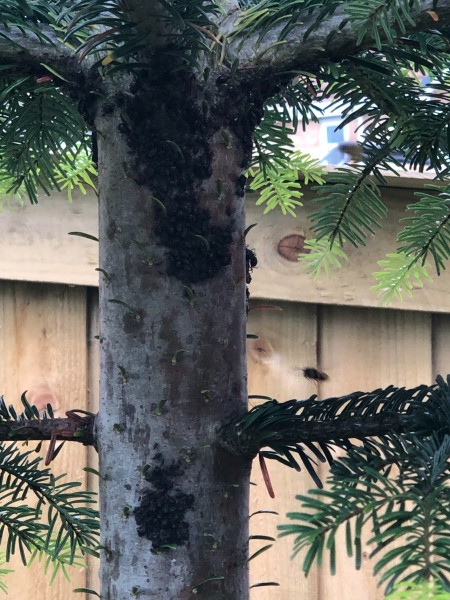
I have a Christmas tree in my garden and on the trunk are some black egg like things which are attracting wasps and bees. What are these eggs and what can I do to get rid of these ?
You can repel them with a spray you make yourself with distilled water, witch hazel, glycerin and essential oils. Instructions are here. renewedhealthoils.com/
You don't mention where you are located so I don't want to guess if these are another bug, bug larvae/eggs, a fungus, or the way the tree is manifesting a disease.
If you are in the US, I suggest contacting your local home extension office to figure out what these are AND to help you with your bee/wasp issue. There is a link:
www.gardeningknowhow.com/
If you are not in the US, see if your local government has a similar entity or if you have a college with an agriculture curriculum, they can point you in the right direction.
This is a two fold safety issue because you need to be careful that the bees, wasps, hornets are not around people who may be allergic but also since bees are dying at at an alarming rate, special care needs to be taken with them also so that, if at all possible the colony can be relocated if they have built one to be near whatever this black stuff is on the tree.
As much as I am terrified of them, even wasps and hornets have a purpose in the garden so they too need to be safely relocated.
I suggest that you avoid spraying anything for the bees/wasps/hornets and do not attempt to remove the black things on the tree until you talk to someone.
Post back with an update on what you learn. Safety first here!! Let the experts guide you on what you have and how to remedy it!