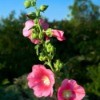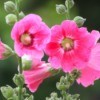
Alcea rosea
short-lived perennial, biennial
spring or fall
plants vary in size from 3' to 7' tall
full sun or light, part-day shade
average to rich, well-drained soil
biennial or short-lived perennial zones 2-9
late summer to fall
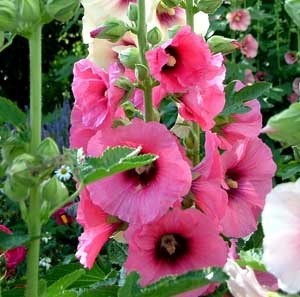
variety of color shades including pinks, reds, yellows, whites and maroon-blacks
green leaves on upright stems holding flower spikes
seeds
back borders, accents against walls or fences
Purchase plants or start from seed by sowing seeds directly into the garden in the spring to early summer. Plants will bloom the following summer. For possible first year blooms, start seeds indoors in late winter. Hollyhock seeds need light to germinate, so barely cover seeds with soil. Plants may live a third year if you cut off their flower stalks after blooming, otherwise plan to replace spent plants with seedlings to keep a crop blooming each summer without interruption.
The hollyhock is a relative to the hibiscus. Children adore making dolls out of hollyhocks. Use a flower for the skirt. Use a bud to top the skirt with a head (attach with a toothpick) and put another flower on the head to serve as a bonnet.
Add your voice! Click below to comment. ThriftyFun is powered by your wisdom!
I live in an old Western mountain town where hollyhocks have been established as long as the old mines have been closed down! So I gather seed in alleys and along median strips. The hollyhocks will try their best to grow, even when there's only a little soil on top of the granite!
Just did a blog post about our granites:
http://walkingprescott.blogspot.com
Do come visit.
Granny J
The only problem with hollyhocks is that after they finish blooming and dry out you have to take them down. This will scatter the seeds everywhere, even if you think you have previously collected them all. If the rough, dried out pieces get in your clothes it will be very scratchy.
Add your voice! Click below to comment. ThriftyFun is powered by your wisdom!