Think you've mastered electrical savings? Take another look around your home and find even more places to pull the plug and keep the meter from spinning.
Knowing that hot water demands large amounts of energy, try to use it less in the home. When doing laundry, use the cold/cold cycle rather than a warm/cold cycle. This will lessen the demand for hot water and save energy all while washing clothes to the same degree. Try soaking soiled clothes before washing for the same effect as hot water, and save the hot water cycles for extremely soiled clothes.
While drying clothes there are also ways to save electric. The most obvious is to hang the clothes to dry rather than use the dryer. If this option doesn't work, try a compromise. Remove clothing from the dryer a few minutes before the cycle is complete and hang the clothes immediately. This saves a few minutes from the drying cycle, saving electric, and it allows the clothes to dry practically wrinkle free. In practicality, many people prefer to use a clothes dryer for all of their laundry loads rather than hanging clothing to dry. Save electric while using the dryer by running it continuously. As soon as one load is dry, replace it with a wet load and start the dryer. This eliminates the cool down/warm up time that elapses between loads and thus uses less electric.
A leaky faucet doesn't seem to warrant an expensive plumber; at least that's what most people believe. However, one leaking hot water faucet can add up. At the rate of one drop per second, a leaky faucet can waste 165 gallons of water a month. Imagine how much electric is used to heat 165 gallons. The water wasted adds up to the amount of eleven average showers.
While you're doing handy work around the house, check the furnace and have it cleaned as well. Vacuum baseboard heaters, thermostats, and other elements of heating devices. Built up dust and dirt prohibit them from working properly and allow them to eat up more electric. This includes the coils on the back of the refrigerator and water cooler. Clothes dryers which have clogged lint filters can use almost 30% more energy to dry a load of clothing than those with clean filters.
When cooking, try to trap energy whenever possible. Use the oven window and light to peek at dinner rather than opening the oven and allowing hot air (energy) to escape. Along those lines, when cooking with pots, cover the pot when possible. Water will boil faster and less energy will be wasted when heat is trapped in the pot. Align the pots to the properly sized burners as well. This eliminates heat from escaping needlessly around the sides of the pots; instead focus all of the energy on the item to be heated.
Add your voice! Click below to comment. ThriftyFun is powered by your wisdom!
One more thing you can do while cooking is : do NOT add salt until after the water is already boiling as it takes longer for the salted water to boil.
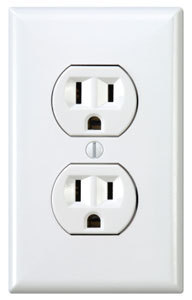
Insulate behind outlets along exterior walls. Foam insulators are available at your local hardware store. For an extra energy saving kick (with a safety bonus), cover any unused outlets with plastic safety plugs meant for baby-proofing.
I start with my heavy clothes (jeans, etc.) first, I hang them on the line while washing a lighter weight load, then hang those, and so on.
Then after half an hour or so, after they're all hung, I start taking them down, lighter clothes first, and eventually work my way up to the heavier ones. And allow them to finish drying in the dryer from 15 to 20 minutes per load.
I end up using the drier about 1 to 1 1/2 hours for 3 loads. Soft & wrinkle free! (Don't forget to use cold water too!)
1. Set your computer to go to screen saver mode after 10 minutes of inactivity, and into sleep mode after half an hour. Most computers (at least the ones I've used, both Mac and PC) have automatic defaults to go to screen saver mode after half an hour and sleep after one to two hours. You'll save electricity if you have them go to the energy-saving modes sooner.
2. Turn off the TV. Not if you're watching it, of course, but if you're leaving it on just for comforting "white" noise, turn it off. Use a radio for slightly less energy, or open a window in fine weather and listen to crickets chirp or children playing. Have the TV on only when you are paying attention to it.
3. I used a timer-plug to regulate just one lamp in my apartment, so that people would think someone was here while I was on vacation for five days. Just using that, and pretty much nothing else, my electricity bill was $40 higher that month than the month before or the months since! ONLY use those timers if you can't find anyone to come to your house to check mail and turn the lights on for half an hour while they water your plants. It would've been cheaper just to let the lights stay on for the entire time I was away, than to have that little timer ticking away and draining my energy.
4. If you have (or can make) a water catchment system, use rainwater and greywater (used sink, dishwasher, and shower water) to water your lawn. Your lawn will stay green, and you won't be paying any extra to accomplish it. However, before trying this, use up any non-biodegradable soaps, detergents, and cleaning solvents. Use environmentally friendly options, or you'll wind up killing your lawn instead of enriching it.
5. Unscrew the light in your refrigerator and freezer, and any other lights that come on automatically when you open doors or push buttons. Also unplug appliances you're not using.
6. I've said it before and I'll say it again: Buying disposable feminine hygiene products may be cheaper in the short term ($5 for a box of 24, instead of $8 to $15 each), but over a lifetime you could save as much as $9,000 by using reusable cotton pads instead of disposables. Plus, you won't be filling a landfill with the complex, non-biodegradable polymers that are used in the making of the vast majority of feminine napkins and tampons. Plus, if you soak the pads in water and a little baking soda and tea tree oil before washing, you can use the water in your garden, and your plants will be the healthiest on the block.
Add your voice! Click below to comment. ThriftyFun is powered by your wisdom!