Here are the questions asked by community members. Read on to see the answers provided by the ThriftyFun community.
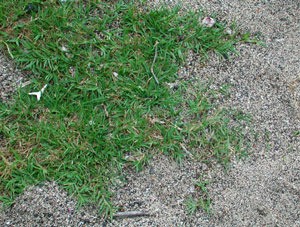
How do I kill Wire grass (Bermuda) in my yard and flower beds? Seems I recall reading about a product in the form of a spray, that would kill it and not the grass or flowers. I do not recall where I read about it. Can anyone help me please?
By Paula Jo C. from Mebane, NC
It's been 8 years since you posted your question. I just now happened to see it. I hope by now you have found an answer, though I doubt you have.
I live less than 60 miles from you. I can tell you, you can blame the area you live in for your problems with Bermuda. It is everywhere in our region. Mostly wild, a lot has been planted. In cemeteries, golf courses and even in lawns.
I fought Bermuda for 20 years before giving in. I wanted a beautiful Fescue lawn and I dug out Bermuda all those years. It was useless. I spoke with an ag agent who said the only thing I could was remove all the soil from the lawn and refill it and then plant Fescue.
I said, 'Bermuda is growing all around me. There are patches of it in all my neighbor's yards. If I did redo the whole lawn, it wouldn't be long before Bermuda would re establish itself in my lawn by seed from their lawns'. He said, 'Well, you're right'.
Then I asked if there was a product that would selectively kill Bermuda and not harm my Fescue. He said there was no such product on the market. Anything that would kill Bermuda would kill your other grass and flowers.
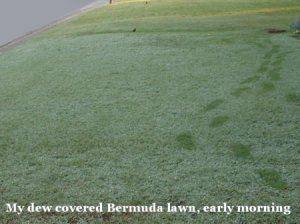
It was then that I decided to sow the lawn in Bermuda. I did, with one of the better hybrids. Now, I have the best looking lawn in the neighborhood. The only thing I don't like about it is that it goes dormant and turns an ugly brown each winter. If a green lawn is desired all year round, Bermuda can be overseeded each Fall with perennial rye.
I've learned to 'make do' with my Bermuda lawn. I heavily mulch foundation plantings. That helps keep the Bermuda down in those areas. As for my flower beds, I now grow everything in sunken tubs. Occasionally, a sprig or two of Bermuda will creep in, but it is so easy to remove. Here is a link to show my sunken tubs.
www.thriftyfun.com/
If during the past 8 years, you have found that product which will kill Bermuda and not harm your other grass or flowers, please post back here and let us know. I, and a few million others would love to know is name.
I hated giving in to Bermuda. Maybe you can do better. I wish you luck.
it