HomeBrowseNewslettersContestsAskShare 
AllGuidesQuestionsVideosBy DateRecent Feedback My AccountAbout Us
Home and Garden > Gardening > Advice on March 17, 2012

Saving Money on Gardening

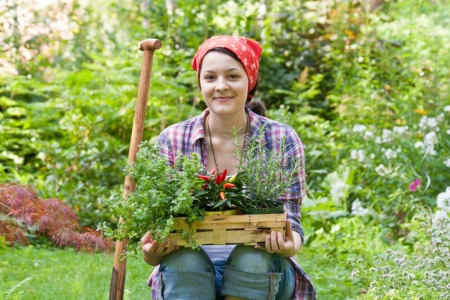
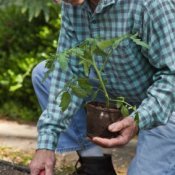
Man planting in a garden.Gardening does not have to be too expensive to enjoy. This is a guide about saving money on gardening.
     

Solutions: Saving Money on Gardening

Read and rate the best solutions below by giving them a "thumbs up".

Use Arches in Gardening

When they are on sale, I buy arches for the garden. They are made of metal tubes that you put together for an arch about 6 feet tall and wide enough to walk through. Well, I set them up in a row, all facing the same direction, each one about two feet from the next, so that they form a kind of tunnel. I usually make the tunnel about 10 feet long.

At the base of each arch, I plant seeds for vining vegetables like beans or summer squash. In between each arch, I plant things like herbs and lettuces that won't mind shady spots once the vines grow. The vines will grow up the arches and then cover the whole sides and tops, creating a leafy arbor that is really very attractive. The vegetables (I've done several varieties of green beans, and Italian zucchini) hang down into the tunnel. Growing up off the ground like this, they stay very clean, and never get soggy after heavy rain. They also seem to stay pest free, since I never have problems with bug bites. And, in really hot summers, the vegetables never get sun-burned.

At harvest time, I take garden scissors, a step-stool, and a large basket with me. I get great harvests with this method. The vegetables hanging down are easy to see, just waiting there to be taken, and it's nice and cool in the shade. An added bonus is that I can harvest lettuce later in the summer than usual (lettuces don't usually like the sun and heat). This method saves space, is very attractive, and seems to produce the best harvests.

By schyresti from North Royalton, OH

14 0SharePrintFollow4 Feedbacks

Make Your Own Pearlite

If you need to lighten potting soil, instead of using pearlite you can make your own. Simply grind some Styrofoam packing peanuts in a food processor for a few seconds and add them to the soil.

By Teresa from Ypsilanti, MI

6 0SharePrintFollow3 Feedbacks

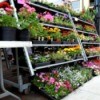
Bargain Plants at Garden Centers

Have a green thumb and a tight budget? I have found that if I go to garden centers in the big box home improvement stores on the day after their vendors go through the plants, I can find some real bargains. I have bought some puny plants that were in planters which cost more than the plant was reduced to!

Generally all the plants need is a little water and some TLC. I bring them home, put them in a shady spot, and keep them well-watered for several days before planting them out.

The stores usually have them on rolling carts toward the back of the garden section. If you don't see them, ask someone. The folks in the garden center are happy to show you to help get them out of there.

Don't be afraid to ask if they will reduce something that is less than vibrant. A little clipping, plant fertilizer and watering can revive most annuals which are droopy. I have been doing this for several years and have lost very few plants. At the price I got them for, that didn't amount to much money.

By Sandy from Elon, NC
4 0SharePrintFollow4 Feedbacks

Nine Ways To Use Sawdust In Your Garden

Flowers Sawdust is inexpensive, readily available, and has many practical uses in the garden. It often gets a bad rap for "stealing" nitrogen from growing plants, but when used properly it can actually support the growth of your plants by helping to improve your soil. Sawdust can also be used to store crops, repel pests, deter weeds, and is handy for cleaning up accidental spills.
  1. Amend Your Soil: Add small amounts of sawdust to your soil to increase organic matter and improve its texture. Because sawdust is very slow to decompose, it works especially well in moist, heavy soils like clay, where soil amendments tend to break down quickly.

  2. Compost It: For composting purposes, sawdust is considered a "brown" (carbon) material, which can be added in alternating layers to balance out the "green" (nitrogen) materials like grass clipping and food scraps. Sawdust also acts as a bulking agent, allowing air into the pile. It takes approximately a year to transform raw sawdust into finished compost.

  3. Discourage Weeds: Not many gardeners know this, but sawdust (especially from hardwoods like walnut trees) is a natural weed killer. Sweep it between the cracks and crevices of concrete sidewalks and in between stepping stones to help prevent weeds from popping through.

  4. Grow Mushrooms: If you have ever considered growing your own mushrooms, sawdust can make a good growing medium. Unlike green garden plants, mushrooms lack chlorophyll and rely on other organic materials for their food. In nature, logs work well for this. In the garden, you can use a mixture of sawdust and woodchips. Growing mushrooms successfully requires monitoring temperature and light. For information and supplies, check out: http://www.mushroompeople.com

  5. Mulch With It: Sawdust has an acidifying effect on the soil, and is a good choice for mulching around acid-loving plants like conifers, blueberries, strawberries and rhododendrons. Keep in mind that fresh, non-composted sawdust will hog nitrogen as it decomposes, so using too much of it without adding supplemental fertilizer to the soil can cause a nitrogen deficiency in your plants.

  6. Pave a Path: Sawdust is the ideal material for creating an inexpensive garden path. It's soft, looks natural, helps control erosion, and it smells really great! Start by marking out your path. Clear away existing grass and weeds to expose the soil. Apply a thick layer of sawdust and tamp it firmly into place. Walked-on sawdust compacts quickly, so expect to refresh your path every few years.

  7. Repel Slugs: Sawdust (especially coarser sawdust) can help keep slugs at bay. Raise the foliage around susceptible plants and apply several inches around the base of stems.

  8. Soak Up Spills: Sawdust is highly absorbent, which great for cleaning up occasional drips and leaks from lawn and garden equipment. Keep a bucket handy in your garage or garden shed. Toss a handful of sawdust over the spillage, wait for it to be absorbed, then sweep it up cleanly with a broom.

  9. Store Root Crops: Root vegetables like carrots, beets, and turnips can be placed in a single layer and kept over the winter in a box filled with fresh sawdust. To maximize their shelf-life, store the box in a cool place like a semi-heated garage or unheated basement at approximately 35-40 degrees F.

Warning: Sawdust Can Rob Soil of Nitrogen

Using sawdust in the garden is not without its problems. Like other wood products, as sawdust breaks down and decays it locks up important nutrients in the soil - namely nitrogen. Spreading raw or "green" sawdust in the garden can lead to a nitrogen deficiency resulting in the malnutrition of your plants. Fortunately, there are a couple of ways around this:

  • Let the sawdust simmer in the compost pile for at least a year before using it in the garden.

  • When using raw or "green" sawdust, provide regular applications of a slow-release organic fertilizer to counteract any nitrogen deficiencies.

  • Avoid using large quantities of sawdust around plants at one time. Start with small amounts and see how your plants react.
If your soil is low in organic nutrients to being with, pay extra attention to your plants during the growing season. If they start to appear light yellow in color, they may be suffering from nitrogen deficiency. You can counteract this by side-dressing them with an organic fertilizer such as alfalfa meal or blood meal, compost, or manure.

Sourcing Sawdust

The best sawdust for garden use has a slightly course texture - the type created as a byproduct of sawmills or chain saws. Very fine sawdust, like the dust created from sanding furniture or cabinets, has a tendency to become packed down and anaerobic so it's not a good choice. Also, make sure you know what type of wood was used to create the sawdust.

Walnut, cedar, and chemically treated wood should never be used on garden plants, but may be suitable for soaking up spills or creating garden paths. To source sawdust in your area, check with local lumberyards and tree removal companies. Many will offer sawdust for free (or at least very inexpensively), especially if you're willing to pick it up and haul it home yourself.

By Ellen Brown

4 0SharePrintFollow1 Feedback

End Of Season Plant Bargains

Garden centers, home improvement centers, grocery stores, department stores and any other location that sales plants or flowers always have a tremendous markdown on plants at the end of the summer. This is an ideal time to spend very little on plants that can add beauty to your outdoor space or the interior of your home throughout fall and winter and beyond.

With sufficient lighting, various types of ivy and ferns will thrive indoors. You can grow a beautiful herb garden at a well-lit kitchen window or on a kitchen island or counter. Some ornamental grass can survive a mild winter outdoors. Late blooming summer plants can remain attractive well into late autumn or early winter in some areas. Summer annuals can be potted and placed in decorative containers to liven up your indoor decor for quite some time.

A little TLC and creativity is all you need to make these deeply discounted plants a beautiful part of your indoor or outdoor design.

By VeronicaHB from Asheboro NC

2 0SharePrintFollowPost Feedback

Make a Right Hand Glove Out of a Left

Garden gloves with left turned inside out to make a right. When doing yard work or picking up litter, I use garden gloves from Lowe's or Home Depot. Being that I am right handed, I wear out a lot of the right hand gloves and accumulate many left hand gloves that are still perfectly good. To make a pair of gloves out of left hand gloves, I just turn one inside out and I have a right hand glove.

I have done this with rubber gloves several times, but this is the first year I have used a wrong side out garden glove. This summer, I found it to be very comfortable and much cooler than having the cotton on the inside.

It's yard work time! Let's also work together to get our roadsides cleaned up for the winter months. Get a pair of garden gloves. They are much better for picking up litter than rubber gloves. They protect your hands from sharp objects where rubber gloves don't and you will find that they are very comfortable.

By Litter Gitter from NC

2 0SharePrintFollowPost Feedback

Save Money Shopping End-Of-Season Plant Sales

Plant Sale Fall is a great time to visit local garden centers and shop for end of season bargains. As the growing season draws to a close, most nurseries and plant retailers offer annuals and perennials at deep discounts in order to move out their remaining inventory.

Fill In Color Gaps with Annuals

Most of us shop for garden plants in the spring. This usually results in a garden filled with lots of early to mid-season flowering perennials and shrubs-the kind of plants in bloom when we go shopping. Pots filled with fall-flowering plants are slower to emerge, so we often overlook them in favor of the plants in bloom (especially after a long winter). Unfortunately, once autumn arrives our flower beds start to look dull and the color gaps become painfully obvious.

Fall plant sales are a good way to fill in these color gaps in your beds and borders. One solution is to use frost tolerant annuals like marigolds, which naturally bloom in classic autumn colors. Because you'll be buying them at greatly reduced prices, even if they don't last more than a few weeks, your investment will have been minimal.

Save Money on Perennials

Late season sales are also a good time to save money on perennials. The plants growing in pots this late in the season are usually overgrown. This means you can gain even more savings (and more plants) by dividing the clumps into two or three sections before planting them. Although it is tempting to buy fall-blooming perennials to fill in this year's color gaps, you are better off protecting next year's display by pinching off the blooms immediately after planting them. This will shift the majority of the plant's energy into establishing roots and increase the likelihood that they survive the winter.

Tips for Avoiding Trouble

  • Look past the ugly. Perennial plants still on display by the time fall rolls around will not look as fresh as the perennials you see for sale in the spring. Many will be tall and leggy, and that's okay. As long as they appear otherwise healthy, you are still getting a good deal. Do not let a couple of dropped leaves or broken stems deter you from buying an otherwise healthy plant. A little cosmetic damage won't matter in the long run, because the plant will be going dormant soon anyway. If you plan to buy annual flowers for immediate display, look for plants that are in bloom and still showing signs of healthy growth.

  • Check for healthy roots. Make sure that all of your potential purchases have a strong, healthy root system. It is not uncommon to see roots peeking out of drainage holes this time of year. As long as the roots look healthy and not overly pot bound, they should be okay. If the roots are not visible, carefully slide the plant out of the pot to examine them. Pass on plants with roots that look rotted, dried out, discolored, or moldy.

  • Leave insects at the store. Check plants carefully for obvious signs of insect infestation. Examine the undersides of the leaves and stems, and then test for flying insects by brushing over the top of the plant with your hand. Another trick is to tap the foliage over a small sheet of white paper to see if any insects drop out (I've found plenty of thrip-infected chrysanthemums this way). If a swarm of insects takes to the air, or falls out on the paper, you may want to look elsewhere for plants, as they may have spread to other plants in the store.

By Ellen Brown

1 0SharePrintFollow1 Feedback

Use Rolling Trash Can as Yardwork Helper

I have a large yard with a lot of trees that requires a lot of work. I am always having to pick up limbs , spread mulch, etc. Then I came up with the idea to use my 30 gallon large garbage can on wheels that I had purchased from a discount store. I can roll it like a wheelbarrow or pull it. It holds more. It has a lid and a handle on the side that is easy to pull or push around the yard.

By E L

1 0SharePrintFollowPost Feedback

Gardening on a Budget

Gardening can get expensive. I think that the easiest way to garden on a budget is to first have patience.

Gain a collection of plants that are simple propagators; for example Sedum. You can break a piece of this off of the mother plant and just plunge it into the ground and it will stay green and thrive, and the following year will bring you a hardy new plant with multiple stalks to fill out more and more with each year.

I also like to buy hardy plants that can be safely split, like day-lilies already bloomed (these often get discounted after the flowers are gone so if you don't mind guessing the color) Take it home and slice it in half and plant it you will have two fuller plants the following year, and it may re-bloom late summer.

Forsythia will bud roots in water in a few weeks so take your neighbors clippings that they have to take off and sprout the roots and replant! Also if you take clippings in the house in winter you will force bloom them and they will be that beautiful spring yellow early. It brightens the wintry day.

Rose of Sharon produces tons of offshoots. Ask others for some and they will grow like crazy up to 6 feet in poor soil.

You can buy one marigold flower plant and as the heads die and dry pull them off, roll it in your hands these are the seeds and they are very hardy, spread them where you need low lying flowers they will sprout the same year and probably next year too, and since its seeds the color may be different and unpredictable, and dead heading the plant will help more flower heads to come.

If you have the patience, seed saving can be very fun. Seeing something come up that you dropped seeds for is amazingly gratifying. You could find info about where to find the seeds of a plant by googling "where are the seeds on (flower name)" some may not have viable seeds but if they do not, then you could propagate by clippings or by root cuttings.

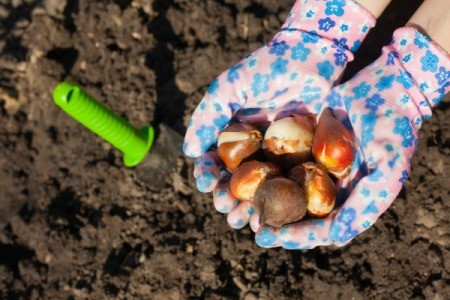
Last but never least are bulbs; they are beautiful, they are typically cheap, you get multiple bulbs that will create multiple plants for a small price. There are bulbs for each season so you can plan out something new coming up all year long. If you wait until just before the season for planting (Spring and Fall) you can get these at a discount at the home stores. As long as they are not so dry they break in your hand, they are still good. They should also not have an odor, take these home and get them in the ground immediately and next year you will have new colorful flowers. Don't forget to look for the word perennial here so you do not have to buy every year.

Basically you can save a lot of money by asking for clippings, buds, or seeds from friends and family or by purchasing one plant and having some patience if possible.

By Gina from Collegeville PA

0 0SharePrintFollow10 Feedbacks

Saving on Vegetable Garden Seeds

I was so happy to read about the seed swapping. My home town also had a seed swap a couple of weeks back. We were able to attend and WOW, did we get the seeds we were looking for and then some. We were able to get all the seeds we needed for this years garden. We also got seeds and bulbs for flowers, herbs. There was a group there that had native plants for our area. We also learned about the evasive weeds and how to control them. This was such a wonderful time and meeting all the people in our local area. I had gotten so many seeds I will be sharing with my sister and we should have a pretty good garden this year at no cost of buying seeds. I will be attending next year for sure. So thankful!

By Ida from Toledo, Ohio

Editor's Note: Visit ThriftyFun's online seed swap. Share your seeds and find some new ones for your garden.
ThriftyFun's Seed Swap

0 0SharePrintFollowPost Feedback

Finding Extra Plants in Pony Packs

I'm frugal, but do afford myself the "luxury" of buying the small plants for my backyard raised garden and flower beds. Today I decided to get started with the planting and stopped to by a few plants from a mom and pop's roadside stand not far from home. Upon examining the little four-packs, which they sell for $1.25, I realized that many of the packs had two or more plants growing in each of the four cups.

By spending a little extra time looking, I was able to buy packs with as many as 9 plants in them rather than the 4 which are usually in the ones which come from the big box garden centers who get them from huge greenhouse operations. I saved money; I kept the profit to the merchant in our community; and I got very healthy plants that hadn't gone through several days of shipping and stocking.

By Sandy from Elon, NC

0 0SharePrintFollow1 Feedback
Share Your Feedback: Once you try any of the above solutions, be sure to come back and give a "thumbs up" to the solution that worked the best for you. Do you have a better solution? Click "Share a Solution" above!

Questions

Here are questions related to Saving Money on Gardening.

Saving Money on Gardening

Spring is right around the corner. Here are some tips for saving money on gardening. Post your own ideas here.

Read More...

SharePrintFollowPost Feedback

Saving Money on Garden Supplies and Equipment

Here are some money saving tips on gardening equipment and supplies from the ThriftyFun community. Post your own here.
Read More...

SharePrintFollow1 Feedback
Follow ThriftyFun