Terra cotta pots are inexpensive and can be painted and transformed into pretty decorative containers. This is a guide about painting terra cotta clay pots.
Solutions: Painting Terra Cotta Clay Pots
Read and rate the best solutions below by giving them a "thumbs up".
I have SO many terra cotta pots that have just accumulated over the years. So like all my other craft projects, I decided through trial and error to explore the possibilities.
All you need is:
a terra cotta pot (or half a dozen if you get obsessed!)
some black enamel paint
a paint brush or foam brush (I used a foam brush)
rubber gloves (if you are concerned about your hands getting dirty. Me? not so much!),
decorating tools (stamps, white paint, small paint brush)
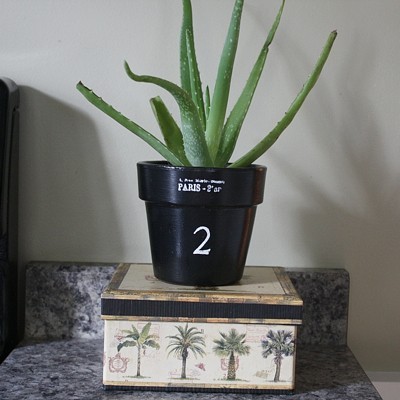
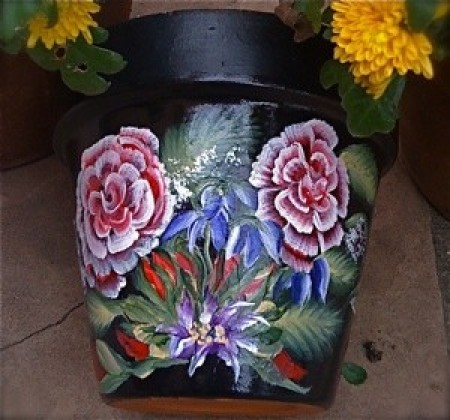
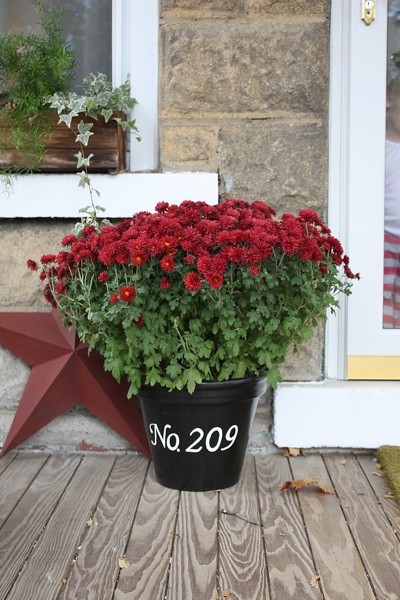
I had a large terra cotta pot. I painted it black. I gave it a few coats; 2-3 is ideal. I thought it would be PERFECT by my front door. I decided, what better way to display my house number. So I went to the computer chose a font I liked and typed out No. and my house number. I printed it out, cut it out and then used it to trace it out on the terra cotta pot. I am sure there are easier (much easier) methods, but this one worked for me and my resources. I traced out the No. and the numbers and then used both a small paint brush and a tooth pick for some of the smaller details. I used a white paint we had on hand. I put some mums in the pot and I think it gives a very polished much more expensive look. Seriously, who would have guessed those were once plain terra cotta pots?
I have done some smaller ones as well. Same concept, paint the pot with black enamel or whatever color you want. I used some vintage French stamps I had, stamped them in the white paint and applied to the front of the newly painted terra cotta pot. Again, so simple and the end result is so unexpected!
Christmas is getting closer, and it is time to start making some homemade gifts. This hand-painted terra cotta flower pot can make a nice gift for a colleague or friend.
Approximate Time: 1 hour 30 minutes
Supplies:
one unglazed terracotta flower pot
white water-based primer
water-based varnish
acrylic paint in the following five colors: old gold, lumiere, plum, flesh, and soft pink
a 8/32 inch paint brush
a fan-shaped paint brush
a 2/32 inch paint brush
a pencil to mark the lines on the pot before painting it
one sheet of ordinary printer paper
a standard pair of scissors
a few sheets of old newspaper to protect the working area
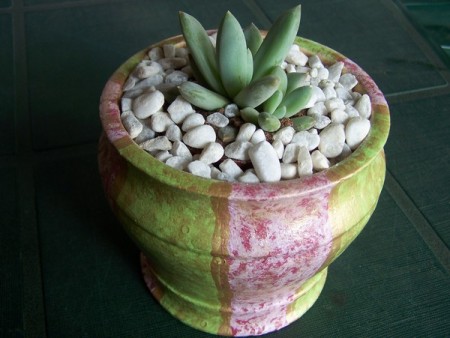
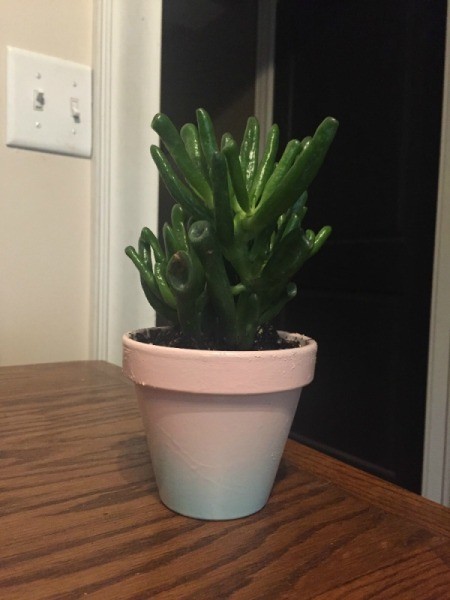
a suitable plant ~ I used a plant from the Sedum family
potting soil
fine sanding paper
Instructions:
Lightly sand the pot before starting to paint.
Clean the pot with warm soapy water and allow it to dry completely in the sun.
With a slightly wet 8/32 inch brush, paint a thin layer of the white water-based primer over the whole pot. First paint the inside and allow it to dry. Then, paint the outside of the pot, and allow it to dry thoroughly.
With the 8/32 inch brush, paint a thin layer of the flesh-colored acrylic paint over the whole pot, again first painting the inside and allowing it to dry, before painting the outside of the pot. Again, allow it to dry thoroughly.
Place the pot on the sheet of printer paper and trace around the edge of the base of the pot.
Cut out the circle that you traced and fold the circle into 8 equal parts.
Turn the pot upside down and put the circle that has been folded into 8 equal parts, on the bottom of the pot. Make small markings in line with each fold of the circle.
Now put the pot upside down on the printer sheet and trace around the top edge of the pot. Cut out the circle that you have just traced and again, fold it into 8 equal parts.
Put the circle that has been folded into 8 equal parts, on the top of the pot, and ensuring that the top markings will be in line with the bottom ones, make small markings in line with each fold of the circle.
With the pencil, lightly connect the top and bottom markings, so that you will have divided the pot into 8 sections.
With the 8/32 inch brush, paint 4 of the sections with the lumiere-colored acrylic paint. Do not paint sections that are right next to each other.
Allow it to dry thoroughly. Of course, you do not need to paint the inside of the pot. Only paint the edge of the pot, as well as approximately 1 inch of the inside of the pot. Apply a second coat of the paint, if necessary.
With the 8/32 inch brush, paint the remaining 4 sections with the plum-colored acrylic paint and allow it to dry thoroughly. Apply a second coat of the paint, if necessary.
With a 2/32 inch paint brush and the old gold acrylic paint, draw a line between the two different colored sections and allow to dry thoroughly.
Using a fan-shaped paint brush, give the plum-colored sections a wash with the soft pink acrylic paint. Remember not to use too much paint when using a fan-shaped brush, as this will lose the fan-shaped effect. Remove excess paint by dabbing it onto a sheet of newspaper before starting to paint. Allow to dry thoroughly.
Now use the fan-shaped paint brush and the old gold acrylic paint to give the lumiere-colored sections a wash. Allow to dry thoroughly.
Dab the 2/32 inch brush into the old gold paint, and remove any excess paint by dabbing it onto a sheet of newspaper. Then, lightly brush over the plum-colored sections, to add a touch of gold to these sections as well.
With the 8/32 inch brush, add a layer of water-based varnish to the inside and outside of the pot, and allow to dry thoroughly.
Leave the pot for 2-3 days in a warm, dry place before adding the plant.
I love painted flowerpots, and I think in the spring they make a fun statement. One of the most popular outdoor motifs is watermelon. I have watermelon cups, plates, and pitchers, so I decided that I wanted to make watermelon flowerpots to match. This set is small enough for starter seeds in the spring, or even an herb garden.
Supplies:
3 small terra cotta flowerpots
1 large terra cotta saucer (big enough for all three pots to sit in)
acrylic paint in the following colors:
forest green
light green
white
true red
black
large paintbrush
small paintbrush
very small paintbrush or a toothpick
waterproof varnish/seal
Instructions:
Using the red paint, paint the bottom part of the flowerpots and the inside of the saucer. You will want to use at least two coats, as you do not want to see the terra cotta through the paint. On the flowerpots, paint up to the ridge.
Use forest green paint and paint just the ridge and the inside of the flowerpots.
Using the same forest green paint, paint the ridge and the entire outside of the saucer. Again, use two coats to be sure you cannot see any terra cotta through the paint.
Take the black paint and put teardrops randomly in the red part of the flowerpots and the saucer. These will be the seeds. If you need to, you can draw the teardrops on in pencil and then fill them in.
Using the light green paint, put a little on the paintbrush and then "dry" the paint off on a paper towel (just put some paint on the brush and take most of it off on a paper towel). In a back and forth motion, make 1/2 inch to 1/4 inch vertical lines on the ridge of the flowerpots. The dry brush will give your watermelon "rind" a more authentic feel.
On the saucer, do the same thing, but take the ridges down to a point in the center of the saucer-base.
Using the white paint and the dry brush technique, make a small, vertical columns in the light green columns. This adds a highlight to the markings.
Using the very small paintbrush or a toothpick, dip it in the white paint. At the base of each "seed" put a parentheses mark. This adds a highlight to the seed.
Let your flowerpots dry overnight. Even though they may feel dry to the touch, they will not be fully dry for 24 hours.
Paint or spray on your varnish or seal. Follow the directions on the side of your sealant and do it outside. You will want to use something waterproof to protect your plants and the paint.
Let the sealant dry. Then feel free to plant whatever you would like in the pots.
Share Your Feedback: Once you try any of the above solutions, be sure to come back and give a "thumbs up" to the solution that worked the best for you. Do you have a better solution? Click "Share a Solution" above!
Questions
Here are questions related to Painting Terra Cotta Clay Pots.
I am doing the flowers for a wedding on May 17th. My sister-in-law (to be) wants mossy terra cotta pots. What is the best way to do this faux or not, in a month? Help! Thanks.
I watched a garden show and they said to jump start a "mossy" pot to take grass or any green leaves and rub them well over the pots. They will start growing moss from rubbing the liguid in the greenery on them.