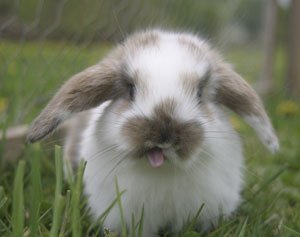
 Description: Rabbits can make wonderful small animal pets. They have gentle natures, are relatively clean and easy to care for, and they're soft and cuddly. There are many domesticated breeds of rabbits to choose from. The Dutch and Mini Lop make good companions for children. They are smaller in size and have very social natures.
Size: The size and space need to keep rabbits depends on the breed. Smaller breeds can weigh in the neighborhood of 2 to 3 pounds. The Flemish Giant is regarded as the largest breed in the world and may grow 3 ft. in length and weigh up to 24 pounds.
Compatibility: Does (females) can often live amongst each other peacefully. Bucks (males) will fight if housed together. Rabbits can sometimes be kept successfully with Guinea pigs, but should be kept away from cats, dogs, and other small animals.
Appeal: Rabbits make popular pets for a number of reasons. They are friendly and social and will live happily indoors, in apartments or in an outdoor hutch. If properly trained, they will hop along on a lead (slowly) and can learn to use a little box. They need less exercise, can be left alone during the day (with proper housing) and they won't disturb the neighbors.
Drawbacks: To keep a rabbit indoors, the house must be sufficiently rabbit-proofed. Electrical cords, carpet, and wooden furniture are all in danger of being chewed. Fireplaces, tall furniture and certain houseplants can all pose serious dangers. Rabbits shed. A rabbit's coat, nails, and ears all need regular grooming and attention and they need a supply of fresh foods to stay healthy.
Diet: Rabbits need a diverse diet that includes commercially prepared pellets, hay, root vegetables, greens, and some fruit.
Problems & Health Issues: Rabbits are susceptible to various digestive problems. They are also vulnerable to serious viruses like myxomatosis and VHD. They need to have their teeth checked regularly, and if spending time outside need to be vaccinated for fleas and other pests and from diseases spread by wild rabbits.
Lifespan: A rabbit's longevity depends a lot on genetics and the care it receives. Typically, a rabbit can expect to have a lifespan that averages 6-7 years, sometimes longer.
Interesting Facts: Rabbits use their whiskers like antennae, especially at night. The whiskers feel and remember the tunnels and walls of a familiar burrow and that information is stored in the rabbits memory. A rabbit put in an unfamiliar burrow will instantly panic because it doesn't "feel" right. Most rabbits will run for cover when being pursued rather than escaping down an unfamiliar burrow.
This page contains the following solutions.
Here are some fun facts about rabbits and raising rabbits. Do you know that rabbits are capable of having 13 litters a year?
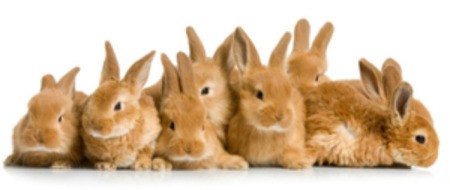
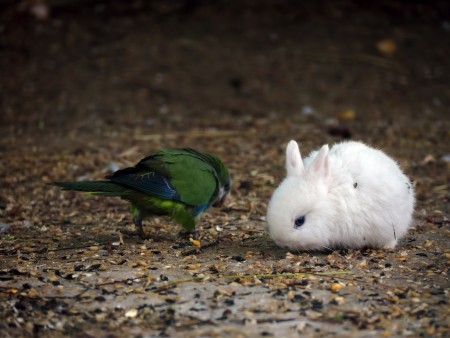
Bunnies will eat anything. Tonight I was getting ready to put the parrot in his cage for the night. I always give him fresh water and pellets at night.
Preparing for your new rabbit means you need a place for your rabbit to live! The hutch is essential even for indoor rabbits, so they have a secure place to sleep. Make sure your hutch has a door that latches so your bunny can't escape his home.
I had a cage that was in good condition and had lasted through several small pets. When my rat died of old age, I decided to adopt from the local animal shelter.
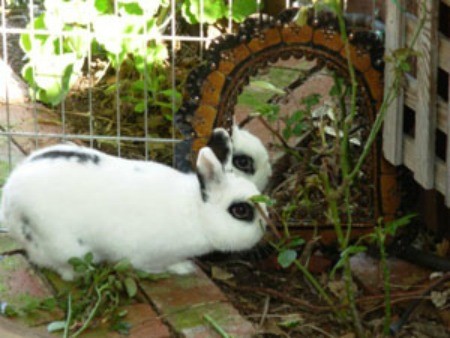
Here are the questions asked by community members. Read on to see the answers provided by the ThriftyFun community.
I have a female rabbit that lives outside in our homemade rabbit hutch. It is at least 8-10 foot long and can house two rabbits. I am thinking about getting another rabbit, maybe when it warms up a little more. But I don't know what kind or gender.
I am not breeding my female. She's getting to the age where she shouldn't be bred. I am also not planning on putting them together. They can still smell each other and stuff, because the screen and a door is between them. What kind of rabbit, gender, and age do you think would be good? I am thinking a younger one would be good so that they would get used to being held.
By Des
I would definitely advise getting another rabbit, because rabbits are communal animals, especially since the one you have is separated from you most of the time. They will snuggle and groom each other and then, eventually, become a bonded pair.
There are definitely some tricks to introducing them, though and I suggest you read up on it a bit. Oh, also, be sure to have them spayed and/or neutered. It will extend the life of your current female by many years and may help with potential behavioral problems down the road.
OK, where can I find a breeder near me. I don't know about getting a rabbit from a pet store because there not use to being outside and I don't know how healthy they are and they cant hardly sex them either at the pet stores. Thanks!
Get another female. You will drive the male crazy and he may hurt himself. If you look in your paper or classified magazine (in NY we have Want Ad Digest) you will probably be able to find a breeder.
Be careful when introducing a new rabbit. You should know that your female may not take well to another rabbit regardless if it is male or female. Female rabbits tend to be territorial of their cages/hutches. Do not just put them in a cage together.
I got some young rabbits about 8 weeks ago. I have them in an outdoor cage. They keep dying on me and I can't understand why. They have clean fresh water two to three times a day, I have pallets in there for them all the time and I have being give them timothy hay.
Can someone please help me I don't want any more to die? What am I doing wrong for them to die on me?We have successfully raised rabbits for over many years now, but I am not a vet.
There may be several reasons for your problem. Firstly, they may have been sickly when you got them.
Second, where is their "cage" located? Is it covered? Is it shaded? Rabbits can die very quickly if left in the sun on a warm day. Is it protected from strong prevailing winds? Is it on the ground or up on legs?
A rabbit hutch should be off the ground, and fenced off so that predators cannot come near it. We've had rabbits that were actually "scared to death" when a neighbors big dog got too close.
Rabbits need fresh water every day, and twice a day in the hot part of the summer. Also, what kind of pellets are you feeding? You might consider changing brands.
The hay also may be suspect, as now you have to be VERY careful to get hay that has not been sprayed with, or received the overspray of pesticides. Also, never feed rabbits yard grass or weeds that have ever been sprayed with any sort of chemicals. Their little bodies are very sensitive.
Lastly, many people don't realize this, but domestic rabbits really don't need lettuce, and it's not good for them. If you feed them fruit peels they should be organic.
A vet is a good idea,...and if you decide to take them to one, while you have them out clean their "cage" thoroughly with white vinegar and a good rinse. Make sure they have a clean hardwood board to rest on, roughly twice the size of the rabbit.
These are all the ideas I have - hope something helps.
Timothy hay would not be an adequate diet for them. Find a feed store and get rabbit chow.
There are three basic things for a happy and healthy rabbit ,
1. The climate : they can tolerate cool climate a bit ,but can heat so try to use some straw mats to cover the cage and spay some water regularly on the mats so that climate will be cool cover two adjusent sides and leave the other two free so that they they can get some ventilation
2. Food: rabbits will not have any hard work to do as they don't even make sounds regularly,so low calary food is good for them,and while grooming them self's they will swallow so much of hair so they need to intake maximum fiberrich food like grass ,hay, etc don't give them too much of fruit ,and veggies should be fresh as wild rabbits can adjust but our buddies can't
3. This is important ; our love they are social animal you can know it from their behavior in free times them will groom others and kissing them whispering with others ,so you have to spend some time with them nourishing them talking with them they may not understand our language but defiantly they can understand that ,my buddy is telling me some thing he always used to share something with me,he loves me so much ,that is enough ,happy life will be a healthy life for sure,
4. Don't let strange animals to come nearby as rabbits have a sensitive heart they can die if they see a predator close to they as they are in a cage,if they free like wild rabbits they can run away ,so don't let some ugly creature to visit our buddy I don't have a photo of my rabbit as they never gave me a chance to take a pic they will try to play every time when I am home
I hope it will help you,see ya
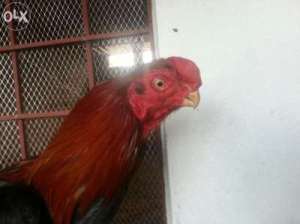
 I have a 16 week old rabbit. Two days ago I noticed a sore on the side of his nose. I have looked endlessly on the internet to see what it might be. I have gone to two vets and they don't know if it's an infection or just a sore. It's an indoor rabbit and is not in contact with any other rabbits.
By Daphney
Did either of the vets give you a topical ointment to see if it would clear up the sore/infection?
Hello...
There is a Veterinarian in Petaluma, Calif. that specializes in rabbits. His name is Dr. Pfahn. He is wonderful. You might want to give him a call or E-Mail him a pix. Good luck
I find it hard to believe neither vet suggested blood work or a skin scrape or both. Either one of those would rule out or confirm an infection. Did they at least offer antibiotics or an antibiotic ointment? Steriods would be another option if its a sore and not healing. They aren't great for the animal but in short term use, work wonders. I would find another vet if neither one wanted to do anything for you. I understand vet care is expensive but that comes with the responsibility of having a pet :)
I have 3 rabbits. My rabbits are 2, 5 year old Lop Ears and a 1 year old Lionhead Dutch mix. There is 1 male Lop and 1 female Lop and the Lionhead who is a female. I need to know how to make toys and stop their water from freezing so easily. I need toys to entertain them while I am at work. Please help me. Thanks.
By bunny_puppy_animal lover from MI
The boy toy will find the girl toy if you don't do something about that, like now. Please do not breed. Thousands of rabbits go to the pound. Many are euthanized.
Yeah. I don't breed them. I got the 2 lops from someone who didn't play with them or take good care for them for 5 years. I do not breed them because it just is too much work.
I am aware of all the animal abuse out there. I do not breed animals because of the millions of animals who actually need good, loving and caring homes.
Our rabbit has a wart/cyst on his ear. It doesn't seem to bother him but I would like to know how to remove it. A hunter that we know says wild rabbits get them but they fall off in the winter. However he is a inside spoiled rabbit. Thanks.
A vet would be the best one to remove it.
I have 2 male rabbits, they love to dig and have managed to get out on a few occasions by digging holes in the neighbour's yard. Since they have gotten out we (my neighbour mostly) has completely blocked them into their own yard and territory. I have noticed that there are new holes being dug next door through the night right next to the fence into my yard. My neighbour believes that the local feral rabbits are trying to get into my yard. Why would they want to get to my rabbits and how do I stop them without killing them?
By Nathan S.
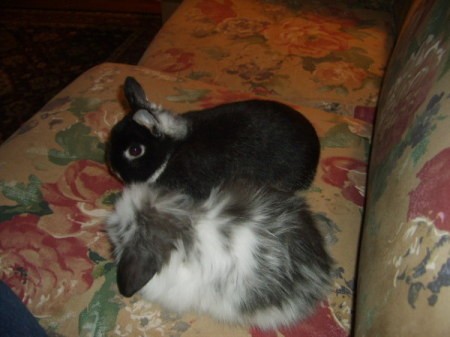
Check out these photos.
Reeses and Buttercup are 2 year old rabbits. The Easter bunny brought these in my son's Easter basket 2 years ago. We bring them in and they run around on the floor with my son and cuddle.
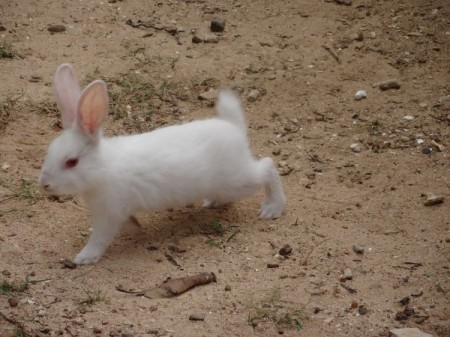
He's a lovely little white ball of fur who keeps hopping around the backyard and house all the time. He has deep red eyes which contrast very well with his white fur.
This is a page about keeping your pet bunny happy. Keeping your pet bunny happy can involve serving her favorite foods, providing toys and activity opportunities, and just spending time with her.
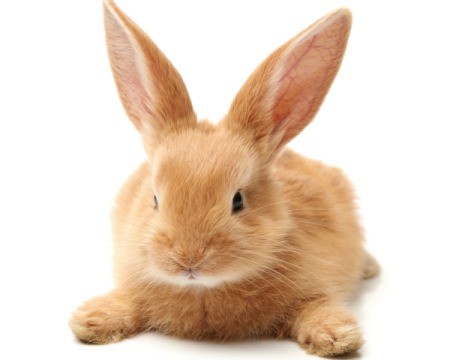
This page contains tips for a house bunny (and mice). If you are considering getting a house bunny check out the very detailed information, in this page, from the keeper of a Dutch bunny.

This is a page about feeding a pet rabbit. Choosing the right foods for your bunny is an important part of keeping your pet healthy and happy.
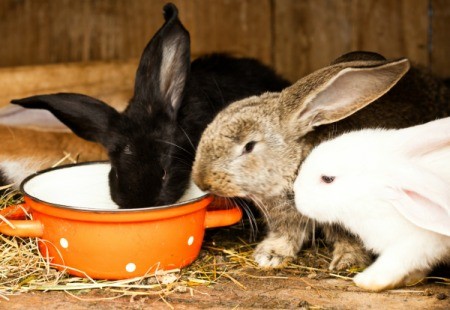
This page is about keeping bunnies cool. Making sure your rabbits are kept at a comfortable temperature is important for maintaining their health.
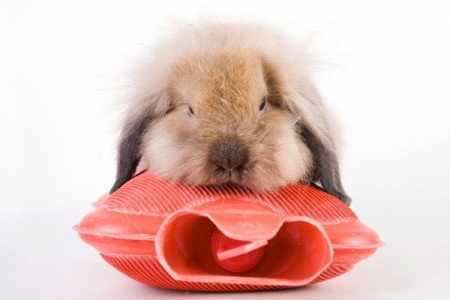
This page is about caring for a pet rabbit and her babies. Being aware of what is normal behavior for a mama doe will help you know if you need to help her care for her babies.

This is a page about mother rabbit harming babies. Understanding the normal and stressed behaviors of rabbits is important to prevent the accidental or intentional harm to infant bunnies by their mother.