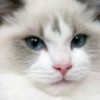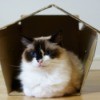
History & Origin: The Ragdoll was developed in California in 1963 from crossing sturdy, free-roaming domestic longhairs of unknown descent. The foundation cat, Josephine, had a particularly gentle and loving nature. The originator of the breed, Ann Baker, was a gifted breeder known for recognizing potential in the cats she found and had a clear sense of what she was trying to accomplish through breeding them.
Character & Temperament: This is a gentle breed. They are good with children as they are slow to anger and will seldom use their claws. They do not tend to be jumpers, but rather remain on the floor. Ragdolls love people and are well behaved and eager to please. They have soft voices and are not very vocal. They retain their kitten-like nature as adults and continue to be playful into old age. They are sometimes called 'puppycats' and make wonderful companions, especially for those living alone.
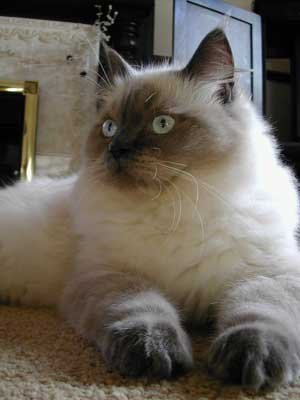
Color: Ragdolls have four distinctive coat patterns: pointed, mitted, bicolor, and van, and within each of these patterns are 6 different colors.
Coat Type: Moderately long, plush, and soft to the touch.
Grooming: Ragdolls are good about grooming and maintaining their own coats. They shed very little and have few problems with hairballs. Most enjoy being groomed daily, but it is not necessary to maintain their coats. Claws should be trimmed and ears cleaned only when necessary.
Health Considerations: This is a hardy breed with no known breed-specific problems.
Trivia: Ragdoll kittens tend to have one or more explosive bursts of growth, but their growth patterns are completely unpredictable. They may reach their full size quickly and then stop growing or stop for a year or two and then start growing again. They can take up to 4 years to mature.
About The Author: Ellen Brown is an environmental writer and photographer and the owner of Sustainable Media, an environmental media company that specializes in helping businesses and organizations promote eco-friendly products and services.
Add your voice! Click below to comment. ThriftyFun is powered by your wisdom!
What a beauty! My brother had a similar looking cat named Spencer.
Add your voice! Click below to comment. ThriftyFun is powered by your wisdom!