Request: Make Your Own Vegetable Wash
Archived on 06/11/2009
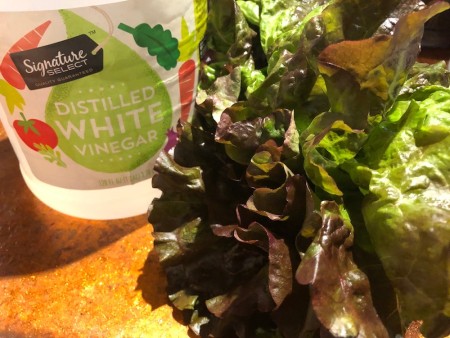
When you use vinegar for veggie wash, what kind? White or cider?
By ceeann from OK
Feedback:
RE: Make Your Own Vegetable Wash
You don't need to use anything to wash fruits and vegetables other than soap and water, washed hands and fresh, clean water. Fruits and vegetables are porous and will absorb any "wash" whether it be soap, bleach, or vinegar. Also, many stores are now touting "special washes". Save your money because the "washes' are simply a money making ploy.
A tip: Do not wash fruits and vegetables until serving, because washing before storage causes the produce to spoil more quickly. (06/02/2009)
By Deeli
RE: Make Your Own Vegetable Wash
There are three very safe and healthy ways to wash veggies and fruits.
- Lugol's iodine, a few drops in a bowl will kill all bacteria.
- Ozonate the water. Ozone is similar to oxygen and will kill all bacteria. You need to buy a machine to produce ozone. You can also ozonate water to drink, very healthy. An inexpensive ozone machine can be used for this. Simply put the ozone bubbler in the bowl of water and set the timer for 5 minutes.
- Hydrogen peroxide. About 5 drops in a bowl of water will kill all bacteria. It is most important "not" to use the drug store kind, this is 3% and has some added chemicals not good for human health (good for external use only). Instead buy 35% food grade. This is a concentrate and one pint will make 10 pints.
http://www.dfwx.com/h2o2.html?OVRAW=35%20hydrogen%20peroxideandOVKEY=hydrogen%20peroxideandOVMTC=advanced
With all of the above, no rinsing is necessary as all are healthy for humans and no chemical additives to worry about.
Jim in Jax
(06/05/2009)
By smartfell-r
Report Spam or Abuse

Request: Make Your Own Vegetable Wash
Archived on 05/29/2009
Fruit and Vegetable Wash:
- 1/4 cup Vinegar
- 2 Tablespoons salt
Fill a clean sink with cold water, a plastic dish pan works wonders, and add vinegar and salt and let sit 15 minutes, rinse. The vinegar cleans the fruits and vegetables, while the salt draws out any critters, dirt and anything else undesirable. It doesn't effect the flavor at all and vinegar helps take care of the sprays and wax they tend to use. Wash all fruits and veggies before putting away. Even the ones where you peel the skins.
By Dee
Feedback:
RE: Make Your Own Vegetable Wash
Let the fruit and vegetables sit in a strong salt and water solution for 30 minutes and rinse. (09/28/2006)
By Willem
RE: Make Your Own Vegetable Wash
That Coconut tip got my attention. Is that one posted under Beauty tips, as well?
As I was taking a course in Homeopathy, I found that about an 8th of a spoonful of bleach, in a full sink of water, will take care of anything that might hurt you. And for the fears of drinking bleach, it sounded wrong to me, too. I'm told that many water-purifying systems are essentially doing the same thing. "Such a minute amount is not harmful." (11/27/2006)
By abbiegrrl
RE: Make Your Own Vegetable Wash
I personally think the safest, easiest way to clean veggies and fruits is with a combination of peroxide and vinegar. I keep them each in spray bottles. Just a few squirts to cover the produce and let sit for a minute. Then I rinse them completely in distilled water. These two substances can effectively kill germs and residue from foods and do not harm or change the produce. You can also use this combination to clean counters. I have read several studies that they are just as effective as chemical cleaners.
As to the question of when or what produce to wash, whether you buy organic or not there is a great risk of buying dirty or contaminated produce. Everything must be washed before eating raw or cooking. Avoid anything that is bruised, browned or has broken skin as it will be contaminated inside the item. It is quite easy to take a few simple precautions with fresh produce, and no different than then necessary steps for handling raw meats, fish or eggs. Please note that using water alone is not effective at all for killing germs or removing residue from your hands, counters or produce. Soap is not recommended to be used on food items because of the possibility of being taken inside the item or not being rinsed completely, ingesting soap will cause diarrhea or vomiting. (10/08/2008)
By Sue W.
Report Spam or Abuse

Request: Make Your Own Vegetable Wash
Archived on 09/28/2006
Does anyone know how to make a natural, inexpensive vegetable wash?

Thanks!
Becky from California
Answers:
RE: Make Your Own Vegetable Wash
Generally, I don't think veggies require much more than being cleaned well with water. But I have a friend who uses a spray bottle with half white vinegar and half water in it. I would try that. (06/07/2004)
By Anne H.
RE: Make Your Own Vegetable Wash
Fill a clean sink with cold water and 1/4 cup of vinegar and 1 teaspoon of salt ( plastic dish pan works wonders). The vinegar cleans the fruits and vegetables, while the salt draws out any critters, dirt and anything else undesirable. It doesn't effect the flavor at all and vinegar helps take care of the sprays and wax they tend to use. Wash all fruits and veggies before putting away. Even the ones where you peel the skins. (06/10/2004)
By Dee
RE: Make Your Own Vegetable Wash
Goodness! It seems people are desperate to find something else to spend their money on! Water is a good cheap vegetable wash, and a green nylon pot scourer. Humans have been eating vegetables for eons - most are peeled and/or boiled to remove contaminants. I have never heard of anyone getting sick from vegetable contamination. I suppose in theory it could happen but the chances are so small as to be negligible and a good scrub and wash with plain water should be sufficient. This sounds like a marketing ploy to sell 'vegetable washes' - don't be sucked in!
Regards (06/11/2004)
By Jo
RE: Make Your Own Vegetable Wash
Use baking soda and water. (06/18/2004)
By Ruth Ingram
RE: Make Your Own Vegetable Wash
In Dr. Mercola's Total Health Cookbook& Program he recommends soaking your fruit and vegetables for 10 minutes is a sink of water, vinegar and hydrogen peroxide. It works great! (06/20/2004)
By Kris
RE: Make Your Own Vegetable Wash
My husband has a weakened immune system and the Oncologist has told him 'no fresh produce unless you have washed it - it carries bacteria.' We wash our produce in vinegar before cutting. we wipe cutting boards w/ vinegar before placing food on them. Otherwise, whatever the handlers touched before touching your food is what you are eating. (07/10/2004)
By Kate Z.
RE: Make Your Own Vegetable Wash
My previous post rather scoffs at the neurotic 'germ phobia' in wanting something to wash your veggies in, except for plain water and a scrub. I hadn't considered someone with a depressed immune system, as in the post below. I have to agree with the special cleaning precautions taken here but still maintain that someone with a healthy immune system will have no problems with water washed vegetables and if you are worried about preservative/insecticidal/fungicidal sprays on your fruit and vegetables peeling, or better still, buying certified organic produce is a much safer way to ensure you aren't eating these possibly harmful substances. Unless laboratory tests are done with these various 'washes' there is no guarantee they remove anything.
Regards (07/12/2004)
By Jo
RE: Make Your Own Vegetable Wash
Jo, certainly we've been eating vegetables for eons... but we've only been eating vegetables covered in pesticides/insecticides for less than a half century. Wisen up and wash your veggies. (09/29/2004)
By T. from Pittsburgh
RE: Make Your Own Vegetable Wash
Don't think that Organic vegetables don't need to be washed; they often have FAR more potentially dangerous bacteria than commercial foodstuffs (even if there are no insecticides) as they are often fertilized with manures that haven't been properly composted (which will kill off all the bacteria if done properly). A healthy immune system can usually fight off most of it, but why take unnecessary chances?
Otherwise, distilled water, some vinegar and a couple drops of dish soap (shaken in a spay bottle) works pretty well, and a $2 matching plastic bowl and colander (from that giant retail superstore chain that everyone seems to hate these days) works great as a soaking bowl and matching strainer..
(05/16/2005)
By Crunch
Store Bought Veggies
This is in response to the remarks about store purchased veggies not being harmful. That is utterly and totally false. They are steeped in chemicals, pesticides, some are radiated etc. The list goes on and on. They do these things to increase the "shelf life" among other things. That long with everything else that is manufactured including the meat and diary we eat is the the reason our society is steeped in cancers, illness and diseases of all kinds despite all our "modern medicine". The safest way is to grow it yourself or buy organic. Not always an option but thats the truth. There is astronomical research out there about what is being done to our food. Just get your info from someone other that the "food industry" or "dairy industry" or "meat industry" whose sole purpose is to make money at any cost. If you want to learn about what is being done to our food be prepared. It will sicken and scare the daylights out of you. Read: Diet for a Dead Planet: How the Food Industry Is Killing Us, May All Be Fed, by John Robbins, Mad Cowboy: Plain Truth from the Cattle Rancher Who Won't Eat Meat, and the list goes on and on. Many by folks who worked in the industry and left. Please don't think for one second that just because a government authority says something is safe... that it really is. There are too many dying and sick gullible americans in this society. (08/07/2005)
By Nan
RE: Make Your Own Vegetable Wash
My veggie wash says: "100% Natural. Laboratory tested and proven to remove unwanted residues significantly better than water rinsing alone. Waxes and many agriculture chemicals are designed to be water resistant. With Natural Lemon solvents for effective and safe cleaning. Veggie Wash rinses clean is significantly more effective than water in removing these tough surface contaminates, including people-handling residues (fingerprints). Veggie Wash rinses clean and leaves no after taste, just the natural flavors of really clean, fruits & vegetables!"
"100% Natural ingredients: Water, natural cleaners made from corn & coconut, lemon oil, sodium ditrate (a natural derivative of citrus fruit), glycerin (from coconut oil) & grapefruit seed extract."
Now my thoughts:
1. Have you been in the bathrooms at restaurants and it has the notice on the doors that it is a state law for workers to wash their hands before they return to work? I have and they are not the ones I worry about... look at all the people who touch the fruit & veggies and put them back. Kids always have to pick thing up and we all know they are walking germ kegs! I am a nurse and I know what germs from hands can do, our hospitals are rampant with it and they spread deadly antibiotic resistant germs just in that manner, by not washing their hands! I am gonna wash it for sure, just for that reason. I don't want my immune system to go wacko!
2. I don't see anything in the ingredients that looks like vinegar but the lemon juice stuff is sure there and I can sure smell it after I spray it too. It cuts the wax really well on apples.
3. This is the only thing I could find on the sodium ditrates:
Pectin and Citrus oil from lime wastes:
Waste from lime is one of the richest sources of pectin. Lime fruit is produced in India, the major area being Andhra Pradesh, Assam, Gujrat, Madhya Pradesh, Tamil Nadu and Punjab. Besides pectin, the by-products viz. Oil and Citrates are in good demand.
Pectin is extensively used in pharmaceutical and food processing industries, whereas citrus oils have greater demand for manufacturing of cosmetics, perfumes etc. Besides these are widely used for flavoring, several kinds of beverages, bakery and confectionery products.
The main raw materials required are lime fruit, Aluminum Sulphate, Sodium Carbonate, Hydrochloric acid, Ion exchange resin, Sugar, Liquid Ammonia and Denatured Alcohol
Process of Manufacturing:
Oil and Citrate- The limes are washed and crushed to obtain separate juice, peel and pomace. The juice is strained and the residue is separated. The filtrate is steam distilled to yield oil. The residue obtained from distillation is filtered, calcium citrate is precipitated from the filtrate by adding calcium carbonate. The precipitate is washed and dried.
Calcium Citrate is reacted with sodium carbonate, which is separated and used for precipitation of calcium citrate. The filtrate containing sodium citrate is concentrate, crystallized and centrifuged to separate the sodium ditrate crystals, which are then dried.
Calcium Citrate is also decomposed to obtain citric acid and calcium sulphate, which is filtered off. The filtrate is concentrated, crystallized and centrifuged to obtain citric acid crystals which are then dried.
4. Coconut oil will not only bring temporary relief to the skin, but it will aid in healing and repairing, unlike most lotions. The coconut oil can help bring back a youthful appearance to your skin by removing the outer layer of dead skin cells, making the skin smoother. The skin will become more evenly textured with a healthy "shine." And the coconut oil will penetrate into the deeper layers of the skin and strengthen the underlying tissues.
5. Glycerin, also known as glycerol, is a natural alcohol and water attractor that is commonly found in skin care products. It makes the skin look and function better, assisting direct skin cells through their four stages of maturity.
6. Grapefruit seed extracts main advantage is it's extraordinary ability to perform both (internally and externally) against a wide variety of known or unknown infections caused by viruses, bacteria, funguses and parasites.
Household Uses - Vegetable wash, counter tops, cutting boards, laundry cleaner, etc.
So it looks like lime and grapefruit seed extracts as well as that glycerin from that coconut oil... maybe that stuff isn't so expensive after all huh? LOL! (10/17/2005)
By Alice
RE: Make Your Own Vegetable Wash
I use this wash and it works great and is very affordable.
Vegetable Wash
Sink Washing: Add 20 or more drops of Grape fruit Seed extract into a sink full of cold water. Briefly soak any vegetables.
Spray Washing: Add 20 drops Grape fruit Seed extract per 32oz bottle of water with sprayer pump. Shake thoroughly and spray on any vegetables. Rinse when done.
Hope this helps
(10/29/2005)
By Linda T.
RE: Make Your Own Vegetable Wash
Do NOT use any soaps in your vegetable washes. The skins of produce can absorb even the weakest solutions of soap. Ingestion of soap can cause diarrhea. The FDA and USDA does not recommend the use of soaps at all. Simply rinsing in water will cut down the presence of bacteria significantly. Rinsing it twice will cut it down 100 to 1. (12/08/2005)
By Health inspector
RE: Make Your Own Vegetable Wash
In a spray bottle put in about 1/8 "Braggs" Apple Cider Vinegar, a tiny bit of "Food Grade" H2O2, and fill with Distilled Water.
Spray and let sit for a minute, then rinse under running water while scrubbing with a vegetable brush. (02/20/2006)
By RedHawk
Report Spam or Abuse

|