By Robin from Washington, IA
Editor's Note: Here are some guidelines that can be found the FDA's website.
| FOOD | HANDLING | REASON |
|
Hard cheese (not cheese where mold is part of the processing) |
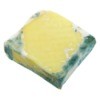
Use. Cut off at least 1 inch around and below the mold spot (keep the knife out of the mold itself so it will not cross-contaminate other parts of the cheese). After trimming off the mold, re-cover the cheese in fresh wrap. | Mold generally cannot penetrate deep into the product. |
|
Cheese made with mold (such as Roquefort, blue, Gorgonzola, Stilton, Brie, Camembert) |
Discard soft cheeses such as Brie and Camembert if they contain molds that are not a part of the manufacturing process. If surface mold is on hard cheeses such as Gorgonzola and Stilton, cut off mold at least 1 inch around and below the mold spot and handle like hard cheese (above). | Molds that are not a part of the manufacturing process can be dangerous. |
|
Soft cheese (such as cottage, cream cheese, Neufchatel, chevre, Bel Paese, etc.) Crumbled, shredded, and sliced cheeses (all types) |
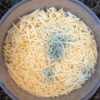
Discard | Foods with high moisture content can be contaminated below the surface. Shredded, sliced, or crumbled cheese can be contaminated by the cutting instrument. Moldy soft cheese can also have bacteria growing along with the mold. |
Add your voice! Click below to comment. ThriftyFun is powered by your wisdom!
After you trim the mold off of hard cheese, (Cheddar, Jack, etc.,) wipe all the surfaces of the cheese with a paper towel or cheese cloth saturated with vinegar. Use what you need & then wrap your left over cheese in the vinegar saturated towel or cloth, place in a FRESH plastic bag and squeeze out as much air as you can before sealing.
Add your voice! Click below to comment. ThriftyFun is powered by your wisdom!