| Botanical Name: |
| Solidago virgaurea |
| Common names: |
| Solidago, Goldruth, Woundwort, Aaron's Red |
| Description: |
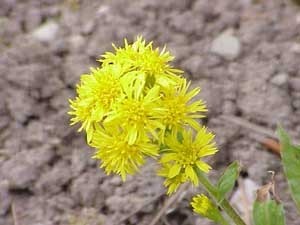
| Goldenrod is native to Great Britain. It reaches a height of about 2 1/2 feet and has a creeping, somewhat invasive growing habit. In appearance, goldenrods have bright green, pointed leaves at the base of their stems, and smaller, more oval-shaped leaves toward the tops of their stems. Their "roots" are made up of multiple rhizomes and they produce simple, golden-colored cluster of flowers on terminal spikes. When goldenrods get bruised, they give off a scent similar to wild carrots. |
| Life Cycle: |
| hardy perennial |
| Exposure: |
| sun |
| Cultivation: |
| Propagate by root division or from seeds. The soil should be rich and light, and the location should be sunny. Lift and replant roots every other year to prevent matting and invasive spreading. |
| Propagation: |
| division or seeds |
| Parts Used: |
| leaves |
| Harvesting and Storage: |
| Cut Goldenrod stems off at ground level and hang them upside down to dry. Remove leaves when fully dry and store in airtight container out of direct sunlight. |
| Medicinal Uses: |
| anti-inflammatory; antiseptic; diuretic; respiratory infections; flatulence; in combination with Echinacea for treatment of nephritis and cystitis. Goldenrod also contains bioflavonoids, which strengthen veins and capillaries. Because of its anti-fungal properties, it can be used as a douche. |
| Culinary Uses |
| none |
| Other Uses: |
| flower garden bordered and beds; leaves and stems contain a yellow dye |
Add your voice! Click below to comment. ThriftyFun is powered by your wisdom!