Home |  Index |  Submit Request |  Share Photos |  Share Tips |  Active Topics |  New Feedback  |  Contact Us  |  Search
 User Login:  Username:    Password:      Forgot It?  | Register

 Popular Topics
 - Beauty
 - Budget and Finance
 - Christmas *
 - Cleaning
 - Consumer Advice
 - Craft Projects
 - Craft Tips
 - Food Tips
 - Garage Sales
 - Gardening
 - Gifts
 - Green Living
 - Home Improvement
 - Organizing
 - Parenting
 - Parties
 - Pest Control
 - Pets
 - Product Reviews
 - Recipes
 - Repair
 - Thanksgiving
 - Weddings for Less

More Topics

Google Search:

Web thriftyfun.com

About:
RSS Feed
About Us
Media
Advertising
Contact Us
Privacy Statement
Disclaimer

4 Steps To Figuring Out When To Start Seeds Indoors

By Ellen Brown
1x1
Date: 02/14/2008 Topic: Gardening > Seeds  
1x1
1x1
Post Feedback! | Email Friend | Print | Get Responses | Bookmark | del.icio.us | Link | Rate: Thumbs Up Thumbs Down
4 Steps To Figuring Out When To Start Seeds Indoors
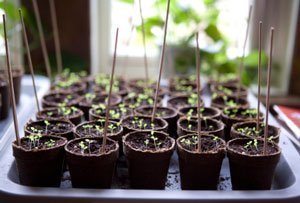
For slow maturing plants and gardeners with short growing seasons, starting seeds indoors can be a crucial element to achieving success. To figure out the optimal time to start your seeds indoors, all you really need is a bit of backwards thinking.

Step 1: Getting Into Your Zone

Hardiness Zone maps are geographic divisions based on the average minimum temperatures of a particular region. For gardeners, knowing what zone you are in is key to knowing which types of plants will grow successfully in your area. Using hardiness zones to grow plants is not an absolute science, the maps are meant as a guide. Environmental stressors, cultivation techniques and artificial environments like buildings and elevated decks are all factors that play into whether a plant can be 'pushed' beyond its normal zone. To find your zone in North America, visit the National Arboretum's website at: International gardeners can find maps of their zones here: or here:

Step 2: Finding Your Last Frost Date

Now that you know your Hardiness Zone, you will need to find the average last expected frost date for your zone. If you live outside of North America, you can either compare your zone to the equivalent North American zone that matches your average lowest temperature, or check with your national climate data center.

Average Dates of Last Frost
(North American Zones)
Zone 1:June 1-June 30
This zone remains vulnerable to frost 365 days per year.
Zone 2:May 1-May 31
Zone 3:May 1-May 31
Zone 4:May 1- May 31
Zone 5:March 30-April 30
Zone 6:March 30-April 30
Zone 7:March 30-April 30
Zone 8:February 28-March 30
Zone 9:January 28-February 30
Zone 10:January 30 or before.
Zone 11:Frost-free year round.

As you can see, the above list illustrates a 4-week range of potential last frost dates for each zone. Many gardeners in lower zones like to use the earliest dates in the range. This is probably a good strategy if your growing season is on the shorter side. Higher zones may want to start seeds somewhere in the middle of the 4-week period. No matter what your zone, make sure you factor in an extra week for hardening seedlings off before moving them permanently outdoors.

To get the best picture of trends on your area, contact your county extension agency, or ask a local nursery. The best way to calculate the last average frost date for YOUR garden is to keep a journal and watch the trend over several seasons.

Step 3: Find the Number of Weeks Until Transplanting

The amount of time it takes from planting to maturity will vary greatly depending on the type of seed you are planting and what type of growing conditions you provide for it (soil, light, and water). New seed packages should tell you on the back the average number of weeks before the last frost they should be planted. Remember, the numbers given always assume that you will be providing optimal growing conditions. If your seeds didn't come information on how far in advance to sow them, use the chart at the end of this article as a guide:

Step Four: Think Backwards

Once you have your average last frost date and know how many weeks before it your seeds should be planted, simply find your last average frost date on calendar and count backwards the number of appropriate weeks and you'll have your date. Remember, when sowing seeds indoors, it's usually better to be too late, than too early. Start seeds too soon and you may end up with weak, spindly plants that can't hold up in the garden.

Plant Number of Weeks Before Last Frost to Start Indoors
Artichoke10-12
Ageratum8
Alyssum8
Aster6
Balsam6
Basil6-8
Batchelor Button4-6
Begonia12 or more
Broccoli8
Browallia12 or more
Brussels Sprouts7-8
Cabbage5-7
Cauliflower8
Catnip8-12
Calendula6-8
Cantaloupe3-4
Celery7-12
Celosia8
Centurea8
Chamomile8-12
Chervil6-8
Chives12-14
Coleus8
Collards5-7
Columbine8
Coriander6-8
Cosmos4
Cucumber4
Dahlia8
Daisy6-8
Dianthus10
Dill6-8
Eggplant8
Feverview8-12
Fuchsia18-20
Geranium12 or more
Impatiens10
Kale4-6
Lemon Balm6-8
Larkspur12 or more
Leeks10-12
Lettuce8
Lobelia12-14
Marigold6
Mint12-14
Muskmelon4
Nasturtium4-6
Nicotiana8
Okra2-4
Onion10-12
Oregano12-14
Pansy12 or more
Parsley12-14
Peppers8
Petunia10
Phlox8
Poppy12-14
Portulaca10
Pumpkin2-4
Sage6-8
Savory6-8
Snapdragon10
Spinach6-8
Squash4
Stock10
Swiss Chard6-8
Thyme8-12
Tomato6
Verbena10
Vinca12 or more
Watermelon5-6

Tip: Don't discard your half-used seed packets from last year! Many of them will stay viable for several years if your keep them stored in a cool, dry place. Here is a brief list of the life expectancy of some common vegetable seeds.

Plant Seed Life Exptectancy
Beans: 3 years
Beets: 4 y ears
Broccoli: 3 years
Cabbage: 4 years
Carrots: 3 years
Cauliflower: 4 years
Corn: 2 years
Cucumber: 5 years
Eggplant: 4 years
Lettuce: 4 years
Onions: 1 year
Peas: 3 years
Peppers: 2 years
Radishes: 5 years
Spinach: 3 years
Squash: 4 years

About The Author: Ellen Brown is an environmental writer and photographer and the owner of Sustainable Media, an environmental media company that specializes in helping businesses and organizations promote eco-friendly products and services. Contact her on the web at http://www.sustainable-media.com

Jump to Feedback | Post feedback
Related Links:
Previous: Pros and Cons of Having Pet Insurance ThriftyFun Next: Removing Cat Urine Odor from Furniture
1x1
 Feedback
1x1
1x1
1x1
1x1
 Sponsors
1x1
1x1

No Feedback Yet

Be the first to post feedback! Click here to post feedback.

1x1

Post Feedback:
Login using the form on the top of the page to post feedback if you have registered with ThriftyFun. If you have not yet registered, click here. It's FREE!. If you are not registered you can post feedback as a guest below. Please don't use your email address for your name because spam robots can dredge it from our site. Please do not post your feedback more than ONCE. We need to approve all guest feedback and it may take from minutes to hours for that to happen.
(1x1 graphic )
Your Name

Subject

Feedback

text tool text tool text tool text tool

Image Upload: Add an image to your post! Click the "Browse" button below and select an image from your hard drive. Please only select gifs or jpegs. If you have any problems, just email the image to images@thriftyfun.com


If you want to post your email address for responses from readers, obscure it in some way like put spaces between the name and @ sign and service address with (remove spaces) behind it or name (at) server (dot) com . This is for your protection from those creepy Robots.

(1x1 graphic )

© 1997-2008 ThriftyFun.com - Design by Cumuli Design
Disclaimer: ThriftyFun.com cannot accept any responsibility for any injury or damage that you may cause to yourself, others, or property when following any advice given on this site. Read the full disclaimer. If you find any information on ThriftyFun.com or in our newsletters that is either erroneous and/or potentially harmful to others, please Contact Us, immediately.