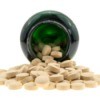
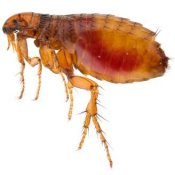
 A tip for keeping fleas away from your cats and dogs. Simply put a teaspoon of powdered brewer's yeast into their food. You can also dissolve 1/4 cup brewer's yeast into 1 quart of water. Place in spray bottle and spray pet, combing into fur as you do.
By TG Brown from TN
This page contains the following solutions.
Each day I give each of my dogs and 4 cats a brewers yeast and garlic tablet and they have had no fleas all season! That's one bottle for dogs and cats!
Add brewers yeast to food, and/or add 1 Tbsp. brewers yeast to 1 quart of water then spray on dogs coat and brush in. Fleas will leave the animal.
Here are the questions asked by community members. Read on to see the answers provided by the ThriftyFun community.
Can I use baker's yeast instead of brewer's yeast? I can't find brewers.
By DW
No. Do not use bakers yeast in place of brewers yeast. Bakers yeast is toxic to cats.
if you get really stuck you can find brewers yeast at a shop that sells the stuff to make home made beer
You can get brewers yeast at any GNC store or at WalMart !!
You can get Brewers Yeast at any GNC or Walmart Store !!
Hi my vet recommended the oil and brewers yeast to both help with fleas and it seems to help their coat too.
The Brewers Yeast at Walmart may have the vitamins leached out and does not work(did not we or for us) Get a quality product with lots of Vit b.
NO!!! Bakers yeast is completely different than Brewers yeast. Baking yeast is processed differently and is toxic even to humans if not baked. Brewers yeast is nutritious. and repels fleas.
never use baker's yeast in or on animals. buy redstar flake nutritional yeast. It comes in bulk in the health food section or health store.
What oil are you talking about? How do you use it?? Do you mix oil and yeast or just add to food??
Can find brewers yeast pills at walmart
Hi
Walmart has brewers yeast in caplets in the nutrition section.
Get brewers yeast or nutritional yeast from a health food store or Amazon. If you want you can buy empty capsules to put it in if your animals wont eat it straight
My mom uses brewer's yeast for our dogs and I was wanting to know can you use the same brewer's yeast for cats as you use for dogs or is there a different type for cats?
By Angie S.
Hi, have not used it but Health food store suggested it. I would assume they have the best quality.
I used in for my cats. Added some to their food; and, rubbed it into their fur; and, it got rid of the fleas.
We used Nutritional Yeast and our cats loved it. This kept fleas away as long as they had it on their food. One cat loved it so much, she wouldn't eat unless the yeast was on her food.
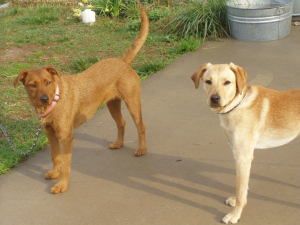 I've heard that like onion, garlic is poison and my old dog did die of liver related stuff at age (almost 16). i was reading about brewers yeast/garlic pill and thought i should put this out here~ maybe what I read was wrong? I know brewer's yeast is stinky lol. I used to take it in powder form long ago~ yuck! I can't imagine spraying my dogs every day with it.
By Robin
I just read that using Nematodes in the yard will kill most fleas that get on your pets outside. You can get it at your local hardware or home store. I'm going to try it!
I put about a tsp. of Brewer's Yeast in my palm and when I pet my cat, I casually sprinkle on fur and try to rub in a little so it doesn't go onto floor so much. My younger American Shorthair just accepts and starts the licking routine. My older Turkish Angora, though, gets really upset that anything is on his beautiful coat..and then becomes a bit afraid to even let me pet him.
Front line and advantage, even advanticks does not work anymore we have done it all, flea dip baths with flea shampoo bombing the house treatment of the yard steam cleaning and all flea treatments so I started the B-yeast thing going let's see how it goes
Try Revolution..it kills fleas, flea eggs, ticks, worms..just about any cat pest there is. Years ago my dog had fleas an vet said to use it. Within a day or 2 it was like he never had them. Now I use it on my cats
I have seen deworming medications for pets that also list nematodes as something the dewormer kills.
For a year already we've put a sprinkling of dried brewer's yeast into food (wet mixed with a little dry) for 2 ferals that we feed. Now I'm starting to add a little coconut oil as well!
Has anyone heard of giving brewers yeast to their dogs to prevent fleas? My mother in law swears by it for her cats, but not sure if it is the same for dogs.
By Stacey
Hi Stacey, brewer's yeast definitely works for cats and dogs to repel fleas. My vet told me years ago that it works by making the pet's blood taste bad to the fleas. If you're lucky, and your pet likes the taste of it, the pet will eat it readily by mixing crushed tablets or brewers yeast powder into their food (moist food works best).
I had one cat who loved it, and would pick the tablet off the top of her food and eat it first! If your pet doesn't like the taste at first, try introducing it gradually, by mixing a small amount (a pinch of powder or half or less of a crushed tablet) into the food, then increasing every few days until they get used to it. All of our dogs and cats ate it with no problem.
After our flea problem went away, we were able to stop using it, but if I ever saw fleas again (not likely because my cats are all indoor pets), I would use it again. It also gives them extra B vitamins, as a plus.
My sister uses it for her dogs she owns a kennel she swears by it all her dogs are akc champions and they all have very shiny coats
my cats eat the tablets with no problems. frontline, advantix, etc no longer work on them..my cats are also house pets and the do not go outside.. I do not understand how they got fleas to begin with but this year I am having the hardest time getting rid of them...
where do i buy brewers yeast is it at the pharmacy with garlic pills
How long does it take for the brewer's yeast with garlic to start getting rid of the fleas on a dog?
Am thinking at least three days after he consumes it. He needs to start metabolizing it first, and giving off the odour before the fleas become repelled.
Here are additional notes on the subject: www.wikihow.com/
if you want quicker results, you can also comb it through his fur.
At most 25% of dogs are helped by it and it can cause skin irritation. Be careful.
I only just found out about the debittered (brewers) yeast that you can give to dogs and cats. Yippee, something natural to get rid of and keep fleas away.
How long before it starts to work? Do they have any side effects at the beginning?It probably takes about a week, but you can make it work quickly if you brush it on the dog's fur. It should not be a big issue in terms of digestion.
Is there any flavor of brewer's yeast other than garlic? My dogs don't like garlic.
By Rosario
When I went to my local home brew shop they have all sorts of flavours of brewers yeast...
Is there a strength or milligram per pound of weight for kittens and cats? How many times per day do I administer brewers yeast tablets and garlic tablets?
By Kaylyn L.
For an average size cat give 1 teaspoon of brewer's yeast per day (mix it in their food). If you're talking about kittens under 5, 6 or 7 pounds I suggest asking a veterinarian to be sure.
You can also dust your cat's coat with brewer's yeast as a flea powder.
*Warning! Some cats are allergic to yeast. If you see an adverse reaction, stop adding the brewer's yeast to their food.
**And another warning! NEVER EVER give cats or dogs garlic nor let them eat anything in the allium plant family because it causes Heinz Body Anemia which will eventually cause internal organ failure! Alliums include garlic, any and all types of onions (including chives), leeks, etc. and even flowers like lily's.
How many grams of brewers yeast, per day, for a 12 lb cat?
By Jenny
ThriftyFun is one of the longest running frugal living communities on the Internet. These are archives of older discussions.
I have heard that garlic and brewer's yeast work but I can't get my dog to eat garlic! Am I using it wrong?