Homemade Version Of Clorox Cleanup
I live in an area of TX that is extremely prone to mold and mildew. The best thing I've used so far to combat & kill these is Clorox cleanup. I clean houses and do "make-ready" between tenants.
Needless to say, I use a LOT of it. I'm looking for a homemade bleach/detergent/whatever recipe that's more affordable! Anyone out there made one up yet?
Thanks,
Jace
RE: Homemade Version Of Clorox Cleanup
Here is a recipe I previously saved from another site: You can make your own mildew treatment by mixing a quart of chlorine bleach and a tablespoon of powdered non-ammoniated laundry detergent with 3 quarts of warm water. Good Luck! (01/29/2005)
By snickybun
RE: Homemade Version Of Clorox Cleanup
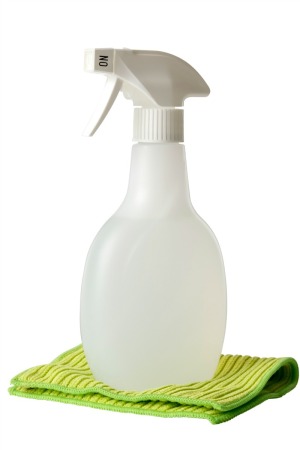
I had a horrid mold problem last summer. I made up a solution of 1 cup bleach, 1 gallon warm water ,and 3 drops Dawn which worked incredibly well. My walls are now mold free and sparkling. I keep a spray bottle with this solution now , marked on it "bleach solution for mold", so as not to mix it up with my other spray cleaner concoctions. (01/29/2005)
By ScotFinn
RE: Homemade Version Of Clorox Cleanup
I just made some a couple of weeks ago. You must boil the water as this prevents the "cleanup" from molding. First take a roll of bounty paper towels and cut in half. then put one half in rubbermaid container with lid or old round wipe container. Boil 2 cups water . Add 2 tablespoons bleach. Pour over towels, pull out center "core", cap and turn over. Let sit for about 5 miln and flip again.(your container will now be right side up. Use as you normally would any clorox product. (01/30/2005)
By johnsonya@cox.net
RE: Homemade Version Of Clorox Cleanup
A note of caution with homemade bleach solutions: Health clinics in the U.S. are required to replace 10% bleach solution every 24 hours if used for disinfecting (1 part bleach to 9-10 parts water). I assume this is because the bleach loses potency after 24 hours. So . . . be careful if you are using an older version of this type of product to disinfect your kitchen or to clean up juices from raw meat. I would hate for someone to get sick because of using a bleach solution that was too old and therefore ineffective. I'm not sure if a more concentrated bleach solution would need to be replaced as often, but how much bleach do you really want to have around your house anyway? Consider using a recipe for a disinfecting cleanser from The Safe Shoppers Bible or Better Basics for the Home instead. (02/17/2005)
By Sandy
Homemade Clorox Cleanup
Is there any reason why I can't just mix bleach with like dish soap and water or Windex and make my own? I love that stuff but gets pricey using it.
Lily from South Bend, Indiana
RE: Homemade Clorox Cleanup
CAUTION! Be very careful mixing bleach with other chemicals. Some glass cleaners contain ammonia and bleach mixed with ammonia releases DEADLY gases. Most dish detergents will say on the back in fine print "Do not mix with bleach". PLEASE make sure your mixture is safe. Don't forget too that peroxide and vinegar are disinfectants as well and have "bleaching" properties. I have filled my Clorox cleanup spray bottle with Bleach and distilled water in the past and have had good results. Good luck. (02/02/2007)
By tardev
RE: Homemade Clorox Cleanup
NEVER MIX BLEACH AND AMMONIA! THE FUMES ARE HIGHLY TOXIC! Windex has ammonia. How about mixing sudsy ammonia and water for a window cleaner. (02/02/2007)
By Linda
RE: Homemade Clorox Cleanup
Hi, over the years I have used all of these methods, finally banning all clorox from any area except laundry room! I have/had so many ruined towels, bath mats, robes, PJ's , tops, pants, whatever due to bleach! I finally said, ENOUGH, find some other ways to clean up whatever it is that needs cleaning, bleach is too destructive! (02/03/2007)
RE: Homemade Clorox Cleanup
Don't mix Windex and bleach because Windex has ammonia and when mixed with bleach that is very toxic. (02/03/2007)
By Allison
RE: Homemade Clorox Cleanup
Bleach is not a safe product to use for cleaning your home or even for laundry. The fumes can cause lung and eye irritation and the bleach is caustic to skin. Instead, mix up about a cup of white vinegar in a spray bottle with water and use to clean surfaces. If you need a bit of grit, sprinkle area with baking soda instead of Comet or Vim. Then spray with your vinegar cleaner and scrub. Your house will be clean and you and your family will be much safer and healthier. (03/09/2007)
By Erika
RE: Homemade Clorox Cleanup
Homemade bleach solutions should be made fresh daily. I read that on the Clorox website when I was trying to figure out why I bought pre mixed bleach cleaner when you could just mix a little bleach and water. This is the website that explains the reason.
This website also has an interesting article on bleach being ok for the environment and having a bad rap. (07/31/2007)
By tthompson
RE: Homemade Clorox Cleanup
Clorox doesn't mold, you don't need to boil the water, though you might need to use non hard water to stop calcium residue. If you pour Clorox over paper towels the chlorine binds to the paper and ruins its potency. Remember 1/2 of what you read on the net is dis information. (02/09/2008)
By RICHARD
RE: Homemade Clorox Cleanup
All Clorox clean up is a 5% bleach solution mixed with 1% of Sodium Hydroxide. Sodium Hydroxide is a caustic that is found in your industrial degreasers such as Purple Power or similar products found in stores such as Home Depot. Mix 1 part bleach, 1 part purple degreaser, and 1 part water and you have home made Clorox Clean-Up. (07/23/2008)
By Jerry
RE: shelf life of home-made bleach
This is why bleach solutions are remade often: Bleach solutions are basic. When exposed to air, carbon dioxide dissolves in the solution (as carbonic acid), pushing the solution towards its equilibrium point, lowering the pH (making it less basic)
Pure deionized water is acidic (in practice) because of this same event: CO2 rapidly dissolves into the water, forming the acid H2CO3 (which goes: H + HCO3). (08/28/2008)
By minithin
RE: Homemade Clorox Cleanup
When chlorine bleach is mixed with an acid, chlorine gas is given off. Chlorine gas and water combine to make hydrochloric and hypochlorous acids. Chlorine gas exposure, even at low levels, almost always irritates the mucous membranes (eyes, throat, and nose), and causes coughing and breathing problems, burning and watery eyes, and a runny nose. Higher levels of exposure can cause chest pain, more severe breathing difficulties, vomiting, pneumonia, and fluid in the lungs. Very high levels can cause death.
Chlorine can be absorbed through the skin, resulting in pain, inflammation, swelling, and blistering. Hydrochloric acid also causes burns to the skin, eyes, nose, throat, mouth and lungs. When bleach is mixed with ammonia, toxic gases called chloramines are produced. Exposure to chloramine gases can cause:
- coughing
- shortness of breath
- chest pain
- wheezing
- nausea
- watery eyes
- irritation to the throat, nose and eyes
- pneumonia and fluid in the lungs
Ammonia and acids are found in many household products so be very careful what you blend with bleach. (01/22/2009)
By Desmond
Add your voice to the conversation.