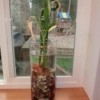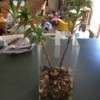
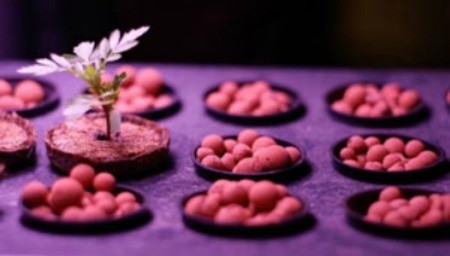
Who needs dirt? Not your houseplants, at least not all of them. Many can be cultivated using a technique called Hydroculture, where soil is replaced with water and a liquid fertilizer, and a clay aggregate is used to support the plant's roots. For people who travel a lot, or for those of us who tend to over or under water our houseplants, Hydroculture may be a good solution.
Hydroculture is another word for hydroponics, a method of growing plants in water containing dissolved nutrients. Many of the foods we eat are produced this way commercially, especially in areas where land for cultivating crops is limited. A simple, scaled-down version of this technique is an ideal way to grow many houseplants.
Plants are grown in containers filled with water and liquid fertilizer. The plants take in nutrients from a water solution through their "water" roots. After continuously being submerged in water, they have adapted by developing a greater capacity to store oxygen. Once the hydroculture system has been set up, a float in the reservoir indicates when it's time to add more solution.
No more guessing how much to feed and water. One of the fastest ways to kill a houseplant is by giving it too much or too little water. Or, not understanding how to properly use fertilizer. With hydroculture, feeding and watering requires little more than topping off water levels. In soil, certain nutrients can remain fixed in the soil as insoluble compounds. In hydroculture, nutrients are evenly available to the root system, so plants tend to be more vigorous.
Reduces pests and disease. No soil means no more soil born pests, including those creepy little potting soil gnats. You can also say goodbye to mold spores and mildew-a boon for those who suffer from allergies.
Lower maintenance. Hydroculture is cleaner and easier to maintain. By eliminating dirt, you eliminate must odors and messy spills. You'll need to water less often, transplant less often, and worry less about leaving your plants unattended while on vacation.
As more people pickup on the trend, hydroculture supplies are becoming easier to find at local nurseries and garden centers. Suppliers can also be found on the Internet by using the search terms Hydroculture Kits or Interior Water Gardens. Here are some additional links:
A great site for setting up do-it-yourself systems with tips based on personal experience.
Illustrated steps for transferring plants from soil to hydroculture:
About The Author: Ellen Brown is an environmental writer and photographer and the owner of Sustainable Media, an environmental media company that specializes in helping businesses and organizations promote eco-friendly products and services. Contact her on the web at http://www.sustainable-media.com
Add your voice! Click below to comment. ThriftyFun is powered by your wisdom!
Wow! There is a word for what I've been doing these last couple of years. I had lung problems-went into hospital - was told to get rid of all houseplants due to my mold allergy! I had to get rid of all of my beautiful houseplants--everything from beautiful peace plants to aloe plants. After a few years I bought a couple of small twisted bamboo plants - was told to keep them in a little water.
Add your voice! Click below to comment. ThriftyFun is powered by your wisdom!