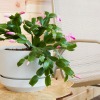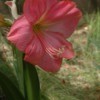
Every plant in the garden performs a function. Some support the overall look of the garden, while others make a bold statement when standing on their own. Using architectural plants in your garden's design helps to anchor it and give it compelling structure. Plants with strong architecture will also continue to add interest to the garden long after the flowers fade.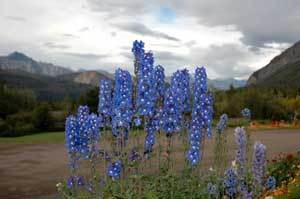
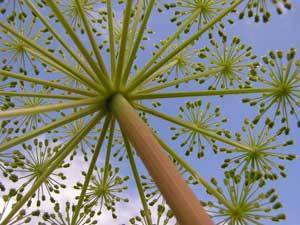
Also sometimes referred to as "specimen" or "accent" plants, architectural plants can be defined simply as plants with a presence. They are usually large, (or at least larger than the plants that surround them), and they generally scream, "Look at me!" They also tend to be bold in shape, dramatic in structure (bones), and have interesting textures or varied foliage. Architectural plants can include trees, shrubs, vines, flowering and non-flowering plants.
Architectural plants can be used effectively as focal points throughout the garden. For example, placing taller plants alone or grouping them among shorter plants will draw in the viewer, and provide places for the eye to rest from time to time. Similarly, architectural plants can be used to pull the eye to a specific location in the garden, like highlighting a dramatic view off in the distance.
Plants like Angelica (Angelica archangelica) or Cimicifuga (Cimicifuga racemosa) work well when used to define back borders due to their imposing size and branching form. Ornamental grasses like pampas grass (Cortaderia selloana) make an effective screen, while also providing movement and sound. A few architectural plants interspersed among shorter plants in a uniform border will make things much more interesting.
Architectural plants can also be used for container gardening. Grouped together or isolated, towering plants with bold shaped leaves are great for adding drama to patios, balconies and steps leading up to doors. Make sure the container is heavy enough not to tip over, and large enough to support the plant's root system.
Remember that because architectural plants can stand alone on their own merit, you only need a few groupings throughout the garden to add interest. Plant too many, and their eye-catching attributes, as well as the rest of your garden, will soon become overshadowed by these bold, dramatic plants.
agaves (larger varieties), angelica, bear's breeches, cardoon, cimicifuga, delphinium, hollyhock, giant rhubarb, golden oats, mullein, New Zealand cabbage palm, ornamental rhubarb, pampas grass, and plum poppy
amaranthus (Hopi Red Dye, Joseph's Coat, Love, Lies Bleeding), bells of Ireland, Cleome hassleriana, foxglove, Kochia, Kochia scoparia trichophylla (summer cypress, burning bush, firebush), Russian mammoth sunflowers.
Amur maple, arborvitae, Chinese holly, English oak, flowering dogwood, golden bamboo, golden privet, Japanese maple, Rose Glow Japanese barberry, Torulosa juniper, weeping beech, weeping flowering cherry, weeping Norway spruce, and yew
About The Author: Ellen Brown is an environmental writer and photographer and the owner of Sustainable Media, an environmental media company that specializes in helping businesses and organizations promote eco-friendly products and services.
Add your voice! Click below to comment. ThriftyFun is powered by your wisdom!