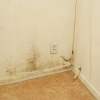
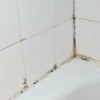
Keep closets, dresser drawers, basements--any place where mildew is likely to grow--as clean as possible. Soil on dirty articles can supply enough food for mildew to start growing when moisture and temperature are right. Greasy films, such as those that form on kitchen walls, also contain many nutrients for mildew-causing molds.
2. Get Rid of Dampness
Dampness in a basement, or any other structure, is often caused by condensation of moisture from humid air onto cooler surfaces. Excessive moisture may indicate that repairs or additional insulation are needed. Replace cracked or defective mortar. Some basements are continually wet from water leaking through crevices in the wall. Make sure outside drainage is adequate.
3. Control Moisture
For waterproofing concrete and other masonry walls above ground, apply two coats of cement paint, tinted with mineral coloring if desired. Waterproofed coatings to seal absorbent brick and other outside surfaces may be needed.
Spread a layer of moisture-barrier material over the soil in crawl spaces under houses. You can use heavy roofing paper or polyethylene plastic film. Good ventilation is important. If possible, do not enclose the crawl space. In extreme cases, a fan or blower may be needed to move the humid air from under the building.
Cooking, laundering, and bathing may add 2 gallons or more of water a day to the house. If circulation is not adequate use some type of exhaust fan. If your clothes dryer is equipped with a vent, have it exhausted to the outside to remove moist air.
4. Dry the Air
Cool air holds less moisture than warm air. Properly installed air-conditioning systems remove moisture from the air by taking up warm air, cooling it (which removes the moisture) and circulating the cool dry air back into the room. In rooms that are not air-conditioned-especially the basement--mechanical dehumidifiers are useful. A humidistat can be attached to the unit to control the humidity. Mechanical dehumidifiers, however, can add heat to a room.
When using air-conditioners or dehumidifiers, keep windows and doors closed.
5. Heat
Get rid of dampness by heating the house for a short time. Then open doors and windows to let out the moisture-laden air. An exhaust fan may be used to force it out.
Air in closets and other small areas can be dried by using an electric light continuously (60- to 100-watt bulb). The heat will prevent mildew if the space is not too large.
PRECAUTION: Be sure to place the light bulb far enough from clothing and other flammables to avoid the danger of fire.
Chemicals that absorb moisture--may be used to absorb moisture from the air. Follow directions on the label exactly.
6. Circulate the Air When the air outside is drier than that inside, ventilation allows the dry air
to enter, take up excess moisture, and then be carried outside. When natural breezes are not sufficient, you can use electric fans placed in a window, set in a wall, or ducted to the attic to move air from the house.
Poorly ventilated closets get damp and musty during continued wet weather, and articles stored in them are apt to mildew. Try to improve the air circulation by opening the closet doors or by installing a fan.
In addition, hang the clothes loosely so that air can circulate around them. Dry all wet clothing (including clothes wet from rain or perspiration) before putting it in the closet.
7. Get Rid of Musty Odors
Get rid of musty odors as soon as possible to prevent further mold growth. Usually musty odors disappear if the area is well heated and dried. If the odors remain, the following treatment may be necessary.
On cement floors and on tiled walls and floors in bathrooms, get rid of mustiness by scrubbing with a diluted solution of sodium hypochlorite or other chlorine bleach available in grocery stores. Use one-half to 1 cup of liquid household bleach to a gallon of water. Rinse with clear water and wipe as dry as possible. Keep windows open until walls and floors are thoroughly dry.
PRECAUTION: Work quickly and carefully on plastic and asphalt tile to avoid spotting the surface.
This article was written by Anne Field, Extension Specialist, Emeritus, with reference from the USDA bulletin, Mildew. Source: MSU Extension
Add your voice! Click below to comment. ThriftyFun is powered by your wisdom!