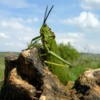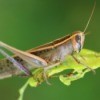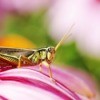
There are several hundred species of grasshoppers, but only a handful that cause damage to crops and ornamental plants. Many common garden species are 1-2 inches in length and gray, green or brown in color. All grasshoppers have large eyes and large hind legs specially developed for jumping. Adult females dig holes in the soil with their abdomen and lay eggs. One year later, wingless nymphs hatch in the spring. By summer, they have developed into mature winged adults.
Some species of grasshoppers are general herbivores and feed only on grass. Others feed on just about any type of wild or cultivated plant available, including the leaves and flowers of plants. One interesting aspect of grasshoppers is that some of the vegetations they eat contain
Grasshopper Damage occurs most frequently during dry summers. The potential for Damage increases as the summer progresses and crops start to develop fruit. Adults will be more likely to move into yards and gardens in July and August. Adults can quickly shred plants and either destroy or severely reduce potential yields.

About The Author: Ellen Brown is an environmental writer and photographer and the owner of Sustainable Media, an environmental media company that specializes in helping businesses and organizations promote eco-friendly products and services. Contact her on the web at http://www.sustainable-media.com
Add your voice! Click below to comment. ThriftyFun is powered by your wisdom!
i got a grasshopper for my birthday and i dont know what to feed it.i have a lovebug in there for it to eat.but the love-bug is still there. what will i do.
i dont want it to die.so what does it eat.
kelsey age 10
Try different kinds of leafs and plants, like zinnias
Add your voice! Click below to comment. ThriftyFun is powered by your wisdom!