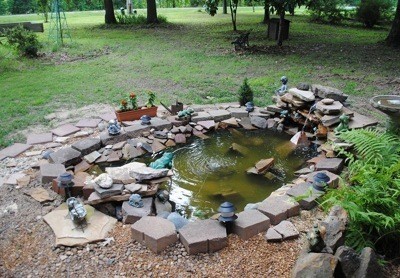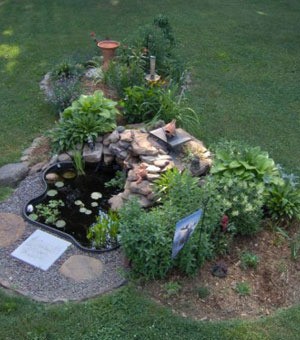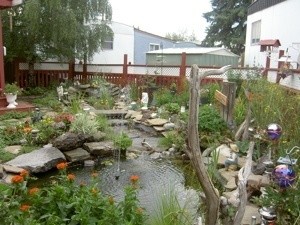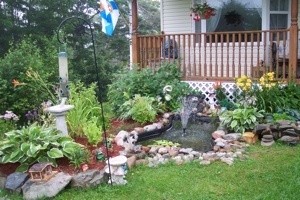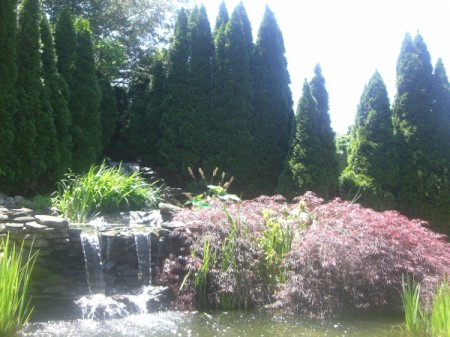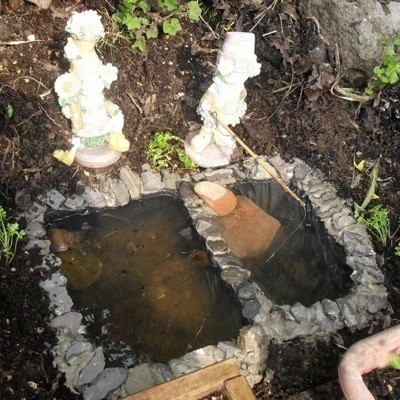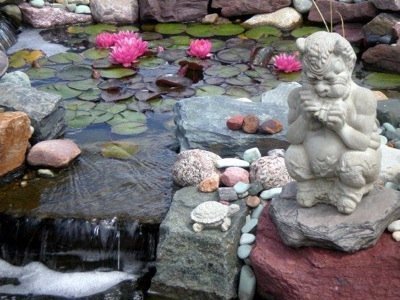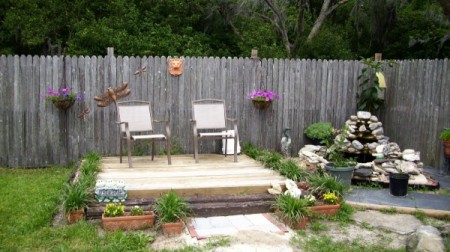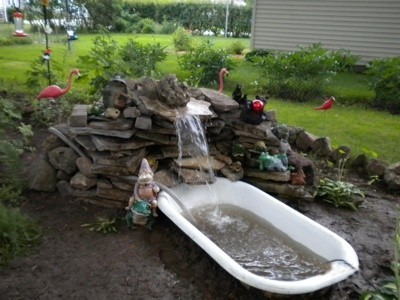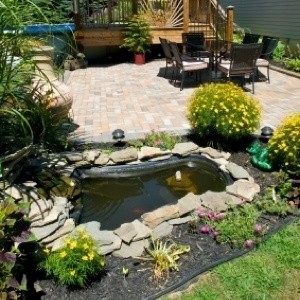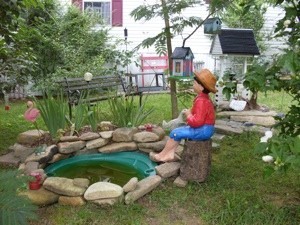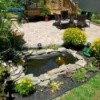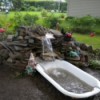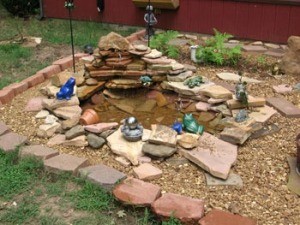
We took the entire pond apart rock by rock and bought a new liner, dug the pond opening larger and built a dam around the perimeter of the pond to keep the water in the pond. We constructed a small waterfall and a perch for the ceramic frog that "spits." We filled the bottom of the pond with large stones and river rock.
There is a large fern growing behind the pond which gives it color; plus I have a bird feeder with a homemade gazing ball in it; I have 2 miniature spruce trees on each side of the pond in the front with stepping stones in an oval shape going to each tree.
A plastic window box sits on river rock which is filled with bright orange Zinnias; I have whimsical ceramic and resin frogs and turtles around the pond. All the river rock and stones came from my late sister's home in the Ozark mountains which makes it a very special place to visit.
The sound of the water coming from the small waterfall and the "spitting" frog (we put a tube in the ceramic frogs mouth and placed a pump nearby) the frog spits water into the pond; I also have a ceramic green lizard that sits on the other side of the perch where the frog sits like it wants to pounce on the frog and eat it!
It was fun reconstructing this pond and the enjoyment of this area of our yard is beyond measure in our eyes.
By Jose
Preformed ponds are an easy and relatively inexpensive way to get started in water gardening. Most box-garden centers offer several sizes and depths to choose from, including complete kits that contain everything you need to get started: the pond, the pump, and filters-for as low as $100. Installation is easier than digging and lining a free form pond, too. Depending on the size you choose, you can install a preformed pond by yourself in a single afternoon.
Shop online and research your options before making a purchase. Online retailers sell in volume and have a low overhead. Even with shipping charges, sometimes they can offer you the best deal. Preformed ponds are designed to be durable and puncture resistant. With proper care and maintenance, one made of at least 1/4-inch thick fiberglass can last up to 50 years.
A pond featuring varying depths will accommodate the largest variety of plants and wildlife. Three different depths are ideal. Water lilies, lotuses, and other submerged plants need a depth of at least 18 inches. A depth of 6 to 10 inches will accommodate most marginal plants, and attract aquatic animals like frogs. Over-wintering plants and fish need a depth of at least 2 to 3 feet.
Note: In areas with harsh winters, be prepared to bring fish and plants indoors for the winter.
Start out with something small until you get the hang of the required maintenance. If you want to expand the size in the future, you can combine two or more preformed ponds together to form something larger and more dramatic.
The ideal site for your pond will be fairly level, offer good drainage, and feature both sunshine and shade. Most aquatic plants prefer at least 5 to 6 hours of direct sunlight a day, and both plants and fish will appreciate some afternoon shade.
Try to locate your pond away from overhanging trees and shrubs. Not only will this save a tremendous amount of work in the way of maintenance (constantly removing fallen leaves), but you'll also be less likely to encounter tree roots while digging your hole.
Low-lying sites leave your pond vulnerable to runoff contaminated by fertilizers, herbicides, or pesticides. Even if you don't use them, maybe your neighbors do. Also, a pond located near an outdoor faucet makes filling and cleaning it more convenient.
A simple way to dig the correct shape for your pond is to flip it upside down in the desired location and dig around the perimeter. You can also outline it with chalk dust, move it out of the way, and start digging.
Dig your hole a 3 to 4 inches larger and deeper than the form. Make sure you dig your hole to match the angle of the walls. If your pond contains one or more plant shelves (varies in depth), you may need to move the form in and out of the hole several times to ensure you get a good fit. Remove roots, rocks, and other debris as you dig.
Once the hole is deep enough, level the bottom by tamping it down with the back of your shovel. Cover the bottom with several inches of builder's sand so that the bottom is level and the top edge of the form sits slightly above ground level. Using a carpenter's level on top of a board laid across the hole, check to see that the top of the hole is also level. Adjust the height of the soil at ground level if necessary.
Before setting the pond form into the hole, rinse it out to remove any dust and residue acquired during manufacturing. Place the pool into the hole and wiggle it into position. Check to see that both the bottom and rim all the way around the sides are level.
To prevent bulges from forming on the sides of the pond, you need to backfill the hole and fill the pond with water at the same time. Slowly start to fill the pond with water. As it's filling, backfill the gap around the perimeter of the pond by working your way around it several times, adding even amount of soil and tamping it as you go. Continue to fill the pond and backfill the hole so that you finish both at approximately the same time. When you're finished, the soil around the rim should slope slightly away from the edges of the pond to prevent runoff from getting in.
To give the edge of the pond a more natural look, disguise the plastic edges using rocks, or fieldstone. Secure them by digging them down into the surrounding soil or fixing them to each other with mortar. Note: Depending on the mortar you use, you may need to let it cure before being able to safely add plants or fish.
Before adding living things to your pond, run the motorized pumps and filters for a couple of days to ensure everything is working correctly. Water contains a variety of chemicals depending on its source. Check with local pond and fish suppliers to see what, if any, chemicals you need to add your pond water to make it safe for plants and fish. Expect to wait at least three days after filling your pond before adding plants, and a week or more before adding fish.
Check with the pond's manufacturer for their recommendations on the number of plants and fish your pond can sustain, and plan on starting out with less. Both your plants and fish have the potential to grow larger and reproduce. Besides, it's always easier to add more plants and fish than to try to correct a pond with oxygen and nutrient imbalances.
By Ellen Brown

Goldfish and Koi are a welcome addition to most ponds-to both humans and local wildlife. Once you add them to your pond, don't be surprised to see raccoons, herons and neighborhood cats waiting around for an easy meal.
Create deep water: Large, deep ponds (30 to 36+ inches deep) make it harder for predators to hook or spear a fish.
Erect bridges and tunnels: Bright colored fish are easy to see. Use bridges or ledges to cast shady hiding spots that will dull their color, or construct fish tunnels made from rocks, broken flower pots, or hollowed-out logs.
Provide extra plants: Use extra terrestrial and floating plants (especially around smaller ponds) to create a wide border of plantings around the water's edge. This will help keep four-legged predators away from the water's edge, and provide extra cover for fish when swimming in shallow water.
Amphibians like frogs, salamanders, and newts, and reptiles like turtles spend a significant amount of time on land near the water's edge. If you want to attract them to your pond, you'll need to provide them with plenty of safe cover. Allow the grass to grow tall on three sides of your pond and mow one side short for easy viewing. Place small piles of rocks and logs near the water's edge to provide perches for basking in the sun and safe places to hibernate.
Construct escape routes: Small animals and baby animals may become startled or accidentally fall into the water when they come for a drink, so it's important to provide ways for them to climb out of the water. Create ramps by leaning logs or boards up against the sides of your pond at angles that allows for easy climbing. In deeper water, create life preservers out of floating logs or large rocks that break the water's surface.
Build gentle slopes: A pond with steep sides is nearly impossible to climb out of. Use sand or gravel to create a gentle slope on at least one side of your pond. This will provide a safe place for animals to access water to drink, and provide a safe shore for swimmers to escape to.
Netting: Although visually unappealing, stretching netting across your pond will effectively deter birds and cats. Because it may also deter other wildlife you're hoping to attract, once local predators lose interest and move on to easier prey, you may want to remove it until it's needed again.
Spikes & Spiders: Larger birds like gulls and herons can be kept from landing near your pond by attaching stainless steel or plastic bird spikes near the water's edge. These are the same spikes used to keep pest birds from landing on gutters and roofs. Their somewhat unsightly appearance can be camouflaged with tall grass and pond plants.
A more aesthetically pleasing option may be the bird "spider'. With its stainless steel "arms" that bounce and sway in the wind, its almost resembles a spider plant (or some kind of sea creature). Birds find the constant movement of the arms disturbing and they move on. Neither the spikes nor "spiders" will prevent small birds from visiting your pond or cats, unfortunately.
Dummy Birds: Setting realistic-looking birds of prey (owls, hawks, etc.) next to your pond will temporarily scare off small birds-both desirable and undesirable species. Dummy Trumpeter swans can help deter problem geese for a time (real swans will attack geese), but as with the dummy birds of prey, once the "unwanted" figure out the dummy is fake, the jig is up.
By Ellen Brown
|
By sandyb125 from Bluff City, TN
By WandaJo
By mulberry204
By Deeli
By PICO
By Cricketnc
http://watergarden.com/pages/build_wg.html (08/07/2009)
By Allison5
By sandyb125
I would like to put a small pond and waterfall in my yard. I would love to hear of your tips, ideas, success or defeats. Thrifty ideas are so welcome! Where do you shop in Washington State for pond items? Thanks in advance for replies.
Hardiness Zone: 7a
Lori C. from Ephrata, WA
By Tracy In NH
By Lady BE
By travis in ohio.
By kwinters
By kimhis
There is a product called Skamper-Ramp - "a patented water escape device that prevents animals from drowning!
Every year in the U.S. alone tens of thousands of family pets needlessly drown, along with countless millions of other creatures; raccoons, possums, squirrels, frogs, chipmunks, mice, etc. Pets are family members! They rely on their owners to keep them safe.
According to the American Pet Association, the odds of a pet drowning, are approximately one in 1,028 each year in the US alone. And over 53% of pet owners have a pool and/or spa! The problem is very real but equally preventable." (07/21/2008)
By OhioGirl
By karen55