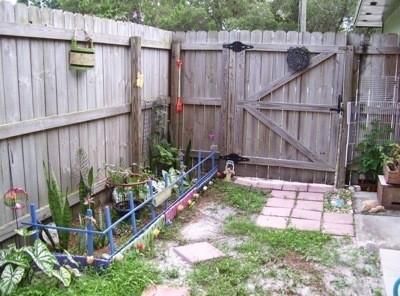
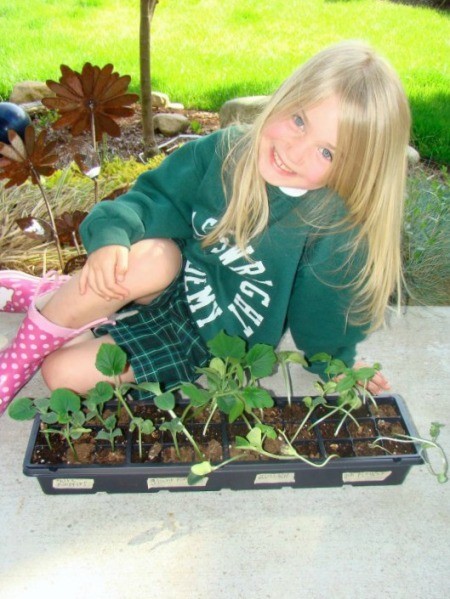
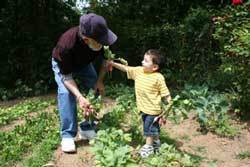
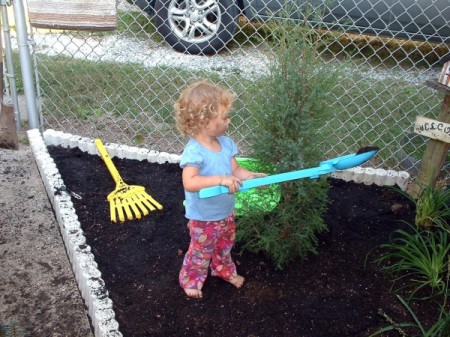
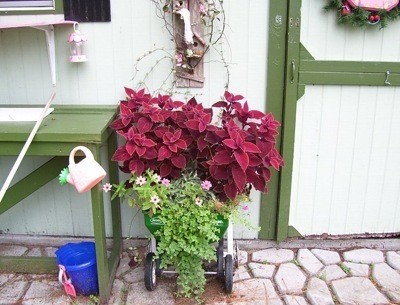
My grandchildren love Grandma's back yard. I converted a shed into a potting shed for them and, needless to say, we spend a lot of good times out there. I bought them their own little garden tools, finding them at dollar stores and thrift stores. Seeds are very inexpensive so they tried growing several things. Pumpkins, watermelon, tomatoes,string beans and squash. Plants such as coleus, ivy, and philodendron are fast growing and easy to care for plants which make them great for kids to grow. Every time they spend time with me, they rush out to the yard to see how much their plants had grown and enjoy watering them in the process.
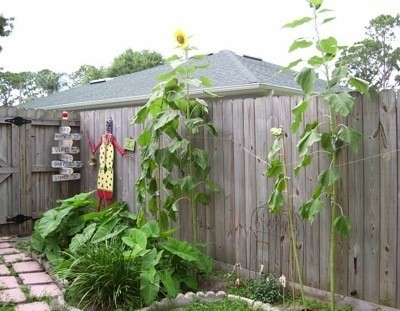
But, the greatest plant for them was the "Mammoth" sunflower and I recommend this to anyone who wants to garden with kids. They planted them by seed and they grew rapidly. We had no pest problems and they soon reached 9 feet tall. My joy comes from the look in their eyes as the plants grow and it is so much fun gardening with them. Try it with a child and you will plant many wonderful memories!

By maryeruth from Palm Coast, FL
Whether it was from a parent, a grandparent, a neighbor, or even a teacher, people who garden as adults were usually exposed to the positive aspects of gardening when they were children. Studies show that children, no matter how small, can benefit socially, physically, and academically from participating in gardening. Here are some helpful tips for getting (and keeping) small children engaged in gardening. It's easy to see how gardening teaches children patience, responsibility, nurturing, and gives them a sense of pride in their accomplishments. According to the National Garden Association, gardening affects children in even more surprising ways. Research shows that children who have access to gardens in their classrooms:

So what about children too young to be in school? They benefit by gardening, too. We all know that a child's early years are a crucial time of mental, physical, social, and emotional development, and that educational experiences during these first years significantly influence the rest of their lives.
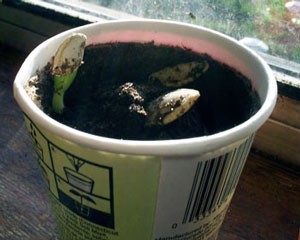
With small children, go with the motto "Simple is Best." They have an extremely short attention span and need constant supervision. Keep the space where kids engage in gardening small (e.g. a paper cup, a small window box, or part of a row). Have a few simple activities planned ahead of time (digging for worms, planting seeds, picking flowers) and be prepared to swap them around according to the child's mood.
As children develop in age, so do their imaginations (think tree-forts, fairies, and secret gardens). Let them act out garden dramas through creative play. For example, the life cycle of a butterfly might be acted out through a dance, or by painting a picture or by making up a silly song.
Young children learn best though repetition and practice. When teaching them new gardening skills (like how to use a watering can or how to plant seeds), avoid criticizing and over-correcting them. Instead, teach with encouragement and enthusiasm. Then give them plenty of time and space to practice under more relaxed standards (e.g. don't worry about them planting perfectly straight rows).
Small children develop dexterity and hand-eye coordination at different rates. Struggling with small seeds or heavy bags of soil can make their time in the garden frustrating. To help build their self-confidence, keep tools and supplies size-appropriate to the task (e.g. a small watering can or large seeds for planting).
As early as age 4-5, children begin to show pride and concern about their possessions. They may still delight in flinging dirt and digging up worms (who doesn't?), but they also appreciate having some garden space of their own-especially one with a marker or sign that announces it is their garden. Children this age are discovering their independence and can be left alone (but within site) to conduct their own activities.
The most important thing to remember when gardening with small children is to keep things fun. Let the kids take the lead and if the opportunity presents itself, you can use the moment to fill in the rest of the story (e.g. explain how a seed grows into a plant while the child is covering seeds with dirt).
For more ideas on gardening with kids and information on how to get a gardening program started at your school, visit: www.kidsgardening.org
By Ellen Brown
Kids (of all ages) love to play in the dirt. That makes an activity like gardening naturally appealing to young children. It provides them with exercise, helps grow their self-esteem, and gives them an outlet for creativity. Most importantly, it offers them a chance to connect with nature and develop an appreciation for the environment they live in. If you want to plant the gardening seeds in the children in your life, follow these simple guidelines. Children, especially very young children, have extremely short attention spans. Keep the session short (10-15 minutes), the directions easy ("cover the seeds with dirt") and the tasks manageable ("pat down the soil"). This will leave children with a sense of accomplishment when they are done, instead of feelings of discouragement or frustration. Design activities for both immediate gratification (picking and arranging flowers) and delayed gratification (planting seeds).
Everything involving gardening (the dirt, the bugs, the plants, the tools) has the potential to sidetrack a young child. If you only have a limited amount of time to catch up on some gardening chores before rushing off to a meeting or appointment, leave gardening with small children for another day. Chasing after bugs and digging in the dirt takes time. Rather than feeling rushed, invite children into the garden when you have time to encourage their need for exploration.
If possible, set aside a tiny plot for each child you invite into the garden. Not only does having their "own garden" give them a sense of pride and ownership, it gives them something to nurture and be responsible for. Giving them their own space will also keep them from damaging other more delicate parts of the garden by giving them a place to dig to their heart's content. If your garden space is at a premium, let children grow things in pots. Kids love things that are personalized. Let them insert plant markers with their names and artwork in their plots or pots so they can show others their garden.
Many seed companies now offer fun, brightly colored seed packets just for kids. Plan ahead for success by helping children plant vegetables and flowers that are easy to germinate and exciting to watch grow (e.g. radishes and sunflowers). Children should also have access to tools designed with their size and safety in mind. Most basic tools rakes, shovels, trowels) are available in lightweight durable sizes for children. Empty plastic food containers and mismatched flatware also make good gardening tools for digging and carrying.
In addition to having the right size tools, kids need to know the basics of using them safely. Make sure they know that tools with tines (like rakes) lie face down. Show them how to properly care for their tools, and designate a special space for them in the garage or shed to store them to store their tools.
Children are swept up by their imagination. Planting gardens around a theme will excite their senses and encourage their creativity. Plant a "Giants Garden" full of tall sunflowers, long beans and over-sized melons, or maybe a "Pizza Garden" with oregano, tomato and basil. Plant a red garden using red radishes, red peppers, red carrots and red snapdragons, or a scented garden with mint, lemon grass and chives.
Young children love to do whatever adults are doing. If you show enthusiasm for something, they will follow suit. Work side by side with them in the garden when completing tasks like pulling weeds. Let them look through seed catalogs with you and discuss which flowers or plants they find attractive or interesting. Bring gardening into indoor activities like watching a caterpillar turn into a buttery fly, making mosaics out of old seeds, constructing fairy houses or baking muffins using vegetables from the garden.
Take trips to the library together to look for books on gardening topics like flowers or bugs or surf the Internet for gardening websites aimed at children. Organic gardening offers more opportunities for learning and provides children with an environment free of toxic chemicals.
If you're separated from the children in your life by distance, there are still ways you can garden together. Today's technology makes it easy to share gardening experiences across the miles. If you have access to a computer, consider investing in a digital camera or setting up an inexpensive web camera to share gardening pictures and progress. Share seeds and growing instructions in the mail, visit arboretums or botanical gardens when you're together or send pictures of trees you've planted in honor of the important milestones in each child's life.
By Ellen Brown
Anyone that takes the time and effort to teach a child to garden will reap great rewards for their effort. In fact, we all will. Children who develop an appreciation for nature are more likely to become good stewards of the environment as they grow. Being responsible for tending a garden also fosters a sense of "nurturing" and helps them learn to care for other living things. Kids are washable. Let them, in fact expect them, to get dirty. Providing them with kid-sized hats, gloves, and boots will make gardening fun while protecting them from the elements.
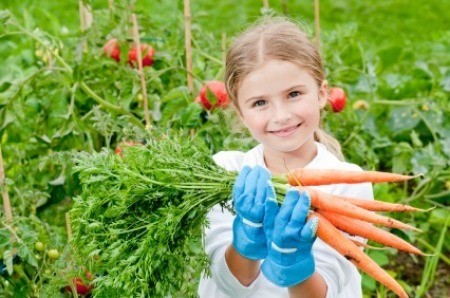
Stay safe & chemical-free. Foregoing the use of chemicals when gardening with children doesn't need any further explanation. However, in urban areas it's a good idea to have the site's soil tested for lead and other contaminants to make sure it is safe for children. Contact your state's or county's extension agency for further information.
Be nice to bugs. Children don't become afraid of worms, caterpillars, and other insects in the garden until we pass on our prejudices. Try to teach children to see bugs and other garden animals as integral parts of the ecosystem that are simply going about their own business of gardening. Encourage them to grow up curious and amazed by the natural world, not afraid.
Keep it fun. Have enough size appropriate equipment on hand to allow kids to work on tasks. It's a good idea to have a loose plan for how kids' time in the garden will be organized so they don't get bored, yet remain flexible and open to any "teachable moments" that happen to come along. When garden time is over, get everyone to help with clean-up.
Be generous with compliments. As children get older, they often hear less positive feedback from adults. Empower your kids by telling them often that they have done a good job.
By Ellen Brown
I have a 4 year old granddaughter. We did a garden together that did OK, but I am looking for other planting projects to do with her. I have 6 big pots that we can put stuff in.
Clarissa from East Chicago, IN
I plant tomatoes in pots and enjoy them. They flower then have little green tomatoes for a long time before they turn red and are ready to eat. For a child tomatoes may require too much time to reap the reward which can be around July 4th or later depending on the variety. We use a tomato cage to support the heavy branches. I love the taste of home-grown tomatoes so much. I grow one plant of grape tomatoes and one of larger tomatoes for slicing. The funny thing is DH doesn't like fresh tomatoes, so I give the overabundance to neighbors.
Last year growing tomatoes upside down was very popular. I think this site had instructions to make those in a DIY project. If you have a place to hang them, you might search for those.
Have fun and good luck with whatever you plant.
Starting a small garden is an excellent way for children to learn how to care for the environment and gain an appreciation for the many birds and insects with whom we share our gardens. It is also serves as an introduction to the changing weather patterns and the seasonal cycles of nature from planting the seed, harvesting (e.g. picking and drying flowers or collecting the seed) and then preparing for the next season.
If you can, set aside a special area in the garden where they can grow the flowers and vegetables of their choice. Decide what kind of garden your child wants - butterfly, herb, flower, vegetable etc.
Sketch a plan for the garden and mark off the area in the garden. Turn the soil breaking up any lumps and condition with organic compost if necessary.
Tip: Buy child's sized gloves, gardening tools and watering can to make the project fun and more real.
If you don't have a suitable area of ground use container pots, planter boxes, or even an old half wine barrel will do.
With very young children it is easier to grow flowers directly from seed. The roots on seedlings easily become damaged as they take them from the pots and transplant into the soil.
Let children choose their own plants and look for easy germinating types such as Cosmos, Snapdragons, Sunflowers or spring bulbs such as Daffodils as young children are typically impatient waiting for plants to germinate and grow.
For vegetables - carrots, peas and strawberries tend to be a favorite as they are easy to grow and great to eat.
Create a garden journal and take photos as the project progresses so your child will have something to remember over the winter months until the next season begins.