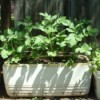
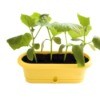
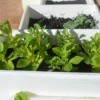
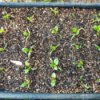
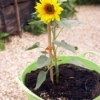
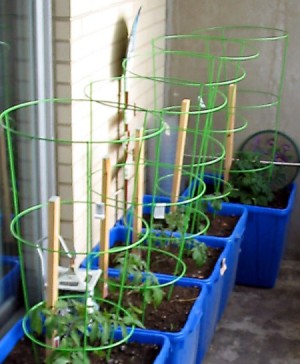
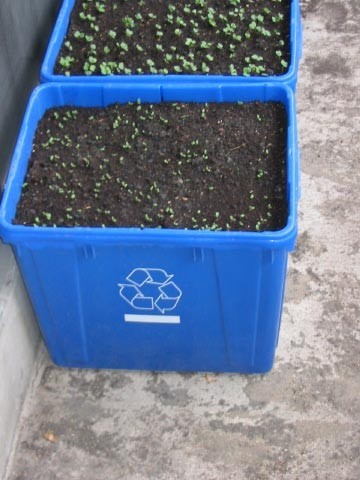
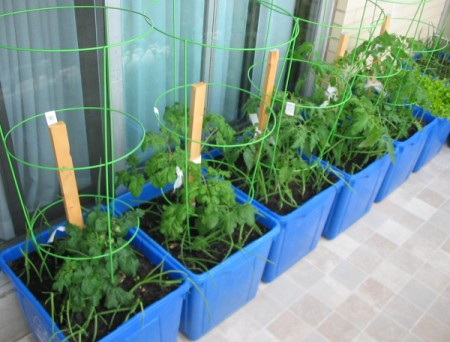
 My wife and I lived in a house for 45 years with a large garden in the back yard area, We loved to garden and enjoy the produce that we grew each summer. As we became older and had to move into a high rise apartment, with a outdoor balcony, we decided to still enjoy a smaller but productive garden out on the balcony of our 16th floor apartment. I purchased 12 plastic containers and 12 bags of black earth soil. Then I purchased some small tomato plants from a nearby nursery, some lettuce, onion, and radish seed. After planting and watering on a daily basis, our garden started to grow and we are now enjoying the fruits of our labor.

This page contains the following solutions.
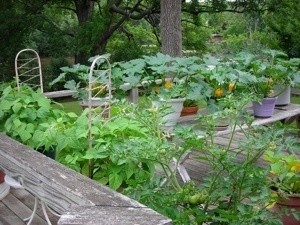
Yes you can! This is a picture of my deck vegetable garden - all in pots. This is not my first year to do this, but this is the first time I have had so much (the squirrels usually dig up the seeds before they even get started).
Check out these photos.
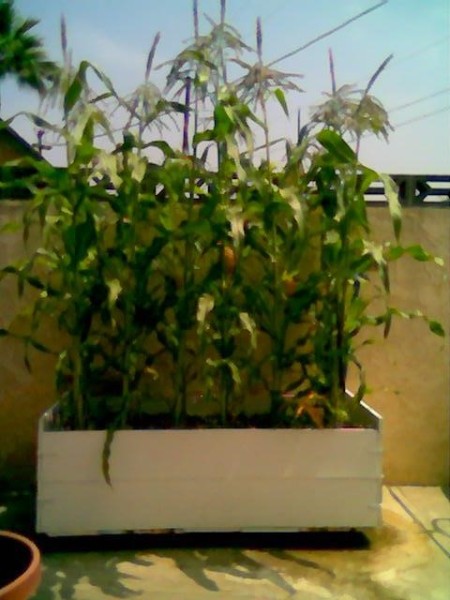
I grew this beautiful corn in the corn box I made from wood. The box size is 4ft. x 8ft. x 3 1/2 ft. deep. I had so much corn I was giving it away to all my neighbors!
Here is my husband's "veggie garden on the deck", built entirely from recycled pallets. Isn't he clever, we are growing lettuce, cabbage, onions, carrots, and spinach!
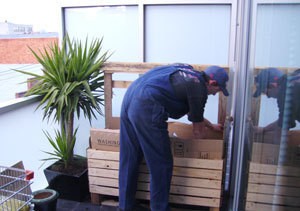
My husband and I recently moved to an apartment. I am seeking ideas for inexpensive vegetable patio gardening. There isn't much direct sunlight on our patio.
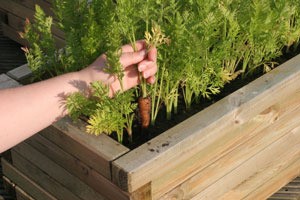
I hate always trying to tie strings to hold my plants so I used some coil I had to place over wooden plant stakes to encourage my peas to climb up on it.

Here are the questions asked by community members. Read on to see the answers provided by the ThriftyFun community.
I grew vegetables in plastic containers this year. And somebody said eating veggies from plastic containers isn't healthy. I got these at the flea market. I suspect they came from a nursery. Am I OK to eat these as I did this year?
Thank you for any help you can give.
By Herrold D
I've grown vegetables in plastic containers and I'm not dead yet. Many vegetable gardeners use over-sized plastic pots which costs less then clay pots. If you have to move some pots around in your yard for sun exposure, its' less work to move a plastic container than a heavy clay pot.
One of my neighbors in the apartment complex does container gardening. He lost a leg due to a motorcycle accident years ago and is wheel chair bound. He grows a lot of vegetables in the large plastic storage tubs.
I've met people who run off at the mouth, and they can give you a lot of false information.
I am wanting to plant some vegetables in pots next spring. What kinds of vegetables can I plant in pots? I really like tomatoes and used to help my mother with those, but I am wondering about others.
Since you have cats, you might have the big plastic pails that clumping litter comes in. I planted cherry tomatoes and bell peppers in mine,(one plant to a pot.) I had great results.These pails are nice and deep, especially for tomato roots. Plus there is room for a stake or trellis to be inserted. I had spray painted mine a dark geen with plastic paint just to match my deck furniture. This may have helped to keep the soil warm, but it probably isn't necessary.
Teresa
P.S. Don't forget to drill some drainage holes.
Almost all veggies can be grown in pots if the pot can accomendate their needs. Pots can be obtain furgally by saving milk jugs, litter buckets, plastic plaster buckets, or just plant in a soil bag on an old tray. (fill the bag with soil, tie it off and lay it on it's side, slit the top and plant.
Orange, lemon and lime rimes thrown around the plants base will help keep the cats at bay. You'll need to add fresh rines now and then. Sprinzting water deluted lime and lemon juice on the leaves will also keep the cats at bay and won't harm the plants.
I grow zucchini, all forms of cukes, eggplant, all forms of squash, strawberries and as you say, all of my tomatoes in pots.
There is realistically nothing that you can't grow in pots, but all members of the cucurbit family, incl. squashes, zucchinis, eggplant...all peppers, all herbs,all tomatoes, even potatoes do well!
How can I grow zucchini in a pot? Won't the fruit fall off the vine from its own weight? Do I need to grow 2 plants together?
Zucchini does spread out. You could do it in a 5-gallon pail and stake it up
I have done quite with 4 pots of zucchinis (1 per pot). They were gorgeous...they trailed out into the yard (down the one step from the edge of our little porch stoop) and had tons of flowers, but the darn ground hog ate most of the zukes--one bite or two and I got a very low harvest.
We want to put out a simple container veggie garden this spring to help cut grocery bills even further than we already have. We're focusing on a few simple things we eat a lot that aren't especially cheap at the local farmer's market. Such as various lettuces, heirloom tomatoes, and some herbs.
We're using 28-lb kitty litter buckets for large containers and cut-off 2-liter soda bottles and similar products for smaller containers. Both will have rocks and holes in the bottoms for drainage. We have a relatively small area of yard that gets enough sun for a vegetable garden, so our space is limited. Because I don't trust the dirt in our yard to be free of contaminants, we'll probably buy bagged soil.
We have lots of rabbits here, will setting our containers up on large cinder blocks be enough to keep the rabbits from reaching them? What else could we do without spending money? Where should we look to find unusual heirloom tomatoes to plant? Should we look for plants, or try to start from seed? What other tips can more experienced gardeners here share with us? We want to minimize expense and keep the work simple, while harvesting yummy produce. Thank you in advance!
Hardiness Zone: 5b
By Weavre Cooper from PA
Because you will not be getting nutrients from the ground you will need to feed them occasionally. follow the recommendation of how often for the plant food you buy.
I grow a lot of vegetables in hanging baskets to keep animals away. I have had success with tumbling tomatoes and herbs. If you can get a child's sandpit on legs this could be used with holes punched in the bottom for salad ingredients, such as bell peppers, garlic, spring onions, lettuce, radishes etc, cress can be grown indoors on the windowsill as can herbs.
Outside you can plant sage, rosemary. mint etc in the flower beds. I doubt animals would like the taste of herbs all except parsley which peter rabbit loved lol
Other vegetables grow underground such as tubers and wouldn't be touched by animals such as potatoes, new potatoes, carrots.
I think your problem areas would be plants close to the ground such as cabbages and broccoli which you may have to cover with a framework of chicken wire mesh, which is what I would use.
Runner beans, green beans grow up poles and are also out of the reach of rabbits.
If you have a list of things you want to grow people could think up animal free solutions hopefully carol x
This is a page about selecting the right sized containers for growing vegetables. Choosing the right sized container for growing your veggies is important to the overall success of your harvest.

ThriftyFun is one of the longest running frugal living communities on the Internet. These are archives of older discussions.
I would like to start a container Garden for a college project. My class is about sustainability. In these containers I would like to grow food.