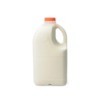
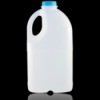
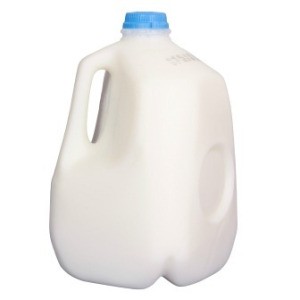
 Don't cut up your plastic milk jugs! I wash them out and then use them for storage. It's much easier to pour powdered milk from the plastic jug than the large cardboard boxes and I can see how much I have left. Prevents running out when I need it for a recipe. I also use the jugs to store dried beans that I buy in bulk (cheaper), elbow macaroni, sugar, flour, and corn meal.. The handle really makes the jobs easier.
This page contains the following solutions.
Thoroughly clean out and dry your milk and juice jugs for reuse. They are great for storing dry food items things like rice, beans, and sugar. Label them and store them in any cool area in your house, even bedrooms or odd closets. Just be sure to label.
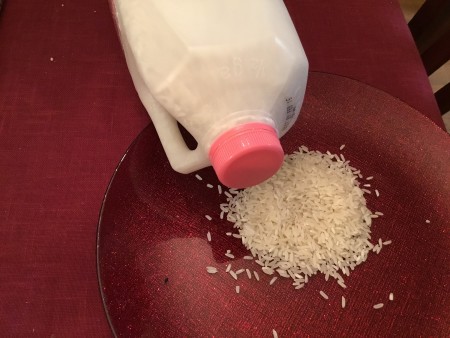
Cleaned out milk jugs are so handy around the house. Of course I take them to the store to fill for drinking water. I mix up plant fertilizer in them to feed the plants.
We go through lots of gallon milk jugs all the time. I have started saving them and cutting off the part below the handle to make little stackable storage for the table. They nest in each other and you can write on them to tell what they are.
It will be garden time soon. So, these are mostly garden ideas.
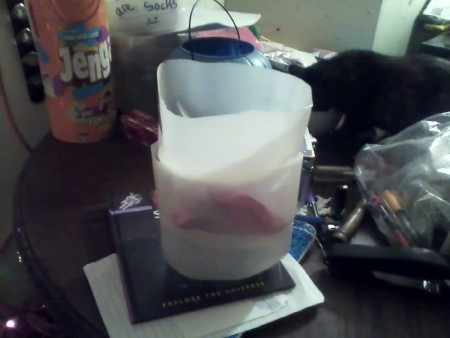
My husband came up with a "bright" idea. We have electric garden lights in our backyard. The plastic shades shattered over time from the sun.
These are cost free labels for any and all flower and/or vegetables you want to identify. They are cut from plastic milk bottles but any clear, or plain white plastic containers that were not holding dangerous liquids, (toxic, or hazardous to handle), are fine.

This is a good way to recycle your empty gallon milk jugs. They do not ever disintegrate so we all have to be creative in using them again and again.
I use the rings for sorting socks for the laundry. I keep a small tupperware dish on a shelf above the clothes hamper. And then before tossing the socks in the basket I place a ring around them.
Use your old plastic milk bottles for cutting into plant labels. I use the straight sides. A permanent marker is best for writing on. Then the bottom can be used as a drip tray. Also if you just cut the bottom off, the top can be used as a mini cloche. You can make a handy scoop too.
Here are the questions asked by community members. Read on to see the answers provided by the ThriftyFun community.
I recently read on this site about using an iron to flatten milk jugs. Could someone tell me more details on how to do that? What temperature iron, what covering on the plastic, etc.?
I don't remember seeing that tip before. I can't help but wonder, to save time and electricity, why not just smush the container with your hands or foot with the lid off and then place the lid back on to keep the air out so it will remain collapsed.
In the article (or tip) they mentioned cutting and flattening a milk jug with an iron to use for cutting out plastic patterns and shapes. I don't want to just smash it flat! I wish I could remember what else the tip was about...
Sorry, Polly. I Just assumed it was to flatten the jugs for trash or recycle bin, cause the question didn't mention crafts.
My suggestion would be to first cut top and bottom off of jugs and then cut the body in to two, three or four pieces. To be safe, just experiment with the temperature on small portions until you're sure what is too hot.
Hope this helps and be sure to share the iron temp with us and maybe even share a photo of the patterns and shapes :-)
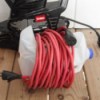
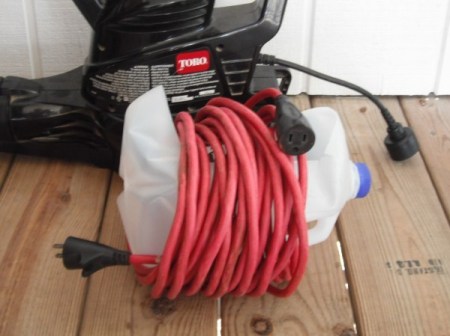
This is a nice way to reuse a milk jug to help keep your extension cords tangle free. This page shows you how to make a milk jug electric cord reel.
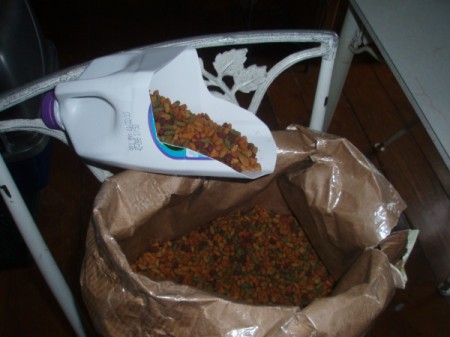
A cut down milk jug makes the perfect scoop for dog food or other dry goods. This is a page about making a scoop from a quart milk jug.
This is a page about using milk jugs in the garden. Plastic milk jugs have a variety of uses in the garden.
ThriftyFun is one of the longest running frugal living communities on the Internet. These are archives of older discussions.
Plant labels can be expensive to buy and often don't last more than once season. So, this year I am making my own.
The opaque lens cover on our motion light cracked and fell apart from time due to weather.