One of the most prevalent attributes common to natural gardens is that they work with - not against - nature. The design has the appearance of a garden that happened naturally instead of a planned, sculptured look. Natural gardens also house native flora that thrives with relatively low maintenance, and embraces nature by providing a haven for wildlife.
Not only are such gardens harmonious with our eco-system, but the birds, butterflies, bees, and ladybugs they attract add to the sense of tranquility and pollinate your plants.
The key to creating a successful natural garden is adaptation. Adapt not plants, but the garden design itself, to the surrounding landscape. How do natural landscapes look? Do they have straight, flush lines, or irregular curving lines? Do they display prim rows of individual flora varieties, or groupings and drifts of varieties that blend together gracefully?
Although Japanese and natural gardens differ, they do have a vital element in common. Both have a type of partnership with nature. That is because neither imposes foreign varieties of plant life into the design. And the result is a lovely, welcoming oasis that enhances quiet moments of peaceful reflection.
If you want to create a natural garden, you must be conscious of how things appear in nature. Imitate what it is you want to create. If a garden pond enters into the mix, take notice of how natural ponds appear. A sloping lip of sand or gravel, for instance, which gently slopes into the shallow end of the pond, creates a natural watering hole for wildlife. Tufts of tall plants might surround part of the pond, with smaller plants and flowers that lend color closer to the water's edge.
A gap of space between plants is another common feature of many natural gardens. Sometimes these spaces are filled in with ground cover; other times they are left bare. One benefit of having something between plants is less space for weed growth. Placing a layer of thick-gage plastic a few inches below the surface of the garden area, with holes spaced for plants, can greatly reduce weed growth.
Natural landscapes in some regions consist of only a few predominant flora specimens. Other landscapes, like those in the northeastern United States, have lush undergrowth with a variety of wildflowers due to the increased moisture brought about by plentiful rains, and snowy winter months. A garden in that type location would look natural with a large assortment of plants and flowers, whereas one in a predominately arid climate would not.
Besides plant variety, plant selection is important. Select only those plants that come from regions with a similar climate. Be careful that plant selection is appropriate to your location. For instance, a display of cactus would not look very natural in a Maine garden.
Annual and perennial flowers grouped together in various layers will help link one aspect of the garden to another, imparting a sense of continuity the way nature does. Planting a variety of patterns using just a few flora species in tufts and drifts, rather than rows, provides a natural look and is in keeping with nature's approach to design.
Before planting a natural garden, work the ground. Mix good quality loam into the top 12 inches of soil. Mimic nature. Sculpture the soil into uneven mounds and soft hills.
After planting flora, strategically add natural materials to the garden area: stones, shells, weathered logs, and antique items - wheelbarrows, kettles, etc. These will add charm, texture, color, and interest to the garden.
Partially bury stones for an authentic, more natural look. A horizontal log not only serves as a natural settee, but also provides nesting and hiding places for various forms of nature, not to mention a buffet table for woodpeckers. If you want to attract the greatest variety of wildlife to your garden area, include a wide variety of plant types that provide them with food and shelter.
Aside from providing beauty and a refuge for birds, reptiles, insects, and small mammals, natural gardens offer other benefits. They are easy to maintain because native plants are used, which require less watering. And areas of the yard left natural with wildflowers and tall ornamental grasses mean no mowing until late fall.
Less work equals more time for enjoyment when it comes to the low-maintenance needs of a natural garden. A feast for the eyes, a haven for nature! What could be a more welcomed addition to your yard?
About The Author: Ellen Brown is an environmental writer and photographer and the owner of Sustainable Media, an environmental media company that specializes in helping businesses and organizations promote eco-friendly products and services. Contact her on the web at http://www.sustainable-media.com
Add your voice! Click below to comment. ThriftyFun is powered by your wisdom!
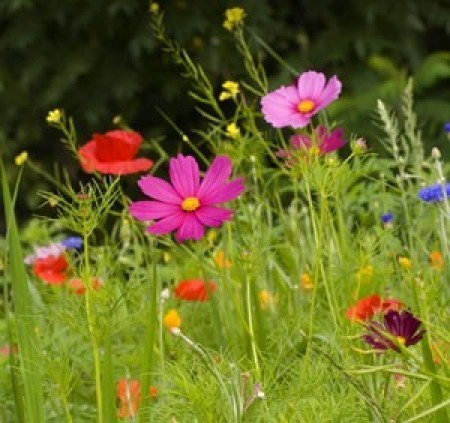
Lovely photo. Also if gardeners will restrain themselves and let the flowers go to seed, they can save some of the seed for next year to enlarge the area or fill in bare spots. Better yet, let the seeds drop on some flowers and they will come up on their own the next year. Overseed, and overplant and the garden will settle down over a few years to a permanent garden through reseeding. Plant the occasional vegetable (open pollinated seeds, not hybrid) among the flowers and you will also get veggies coming up every year, and can save seeds too.
I like your idea of a naturel garden one can still create winding paths thru out the garden. Thank you for your information. 80di
Add your voice! Click below to comment. ThriftyFun is powered by your wisdom!