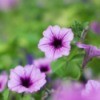
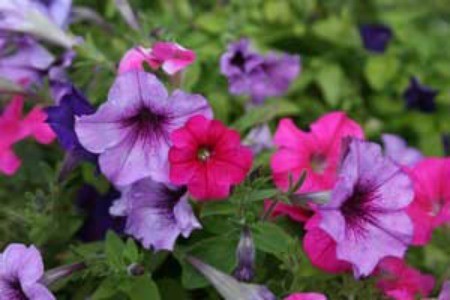
Petunia
annual
spring or summer
6" to 18"
full sun or light shade
average to rich, moist, well-drained soil, adapted to poor soil conditions
n/a
summer through fall
trumpet-shaped flowers in almost every color imaginable (including stripes and contrasting colors)
green
seeds
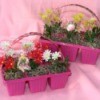
beds, borders, edging, hanging baskets, window boxes, and displays
Plants are widely available for transplanting or can be started form seed. Seeds are tiny and can be started indoors 10 to 12 weeks before last frost date. Do not cover them, as they need light to germinate. Simply press them lightly into the soil surface and germinate at 65º to 70º F. Because petunias are actually tender perennials, they can be brought indoors in the winter (keep them in bright light at 55º to 65º F) and set outdoors the following spring. If they get leggy from mid summer heat, cut stems back by half to produce bushy new growth.
Petunias attract both hummingbirds and moths. A change in growing conditions can cause the white edges on some petunia flowers to change in size. A white border getting wider points to recent hot weather and low soil nutrients. A white border that gets smaller indicated cooler weather and nutrient rich soil.
Add your voice! Click below to comment. ThriftyFun is powered by your wisdom!
Hello There. Hope all is well with you.
I recently planted a bunch of all purple petunias. They are doing quite well but recently I've noticed some red and white blooms. I've only provided basic care with some additional fertilizer and when I planted they were all purple. Is this normal or did someone sneak some additional plants in my box overnight?
I recently planted a bed of petunia's. They were looking great in the warm weather. Now, after some cooling into the 40's they are looking gangily and yellowish. I have had great success in this bed the past 3 years and hoped for another good year. I am wondering if the finer ornamental bark my husband put on the bed is taking nutrients away from the plants? Or maybe it is just the cooler weather. Any suggestions would be appreciated. r e m i t al f c c a @ com cast. net ( no spaces)
I was thinking of filling an area around a tree with top soil and planting directly in that. Would that be a good idea? I don't have a Facebook account.
Add your voice! Click below to comment. ThriftyFun is powered by your wisdom!