These savings tips are not painful and will help your pocketbook while helping the environment.
By Diana from Prospect, KY
This page contains the following solutions.
How I save energy in my home is really easy. I start with the fridge since it is one of the items in the home that uses the most energy. When I take a jug of milk out, I replace it with another filled with water.
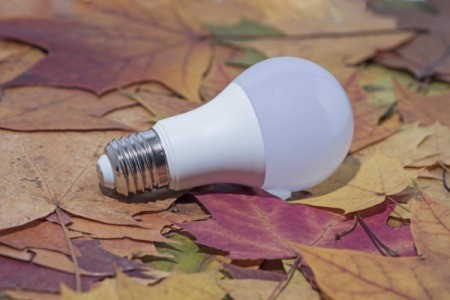
Did you know that by using LED light bulbs instead of regular light bulbs, you can lower your lighting bill by 75%? Also lighting is about 12% of your electric bill (the rest is AC, heat, and appliances).
I purchased white night lights that have an on/off switch from the dollar store, for all over our house. We find they put out plenty of light.
If you seldom use your computer's peripherals, save money by plugging those devices into a separate plug-strip that you can switch 'on and off'. Even if you have your devices turned off, those little transformers are still drawing watts if plugged in.
Sometimes it's okay not to listen to your mother. You can wear white any time of the year and leaving your air conditioner running when you're not home doesn't save money.

I save on utility bills by air-drying virtually ALL of my laundry. In good weather, I use my backyard clothesline (my environmentally friendly solar-powered dryer).
With the end of many states' electric rate freezes, the cost of electricity is rising at an alarming rate. Even if you're still protected under a frozen rate, it's not a bad idea to alter habits now.
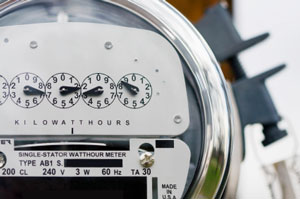
Here are some simple ideas for saving energy, from gasoline to electricity. Do you have some ideas that are not mentioned in this list. Please add them, below.
Energy Saving Window Covers. To save on high gas bills, I replaced the curtains on the Northwest side of my home with black 3 mil paper. The paper absorbs the heat from the sun and prevents the leaking of warm air inside to the outside. . .
Video game consoles use a lot of energy, and they waste a lot of energy when not being used. You will save 75% of that energy, if you turn them off when they're not being used.
Even though fuel prices have dropped a bit, I still save as much as I can. I live in a hilly area. Whenever I can, I put my car in neutral and coast.
Many electrical devices draw electricity even when they are turned off, which adds to your bill. A lot of them have displays or lights. To make sure you are not using any electricity, unplug them. The pictures show the thermometer displays on the window fan even if it is turned off.

Saving money from your electrical bills by simply unplugging your appliances or turning off your surgers, especially if you have a digital TV. Turning off your surger that the digital TV is plugged into will save your TV life too.
To help keep gas and electricity bills down, slow down your water when you take a shower. For some reason we think we need it on all the way.
In your office, while not using your equipment, keep these items turned off or in "sleep" mode, until ready to use and turn off immediately after each use.
The best thing you can do to reduce your cooling costs and protect your HVAC system is change your filter monthly. A dirty filter increases the energy needed to cool air, and it can damage equipment.
Turn off the TV, computer and Xbox and pull out the board games for entertainment at least 2 times a week. Not only saves electricity but creates memorable experiences.
I got tired of finding unneeded lights on so we developed a penalty piggy bank for offenders in the family. Every time someone leaves a light on (that they no longer need,) and another family member notices, they have to put a nickel in the piggy bank (I have young children, you could use a dime, a quarter or whatever penalty you want.)
Fluorescent tubes use as little as one fifth the energy of incandescent bulbs. This can add up to big energy savings over the course of a year.
Here are the questions asked by community members. Read on to see the answers provided by the ThriftyFun community.
Keeping our electric bill down is continually a challenge. We have had over 30 days over 100 this year. I keep a folder to store any tips I find in magazines. While cleaning the folder out last week, I came across a great article I would like to share about high tech's hidden cost. This is average annual energy cost for each item.
Source: This article I clipped was in Real Simple Magazine the April 2008 issue.
By Bobbie from Rockwall, TX
This works with a lot of things.
BUT FOR THOSE OF YOU WITH TIVO OR DVR'S, don't do, or you'll be mighty upset when you miss your newest episode of Shear Genius, Big Brother or gasp, the morning news!
Also unplug your toaster and stuff too. If you have the money try buying those energy saving bulbs. They are a bit more but you can save money on your light bill. I just wish they made them in yellow (bug lights) cause I have 3 in my house.
Didn't realize we were burning electricity when these items are not in use. Thanks for the tips.
I have replaced about 90% of my homes light bulbs with the more energy efficient ones.I could not believe the difference in my energy usage on my bill.It really makes a big difference.The new energy efficient bulbs are even brighter than the old ones,go figure.
I put everything on Switched Power strips. when I am not using it I turn it off. Its called Vampire Gazdgets all those little wal warts consume just a wee bit of power even when they are not doing anything. combined it can add up.
Also CFL is a MUST DO. they are NOT expensive any longer. I only buy GE and Sylvania since they are two brands that stand behind there 5 year claim with a 5 year warranty :-) Sam;s club has an 8 pack of CFL's for $6.63
NOT bad. Personally I am already CFL both at home and at work.
At home I am going even further. I am about 50% LED now. all the bathrooms are LED. My bedroom and my sisters and brothers bedroom are LED.
I am working on the rest of the rooms. My big bathroom is light bright as DAY (almost blinding some say but I like it bright) total power consumption? 18watts 12 bulbs 1.5 watts each.
I got this 6 bulb vanity fixtures at stockblowout.com or something like that for $8 a pop free shipping (over $30) the bulbs I got at sams club $15 for a 3 pack. They consumer ZERO electricity as far as I am concerned. Seeing a how bathrooms are lit MAYBE 2 hours per day more likel it average to 1 hours per day over the whole year but lets use 2 hours. $1.78 a year in electricity.
My dads bathroom 5 bulbs 7.5 watts 75 cents a year. Theoretically at this usage level the bulbs should outlive the building. :-) and us :-)
Each of these bulbs put out around the equivalent of 35-40 watts of light as if from an incandescent bulb but only consume 1.5 watts of electricity. I love them and its a nice warm pure white light not that stinking blue light.
LED's are the future STAY away from the PAR spot light style LED bulbs I have never had one last they just use too much power and burn themselves up. (LED's do not like heat)
Within a year I should have my house 100% led and then all the lights running all at once should consume less than 200 watts of power TOTAL with every single bulb on. :-) thats gonna be fun. at that power level it suddenly becomes affordable to consume ZERO power for lights by moving to a small solar battery array (just for lights)
I Love LED;s :-)
for now go with CFL they are VERY cheap and save there cost in e savings very quickly. in a business environment a CFL pays for itself in less than 20 days of usage at 18 hours a day. at work we may 16.2 cent a KW so our math factor is .000162 (watts used times hours times days times that factor is how much it will cost us a month)
so we replaced a 75 watt bulb with a 13watt CFL. 18 hours a day usage for our business.
75watt $6.51 a month in electricity
13watt $1.14 a month in electricity
Savings in power $4.37 Cost of Bulb 89 cents.
pays for itself in less than 1 week JUST in electricity savings. we are so far getting LONGER than a year out of them (which is over there rated life span) Even if the bulb ONLY lasted 1 year they save us over $51 a year in electricity savings EACH.
At home it takes a little longer. average 4 hours a day equals $1.46 a month for the 75 watt and 26 cetns a month so the difference is $1.20 so in 3 weeks the bulb PAYS for itself in Electricity savings. Not freaking bad ehh? at $4 a pop it would take almost 4 months to break even but you can get good CFL's so cheap now its silly not to switch.
Duh forgot to compare the LED bulbs :-) In the bathroom we replaced 8 123 watt CFL's 8*13watts is 104 watts or $12.29 in E per year. Previously we had 8 60watt bulbs in there or $56.76 per year in E (again 2 hours a day)
The led bulbs consume 18 watts (and I have it BRIGHTER than the CFL made it) so $2.12 per year. Saving over Incans is just shy of $55
Cost to install the LED bulbs? 12 bulbs $15 per 3 pack 4 packs that's $60 in bulbs. so they pay for themselves in just over a year and the will last DECADES easily. If they die before I die they were just incorrectly built :-) and that's in a bathroom at 2 hours a day usage! even faster in normal 4 hours day average rooms and even faster in say kitchens etc..
Bobbie,
How much would you say you've saved in electric since unplugging?
Thanks!
Michelle
This is a page about saving money on your electric bill. Finding ways to save money on your electric bill can really help the family budget.