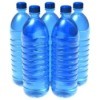
I try not to purchase bottled water but sometimes I forget my water mug. I wondered about what I could do with them since the apartment building I live in doesn't have recycling bins and and I have no room to store them. I also want to remain environmentally friendly by not using/wasting gas unnecessarily to drive five miles away to the recycling center for only a couple of items.
Well, I came up with: Wash them, dry thoroughly and use to freeze chopped veggies and herbs! The bottles are clear so it's easy to see what's in them and they fit beautifully on the freezer door compartment!
I made a funnel with a cone coffee filter but you can use foil, paper bags, etc to easily get the diced and chopped items inside the bottles.
Be sure your veggies and herbs are as dry as possible to prevent freezer burn before funneling ;-)
Thank you, Deeli! You are so right. Reading all these comments was scaring me until I just read your comments. You put it all in prospective. There is no way of getting around it unless you live in the country, grow you own food and never eat or drink anything from the grocery stores. Even then, there are still dangers. That's not to mention all the crap in the air we breath and the stuff that touches our skin. I just do the best I can.
While I appreciate the concept of recycling, those bottles can never truly be "clean" after we use them. If it's just you, then I would say go ahead, just hope you don't use plastic bottles too much!
I very much appreciate warnings regarding the dangers of plastics posted here but, in my heart, need to mention that there is not one single plastic that is safe whether it be in the manufacturing process or recycling process. Nor is it 100% safe for initial food storage, re-used food storage and even is in many manufactured foods :-(
The one and only 100% safe way for any of us is to not purchase or use 'anything' plastic such as cereal contained in plastic bags within the cardboard box, drinking straws, Styrofoam cups or food containers including to-go items, meat or poultry purchased at the grocery store, plastic serving utensils of any sort, sandwich bags, freezer bags, drinking strawas, garden hose, disposable lighters, lawn furniture, medicine bottles, shampoo bottles, dish soap bottles, DVD's. The list is endless :-(
IMHO placing chopped herbs or veggies in a #1 water bottle to freeze these items is not much different than brewing coffee in a plastic drip coffee maker or processing food in a Cuisinart for years on end :-(
I think a lot of this is also on how people store their bottle water. You should never drink out of plastic bottles that have been left in your car over several hours. Go to this site Http://blog.healthyeats.com/blog/2009/02/19/plastic-food-container=saf I printed off several sheets that explain about unsafe plastic. A chemical called bisphenol-A a.k.a. BPA has been linked to brain damage. I am in my fifies and you know I got to thinking when I was growing plastic was not around as much as it is now and look around and see how much cancer you hear about now. Most everyone knows at least one person who has or had cancer. When I was younger you didn't hear of it as much.
Before purchasing anything with plastic (bottles, containers, etc.), or reusing any plastic products, you need to check out this website, that talks about bpa... what it is, how it is harmful and ways to dispose of plastic products containing this chemical.
This is a great idea. I also use mine to put my home brewed non sweetened ice tea in and then freeze. It stays nice and cold if I'm in the car on for long time on a hot day. Also if you frequent Wal-mart they have a plastic bottle recycling container near where they recycle plastic bags. I think I've seen the bottle recycling containers in a few grocery stores too.
This pages has been archived 1 time. You can view older posts and feedback below.
Tip: Reusing Plastic Water Bottles (06/05/2009)
Do not reuse plastic spring water bottles for a long time. A substance in the plastic breaks down into the water.
Post Feedback:
Login using the form on the top of the page to post feedback (if you are a registered user). If you have not yet registered, click here to do so. It's FREE!.
Archives:
Tip: Reusing Plastic Water Bottles
Archived on 06/05/2009
Do not reuse plastic spring water bottles for a long time. A substance in the plastic breaks down into the water. This is not healthy. Teachers have sent a note to parents packing lunches not to reuse plastic bottles! I have reused bottles many times in the past. No more!
By Sharon L Martin from Canada
Feedback:
RE: Reusing Plastic Water Bottles
There is a expiration date stamped on the plastic bottle with the month and year. It can be on the neck, bottom or on the cap. The plastic bottle should be safe to use up until the expiration date. (07/26/2006)
By Dean
RE: Reusing Plastic Water Bottles
I wonder were this bit of information came from. If the substance in the plastic breaks down in the second water, what keeps it from breaking down in the first water use of the bottle? Would it be because the water bottler wants you to keep buying more water? (07/26/2006)
By Helen
RE: Reusing Plastic Water Bottles
Snopes addresses an email that was going around that referenced a study done by a University of Idaho graduate student that concluded plastic bottles may introduce carcinogens into water as the plastic breaks down. Their conclusion was that this is false, the study has not been peer reviewed and may not be accurate.
i do notice that the longer water is in a plastic bottle, the more the water develops a plastic taste. That's just anecdotal, though.
Snopes also notes: "Some organizations (including the IBWA) do recommend that plastic water bottles be used only once before recycling, but not because re-use is likely to cause carcinogenic compounds to leach from the plastic bottles into the liquids they hold. The concern is that people (particularly children) can too easily spread and ingest bacteria from their hands and mouths by re-using bottles without properly washing them or allowing them sufficient time to dry."
Maybe that is what concerns the school?
And Helen, that is a very good question. If the plastic isn't safe to reuse, why is it safe in the first place when bottled water is supposed to have a quite a long shelf life. (07/26/2006)
From what I heard on the John Tesh radio show, the problem is not carcinogens leeching into the water. The problem is bacteria builds up over time. Further, micro fissures quickly develop in the thin plastic giving the bacteria a perfect place to grow, and the plastic bottles are very difficult to clean, which compounds the problem. The study he cited recommended not reusing the bottles for more then a week, and to wash them with hot soapy water and air dry between each use. (07/26/2006)
We're in the hurricane zone so when hurricane season ends, we use up our supply and then replace it again when the season rolls back around. If your water is in a spare refrigerator, or even inside in a climate controlled atmosphere, then it probably will last a lot longer. If it's stored in a hot garage, probably a lot less.
As far as reusing the bottles, from what I understand, the issue with bacteria lies in the fact that most people probably don't wash them well enough, but even if they did, chemically speaking, the plastics used to make single-use bottles are not designed to stand up to washing. Therefore, the heat from wash water - either from hand washing or machine washing (and possibly also from the detergents used) - can degrade the plastic of the bottles, increasing the likelihood of chemical leaching.
I checked this out on the internet, and learned that this is not true. The FDA has checked out PET and permits multiple uses. The expiration date is for the water, as over time, bacteria can multiply, even in the original unopened water bottle. (07/27/2006)
By Linda
RE: Reusing Plastic Water Bottles
This is from http:www.cancer.org :
The original version of this email begins by saying "Many are unaware of poisoning caused by re-using plastic bottles," and says "bottles are safe for one-time use only; if you must keep them longer, it should be or no more than a few days, a week max, and keep them away from heat as well." The email says the bottles contain DEHA, which it calls a potential carcinogen.
A newer (2007) version of the email quotes an unidentified doctor as saying women should not drink bottled water that has been left in a car because the heat and the plastic of the bottle have certain chemicals that can lead to breast cancer.
Fact:
These emails are apparently based on a student's college thesis. In fact, DEHA is not inherent in the plastic used to make these bottles, and even if it was the U.S. Environmental Protection Agency (EPA) says DEHA "cannot reasonably be anticipated to cause cancer, teratogenic effects, immunotoxicity, neurotoxicity, gene mutations, liver, kidney, reproductive, or developmental toxicity or other serious or irreversible chronic health effects." Meanwhile, the International Agency for Research on Cancer (IARC), says diethylhexyl adipate"is not classifiable as to its carcinogenicity to humans."
and this from USC:
To keep reusable plastic water bottles germ and odor free, USC sports teams wash them at least twice a week in the dishwasher, notes Sue Lerner, assistant athletic/medical trainer for the USC Department of Athletics. "Some people use a weekly sanitizing rinse of one teaspoon of bleach in a quart of water," she says. And most importantly: "Let the bottle air dry completely every night."
I re-use the bottles for about a month or so myself, and have had no problems. (11/27/2007)
I need to do this for a science fair project. Maybe you should try doing an experiment on it too. It could be fun and it would help you get a good result. This could also get you extra credit. If you don't want to do this though I have found in my research numerous answers that it is inf act un-healthy. Bacteria could grow in your water bottle without you knowing it. Unless you rinse the water bottle out it is unsafe. Please trust me, I am detailed in science and I am sure this answer is correct. (09/15/2008)