The following five houseplants are worth growing just for the sheer fun of it. All share a few common features - they are obtained from planting seeds, pips, or plant tops from fruits and vegetables you buy for eating. Even better - they cost nothing more than what you pay for them at the supermarket.
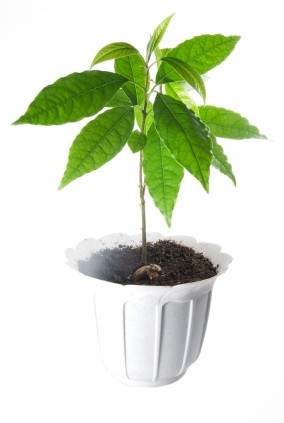
When planted, carrot tops (Daucus carota) produce an attractive spray of feathery foliage. Kids, especially, seem to love to grow them - maybe because most kids enjoy eating them. To plant, cut off the top inch of a mature carrot and trim off the leaves. Push the cut end into compost in a 5 inch pot, leaving just the crown exposed. It will take about a month for the foliage to grow, but no matter how much you wish for it, you will not be able to grow another carrot.
Note: Plants from carrot tops make fun hanging baskets for the kitchen and pretty centerpieces for dinner parties.
Pineapples are bromeliads, and bromeliads are typically expensive houseplants to buy. Fortunately, you can get one for practically nothing by planting the top of a fresh pineapple (Ananas comosus) you bought for eating. When you're at the grocery store, choose a fruit with a healthy crown of leaves. Cut off the top inch of the pineapple and peel away the outer soft flesh so that you are left with only a leafy crown attached to the cylindrical fibrous core.
An avocado plant (Persea americana) is easy to grow from the large stone inside the fruit. After planting, it can take only a few years to produce a plant that is 3 feet tall. Start by opening the avocado and removing the stone from the center. Push 3 toothpicks into the thickest width of the stone. These will be used to suspend the stone over a glass filled with water (toothpicks resting on the rim of the glass). Suspend the stone so that the wide base of the pit is under the surface of the water, while the top part remains exposed to the air.
Believe it or not, the seeds from the date you eat contain the potential to grow into an attractive palm (Phoenix dactylifera). Eat the date and save the stone. Soak it in a glass of water for 24 to 48 hours, changing the water once or twice. Plant the stone vertically in a small pot filled with compost so that the top of the stone lies about 1/2 inch below the surface. Water carefully and keep the seed warm (70 degrees F) and slightly moist until it germinates.
The pips of many citrus trees are some of the easiest and most enjoyable to grow, including those from lemons (Citrus limon), oranges (C. sinesis) and grapefruits (C. paradisi). As you eat the fruit, drop the pips (seeds) into a glass of warm water to prevent them from drying out. Leave the pips to soak in water overnight and then press each 1/2 inch deep into a 3 1/2 inch pot filled with compost. Keep the soil evenly moist and store the pot in a warm, dark place until the shoots appear before moving it to a sunny spot. Let your plants spend the summer months outdoors and move them to a semi-cool room (50-60 degrees F) in the winter.
About The Author: Ellen Brown is an environmental writer and photographer and the owner of Sustainable Media, an environmental media company that specializes in helping businesses and organizations promote eco-friendly products and services.
Add your voice! Click below to comment. ThriftyFun is powered by your wisdom!
These sound like fun to try! Thanks!
I've been doing this for years and it is a lot of fun when you're suffering the "winter blahs" to put some in your kitchen wndow and watch them grow. ;-)
I am presently growing a pineapple, just slice off the top and push it in the soil so it can take root.
Another citrus well worth mentioning and just as easy to grow is the tangerine ( (Citrus tangerina). The leaves are very attractive. I grew one for many years. During the Summer, I placed it where I took my gardening breaks.
Add your voice! Click below to comment. ThriftyFun is powered by your wisdom!