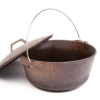
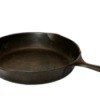
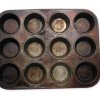
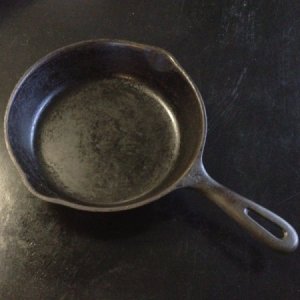
 If cast iron is rusty, use steel pads to remove rust and wash in hot Dawn detergent really well. Dry cast iron. I use cooking oil to season the cast iron; using paper towel, rub oil generously onto cast iron, inside and outside. Place a heavy duty piece of foil on the shelf of the oven and turn thermostat to 350 degrees F. Place cast iron top side down and season for 1 hour. This will allow the excess oil to drain off the cast iron. Allow to cool and wash with warm water. No soap.
My first item cooked in my iron skillets, is a pan of cornbread. I place 2 tablespoons of oil into the skillet and heat to slightly smoking and pour the mix into the skillet and bake at 400 degrees F. It slides right out. No sticking.
By Marie G W. from VA
This page contains the following solutions.
I put them in a plastic garbage bag, soaked a towel with ammonia, and left it tied in bag for several days (maybe 4 days.) As I took each one out to wash and clean, I left the others in the bag. They clean well with a little elbow "grease". They looked almost new.
Here are the questions asked by community members. Read on to see the answers provided by the ThriftyFun community.
How do I remove rust from cast iron skillets?
By Terri from Medford, OR
www.wikihow.com/
After you remove the rust, I assume you want to use this for cooking; you will have to go through the steps to 'season' skillet, once seasoned, Do not scour or wash with soap again. Treat it as a delicate cooking utensil and never put it away without wiping it lightly with an oil. [I give mine a light spray of Pam, then wipe almost dry, then cover with a sheet of wax paper to prevent dust from settling.
Cast iron pans can be cleaned with a homemade paste of course salt and cooking oil. Rub vigorously with a dry cloth or a plastic scrubber and do not use any water.
How do I clean a rusty iron skillet?

I just read this on another site today! It said to use a paste of salt and vegetable oil. If a skillet has been cured, which I assume yours has, the site also said never to use soap, because that will strip the oil "seasoning" from the surface of the skillet.
I heard on Martha Stewart's radio show on Sirius, that if you put an old cast iron pan into a campfire (I guess a bonfire would also work), it will burn off everything and leave the pan like new. You'll of course have to re-season it, but it's worth a shot. Great idea for cleaning old cast iron pans found in antique shops too that might need a good cleaning.
First make a paste of baking soda and water. Rub over the rust and rinse. Repeat and allow the paste to dry. Scrub again, and make a new paste of baking soda and water. Scrub more rust off and pour baking soda on the rusty area. Use white vinegar and pour a small amount on the soda. Use only enough to cause it to bubble a little and allow to sit awhile (an hour or two). Follow up with a good scrub with more baking soda.
Put the skillet in the oven on a sheet of foil and run the oven cleaner. Then reseason.
We use a cast iron pot filled with water on our wood stove for humidity. Rust has formed on the pot and I am not sure how to clean it. Any suggestions? Thank you.
By patricia from Dansville, NY
White vinegar will cut the rust. Clean well after using vinegar.
Water and iron don't mix. to keep iron from rusting, you need to keep it oiled or greased. Dip a paper towel in some oil and rub the outside of the pot. after using a pot for a long time you get a build up on the bottom and side of the pot.
Using water with cast iron is sure to cause rust! I believe that you could remove the rust from this pot if you follow the
instructions for cleaning a cast iron skillet.
Clean the rust away, grease the inside of the pot with crisco or another solid shortening, then place the pot in the oven on low heat for several hours. This usually re-seasons a skillet. It probably would re-season your pot.
There are instructions here on Thrifty Fun that are pretty detailed for skillets. You probably should chose another type container to keep the water in to provide the humidity. Maybe a tea kettle would work?
Sprinkle salt in the pan and rub with a paper towel. Works like sandpaper.
How do I get rust out of cast iron pans and also off a cast iron lamb mold?
By mb
Although it requires a lot of elbow grease, your best bet is to clean it with steel wool. Be sure to rinse well, dry completely and season your cast iron after cleaning.
Cut a medium sized potato in half. Pour kosher or sea salt in your pan and rub with the potato, wiping clean with a paper towel, old shirt or rag. Add more salt until finished. Season immediately.
How do I remove rust from a cast iron Dutch oven?
By Linda
Rust in a dutch oven Canby fixed by scrubbing the rust off with either a Brillo pad or a steel brush, then washing the pot with mild soap and water rinsing well and then greasing the pan with oil, put it on a baking sheet and put in a low oven at 250 degrees and let it bake for at least 3 or 4 hours. Remove the Dutch oven from the oven and wipe the excess oil from the pan. After each use of these cast iron Dutch oven, clean the Dutch oven and then place on the stove top and turn the burner on and allow the Dutch oven to dry Kama then oil the inside of the Dutch oven lightly. This method is very effective for my cast iron
How do I remove rust from a cast iron Dutch oven?
By Jeanne C from Cortez, CO
ThriftyFun is one of the longest running frugal living communities on the Internet. These are archives of older discussions.
Can you get rust off a cast iron pan and use it again?
I have a cast iron wash pot that was my grandmother's. She used it to heat water for her laundry. The pot has a lot of rust on the outside of it. Is there a way to remove this?