ThriftyFun Logo
Home   Find   Ask   Share   Answer   Join   Index   Login  
 
 User Login:  Username:    Password:      Forgot It?  | Join ThriftyFun!

 - Beauty
 - Budget and Finance
 - Cleaning
 - Consumer Advice
 - Craft Projects
 - Craft Tips
 - Food Tips
 - Garage Sales
 - Gardening
 - Gifts
 - Green Living
 - Home Improvement
 - Organizing
 - Parenting
 - Parties
 - Pest Control
 - Pets
 - Product Reviews
 - Recipes
 - Repair
 - Weddings for Less

RSS Feed
About Us
Media
Advertising
Contact Us
Privacy Statement
Disclaimer

Gardening With Kids

By Ellen Brown
1x1
Date: 02/01/2006 Topics: Gardening > Advice | Parenting  
1x1
Post Feedback | Get Responses | Bookmark | Link | Print | Print (With Feedback) | Rate: Thumbs Up Thumbs Down | Bookmark and Share
Kids (of all ages) love to play in the dirt. That makes an activity like gardening naturally appealing to young children. It provides them with exercise, helps grow their self-esteem, and gives them an outlet for creativity. Most importantly, it offers them a chance to connect with nature and develop an appreciation for the environment they live in. If you want to plant the gardening seeds in the children in your life, follow these simple guidelines.

Keep It Simple

Children, especially very young children, have extremely short attention spans. Keep the session short (10-15 minutes), the directions easy ("cover the seeds with dirt") and the tasks manageable ("pat down the soil"). This will leave children with a sense of accomplishment when they are done, instead of feelings of discouragement or frustration. Design activities for both immediate gratification (picking and arranging flowers) and delayed gratification (planting seeds).

Set Aside Child-Specific Time

Everything involving gardening (the dirt, the bugs, the plants, the tools) has the potential to sidetrack a young child. If you only have a limited amount of time to catch up on some gardening chores before rushing off to a meeting or appointment, leave gardening with small children for another day. Chasing after bugs and digging in the dirt takes time. Rather than feeling rushed, invite children into the garden when you have time to encourage their need for exploration.

Give Them Their Own Space
Gardening With Kids
Kids (of all ages) love to play in the dirt. That makes an activity like gardening naturally appealing to young children.

If possible, set aside a tiny plot for each child you invite into the garden. Not only does having their "own garden" give them a sense of pride and ownership, it gives them something to nurture and be responsible for. Giving them their own space will also keep them from damaging other more delicate parts of the garden by giving them a place to dig to their heart's content. If your garden space is at a premium, let children grow things in pots. Kids love things that are personalized. Let them insert plant markers with their names and artwork in their plots or pots so they can show others their garden.

Use Appropriate Plants & Tools

Many seed companies now offer fun, brightly colored seed packets just for kids. Plan ahead for success by helping children plant vegetables and flowers that are easy to germinate and exciting to watch grow (e.g. radishes and sunflowers). Children should also have access to tools designed with their size and safety in mind. Most basic tools rakes, shovels, trowels) are available in lightweight durable sizes for children. Empty plastic food containers and mismatched flatware also make good gardening tools for digging and carrying.

In addition to having the right size tools, kids need to know the basics of using them safely. Make sure they know that tools with tines (like rakes) lie face down. Show them how to properly care for their tools, and designate a special space for them in the garage or shed to store them to store their tools.

Design Child Friendly Themes

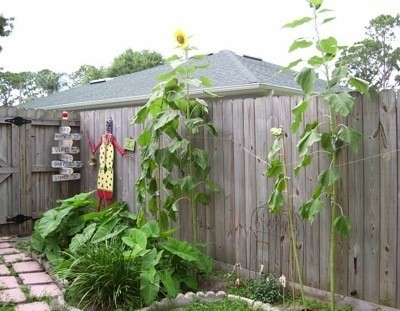
Children are swept up by their imagination. Planting gardens around a theme will excite their senses and encourage their creativity. Plant a "Giants Garden" full of tall sunflowers, long beans and over-sized melons, or maybe a "Pizza Garden" with oregano, tomato and basil. Plant a red garden using red radishes, red peppers, red carrots and red snapdragons, or a scented garden with mint, lemon grass and chives.

Learn About Gardening Together

Young children love to do whatever adults are doing. If you show enthusiasm for something, they will follow suit. Work side by side with them in the garden when completing tasks like pulling weeds. Let them look through seed catalogs with you and discuss which flowers or plants they find attractive or interesting. Bring gardening into indoor activities like watching a caterpillar turn into a buttery fly, making mosaics out of old seeds, constructing fairy houses or baking muffins using vegetables from the garden.

Take trips to the library together to look for books on gardening topics like flowers or bugs or surf the Internet for gardening websites aimed at children. Organic gardening offers more opportunities for learning and provides children with an environment free of toxic chemicals.

Gardening Across the Miles

If you're separated from the children in your life by distance, there are still ways you can garden together. Today's technology makes it easy to share gardening experiences across the miles. If you have access to a computer, consider investing in a digital camera or setting up an inexpensive web camera to share gardening pictures and progress. Share seeds and growing instructions in the mail, visit arboretums or botanical gardens when you're together or send pictures of trees you've planted in honor of the important milestones in each child's life.

About The Author: Ellen Brown is our Green Living and Gardening Expert. Click here to ask Ellen a question! Ellen Brown is an environmental writer and photographer and the owner of Sustainable Media, an environmental media company that specializes in helping businesses and organizations promote eco-friendly products and services. Contact her on the web at http://www.sustainable-media.com

(1x1 graphic )
Previous: Daily Thrifty Tips - February 2, 2006 ThriftyFun Next: Drying Herbs
(1x1 graphic )
1x1
1x1
 Feedback
1x1
1x1
1x1

By ThriftyFun (3117) Profile Blog! Contact
They can help Mom or Grandma transplant plant cuttings to make other plants, to give to other people, (ex. shut-ins, to sell at a church bazaar, or yard sale). Some plants that are good to do this with are: pin cushions, hydrangeas, red valerian, mint, both regular geraniums and scented geraniums. Kids like helping.

By Terri

Posted on 02/01/2006 | Report Spam or Abuse

By ThriftyFun (3117) Profile Blog! Contact
Treat the kids to their own colorful kid-size gardening tools which are readily available in discount stores. They'll may eat more veggies if they've help to grow them.

By Terri

Posted on 06/21/2005 | Report Spam or Abuse

By ThriftyFun (3117) Profile Blog! Contact
Gardening for Kids
By Judy Williams

Kids love to contribute to the family, especially young children. But there is generally not much they can do. These simple gardening projects will allow young children to contribute something meaningful while learning heaps!

Children are continually bombarded with advertising for fast food and unhealthy treats. One of the most important lessons you can teach them is how to tend and grow their own food from the garden.

There are plenty of quick and easy projects that the children can get involved in. The projects will teach them about nutrition, nature, recycling and organic gardening. That's a good outcome!

The no dig garden is a particularly good project for children because the garden can be built and planted in just a couple of hours. You do not have to prepare the garden for weeks in advance, as with other growing methods. There are detailed instructions for building a no dig garden on my website (http://www.no-dig-vegetablegarden.com">http://www.no-dig-vegetablegarden.com). If a full on garden seems too ambitious at the start, try something simpler.

* Growing bean shoots is the quickest way to grow edible things. In just a few days, the kids will be able to pop fresh bean shoots in a salad or sandwich or just eat them as they come. This will also work with alfalfa, cress and snow pea seeds. Put the seeds into a clean, wide mouth jar and place a mesh material over the mouth. It must be a material that water and air can pass through, but not the seeds. A bit of discarded pantyhose secured with a rubber band will do. Soak the seeds overnight in water. Next morning, drain the excess water and place the jar on its side in a bright room, near a window. A couple of times a day, re-wet the seeds, drain and return to the bright space. The seeds will sprout and grow very quickly and within a few days will be ready to eat.

* To propagate your own garden seedlings build this portable greenhouse! Wash a 2Lt plastic bottle (soft drink or soda water type) and using a knife or sharp scissors, cut it in half along one side. Force it open and fill one side with good quality potting mix. Plant your seeds and water gently. A very light mixture of water and liquid fertilizer will kick start the seeds. Close the bottle back up and seal with tape. Place the bottle in a sunny position. Your seedlings should be well on their way and ready for repotting in 2-4 weeks.

* Do you know very young children? Introduce them to Hairy Harry! Take one of those pairless socks every household has and sow on some eyes and other facial features. Put some lawn seed in the sock end and fill with garden soil, potting mix or compost. Fill the sock until the face is filled out and tie a knot in the sock, making sure the mix inside is packed tightly. Water the sock regularly, or prop it on top of a container with water. The loose end of the sock will act as a wick to draw up the moisture. Place in a sunny position. In a couple of days, Harry will have a full head of green hair! In a couple of weeks, he will be ready for a hair cut or styling makeover!

* Children love eating things fresh from a garden. For convenience, you might want to plant close to the kitchen where the children can harvest items under your watchful eye. So consider doing quick growing plants in containers. Cress, radishes and lettuce will be ready the quickest in 6-8 weeks. Next in line are dwarf beans, cucumber, cabbage, tomatoes and onion which will be ready in 8-12 weeks. Most others, including the popular carrots and potatoes will need 16-20 weeks to mature. You could be harvesting from this little garden for months!

Encourage your children to nurture their little garden, which ever project you choose. It's a great way to teach them practical skills and fill them forever with the wonder of nature.

About The Author:
Judy Williams (http://www.no-dig-vegetablegarden.com">http://www.no-dig-vegetablegarden.com) aspires to become a fulltime earth mother goddess. This site acts as a primer for all vegetable gardening aspects covering topics like how to build a garden, nurture seedlings, container gardening and composting.

Posted on 06/21/2005 | Report Spam or Abuse

By ThriftyFun (3117) Profile Blog! Contact
They can help Mom or Grandma transplant plant cuttings to make other plants, to give to other people, (ex. shut-ins, to sell at a church bazaar, or yard sale). Some plants that are good to do this with are: pin cushions, hydrangeas, red valerian, mint, both regular geraniums and scented geraniums. Kids like helping.

By Terri

Posted on 06/21/2005 | Report Spam or Abuse

1x1
1x1
 Post Feedback:
1x1
1x1
1x1

Login using the form on the top of the page to post feedback (if you are a registered user). If you have not yet registered, click here to do so. It's FREE!.

1x1
(1x1 graphic )

© 1997-2010 ThriftyFun.com - Design by Cumuli Design
Disclaimer: ThriftyFun.com cannot accept any responsibility for any injury or damage that you may cause to yourself, others, or property when following any advice given on this site. Read the full disclaimer. If you find any information on ThriftyFun.com or in our newsletters that is either erroneous and/or potentially harmful to others, please Contact Us, immediately.