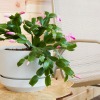
No one enjoys lugging tender potted perennials indoors and out each fall and spring, least of all your back. The good news is, if given the proper protection, many (although not all) potted plants can be left outdoors successfully over the winter. Here are a few different techniques for providing winter protection for your hardy outdoor potted plants.
First things first-healthy plants overwinter better. Make every effort to see that your plants are going into the winter in the healthiest state possible. Continue watering well into the fall. Cease fertilizing after mid-summer so plants have time to gradually shut down in preparation for winter. Once the first hard frost has cost the plant most of its leaves, you can start the process of protecting them for the winter.
Large planters clustered together in a sheltered location (under an eave, or up against a south-facing wall of your house) will benefit from the insulating effects of togetherness. Use old nylon stockings or soft rope to tie back and secure branches. Wrap the pots loosely (from top to bottom) in a cage of chicken wire, making sure the cage is tall enough to adequately cover the entire plant.
Coldframes are easy to make and create useful temporary winter shelter for small potted plants. Simply select a sunny spot and arrange several bales of hay or straw to form four walls. Top the walls off with an old window, plexiglass, or heavy duty plastic. Now keep an eye on the weather-especially into late fall and early winter. The air inside a cold frame heats up fast, especially under glass. Be prepared to prop it open even in the winter to give your plants some air.
In open, windy areas, windbreaks made from burlap, heavy duty tarp or canvass can provide young trees and shrubs valuable protection from sun scald and whipping winter winds. Create a simple screen by stapling burlap to stakes pounded into the ground around the plant's perimeter.
Take advantage of the insulating properties of the soil by sinking plants (pot and all) into the ground for the winter. Vegetable gardens work great for this because the soil is already well worked and friable from the past season. Dig a hole large enough to sink the entire pot into the ground. Then add a heavy layer of straw, shredded bark, or leaves over the top of the plant. The soil will protect the roots, while a heavy layer of mulch protects the top of the plant.
This is perhaps the most extreme method, and one that is recommended for half-hardy plants that are being grown outside of their recommended hardiness zones. Similar to sinking in, an empty vegetable garden works well for this method. Dig a 14 to 16 inch-deep trench, large enough so that the plant (pot and all) can be laid on its side (tipped), and lightly re-covered with soil. Gently tieing up the branches of the plant will make for easier tipping. Once in the trench and recovered with a light layer of soil, the plant's branches and stems should be covered with loose mulch and held in place with burlap for the season. In Minnesota, a similar technique (sans the pots) is used to protect roses.
About The Author: Ellen Brown is an environmental writer and photographer and the owner of Sustainable Media, an environmental media company that specializes in helping businesses and organizations promote eco-friendly products and services. Contact her on the web at http://www.sustainable-media.com
Add your voice! Click below to comment. ThriftyFun is powered by your wisdom!
I have several large "Mother-In-Law" plants. I really don't want to bring them in for I have no place to put them. Anyone have any ideas on how I can leave them outside and how to protect them?
Thanks for the great tips!
Add your voice! Click below to comment. ThriftyFun is powered by your wisdom!