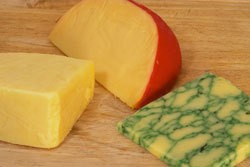
This page contains the following solutions.
For years I have been freezing cheese, especially when I see the expensive ones on sale or marked down. I leave it in the original wrapper and place them in a freezer bag and into the freezer they go.
Buy cheese on sale and in large quantities. Cut it into sizes that fit your use and freeze. To use it just let it thaw out.
Here are the questions asked by community members. Read on to see the answers provided by the ThriftyFun community.
I bought Havarti cheese from Costco, I would like to freeze some. Is it OK, as long as I use my food saver?
By sandie
Softer cheeses tend to crumble when thawed. I have frozen havarti cheese before and it crumbled....But it was Ok for grilled cheese and such.
I have purchased big blocks of cheddar, mozzarella and jack cheeses to food-saver into smaller sized 1 pound chunks and have never had a problem with keeping these chunks in the refrigerator. I have been able to keep my cheeses for months this way! Just make sure there is not a bit of air in the package and to mark them well.
Yes you can! Just wrap well and tightly in plastic wrap before placing in your food saver. Try to use it by around two months for best flavor. Yes, it will be crumbly but crumbled Havarti is wonderful to use in vinegar and oil dressed salads and melts well so you can easily use it in omelets, and pasta, rice and veggie dishes.
P.S. I read somewhere long ago that all cheese freezes better if packaged in one pound or less blocks.
I would like to freeze "Super Hot Pepper" cheese from my local deli. I have one of those "Food Savers" food sealing systems. I will be freezing them in 1lb. individual packages. I have several questions:
Food Saver recommends freezing items for approx 1-2 hours before sealing them in their bags and then placing them in the freezer for storage.
Freeze the cheese first, as suggested, then use the food saver. Doing this will keep the cheese in it's original shape. I tried to vacuum seal some shredded cheese, unfrozen, and it turned into a one blob of cheese. The flavor was fine after thawing but I had to slice it up to use. I have only froze blocks of cheese so I'm not sure if sliced cheese would work but I see no reason why it shouldn't. I LOVE my Food Saver and feel it's the best investment I have ever made due to the way it preserves all types of food for a very long time.
Is it safe to freeze cooked cheddar cheese, like in recipes?
Rachel from Tel Aviv, Israel
I freeze cheese all the time, I live in a very rural area and only shop once a month. I freeze alot of things, and never had a problem with it turning to mush.
Can I freeze packaged cheese slices?
By Connie
It's very easy. Break it down into manageable blocks and then wrap tightly with saran wrap. Then place the wrapped cheese inside of a sandwich bag. The wrap keeps the moisture in the cheese and it stops the cheese from sticking to the inside of the plastic bag.
I was "blessed" with a big tub of Pimento Cheese this Christmas. I need to know if this can be frozen, as we cannot eat it fast enough!
Jonnie from Utica, KY
Yes you can freeze it. Use baggies and divide it up into smaller amounts, then put the baggies into a larger one, with a 3x5 card label in with them, with the contents written in felt marker with big dark letters.
Are you sure you want to eat that? Many processed cheese items have a lot of partially hydrogenated or fractionated oils, which are found to be more dangerous than saturated fats. I no longer eat those because they attack brain tissue pretty efficiently, so a lot of what I grew up with is out. There's still plenty of delicious stuff out there!
Hope this helps, whether you are a trans-fat eater or not. God bless you.
Can I freeze cream cheese in the store packaging?
By Loretta
I have frozen cream cheese in the store packaging. Freezing changes the texture of the cheese. The taste does not seem to change. It still can be used in recipes, but it can no longer be used by itself as a spread since it seems to dry out. So freezing it would depend on the use it is intended for. Hope this is helpful.
I have frozen cream cheese and if you let it thaw completely outside of the fridge, then put into the fridge, it is usually creamy like when it was first bought. If you put it straight into the fridge from the freezer, it will be crumbly and only good for use in cooking.
Can I freeze lunch meat and cheese?
By Shirley
I always freeze luncheon meat, but I don't know if freezing would affect the consistency of the cheese. It might depend on the cheese.
I have successfully frozen hard cheeses in their original packaging. Cream cheeses don't seem to like the freezer, though, so if they seem to be at the end of their life span in the refrigerator, I stir them into potatoes, scambled eggs, or bread dough.
Will Havarti cheese freeze well?
By Joe T. Vosoba from Phoenix, AZ
Best Cheeses to Freeze: Camembert, Cheddar, Edam, Mozzarella, Muenster, Parmesan, Port du Salut, Provolone, Romano, and Swiss. Blue Cheese will retain its flavor, but become crumbly. Soft cheeses should be frozen when they reached the desired ripeness.
Worst Cheeses to Freeze: Container cream cheese, cottage cheese and ricotta cheese do not freeze well. Blocks of cream cheese can be frozen for later use as an ingredient in recipes.
Good luck.
I freeze Havarti regularly (in its own pkg.) and have, not once, had a problem. It's still as delicious as when I 1st put it in there=)
I know, American cheese is not a true cheese; however, my sister split a large quantity that was bought at Costco and it is too much for hubby and I to use in the near future. They are slices, but they not individually wrapped. Can they be frozen?
By Maryeileen from Brooklyn, OH
Can American cheese slices be frozen?
Can pasteurized processed American cheese that comes in 2lb. blocks be frozen?
By Billie
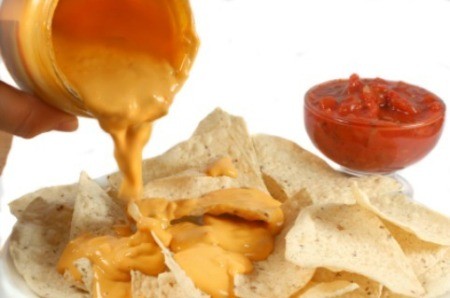
This is a page about freezing cheese sauce or dip. Try freezing, when looking for ways to store extra cheese sauce or dip.
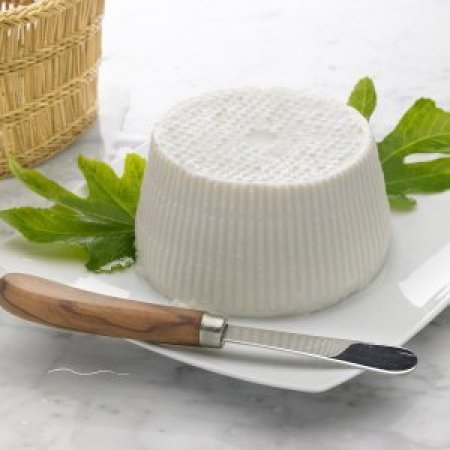
This is a page about freezing ricotta cheese. Ricotta cheese is well known as the soft creamy cheese used in dishes such as lasagna, as well as, many desserts. Although ricotta cheese can be frozen there are some factors to keep in mind when doing so.