This page contains the following solutions.
You may need to adjust your tension dial with your fabric you are using and kind of thread, also adjust to thickness of fabric. Always use good sharp needles with your sewing and keep machine clean and oiled.
Here are the questions asked by community members. Read on to see the answers provided by the ThriftyFun community.
I have a Brother CS6000i. It's about one year old. The stitches are 1/2 mm too short. It was working just fine and then when I went to do a zigzag stitch, I noticed it wasn't right. I took the machine apart, cleaned it VERY WELL, which it wasn't bad to begin with, but a good cleaning always helps, except in this case.
I immediately bought a new machine, same model, because I cannot be without one. So now I have a properly functioning machine to compare my old sewing machine stitches with and the old machine's stitches are 1/2 mm too short. Has anyone else had this problem? I'm hoping it's something I can repair myself. The closest repair shop is over an hour away and I'm afraid the repair bill might be as much as a new machine. I could really appreciate having two properly working sewing machines! That would be awesome! So if anyone could help me out, I would certainly appreciate it.
Your 'old' machine is almost new and these are computerized machine which means you really need help from someone that knows these machines like 'the back of their hands' and that means the tech who built them - Brother employees - if at all possible.
I love all the information found on Google when you are looking for help but I'm sure you already have all of this but just in case...
I love the PDF of stitches from Brother also.
www.google.com/
You may want to contact the seller of your new machine (or the old machine) and ask for help as I feel sure they will have someone who knows how to answer this question.
There is also a sewing forum that has a bunch of great 'sewing' members that just seem to love to answer questions so maybe you can join their site just in case you have problems in the future.
This could be your bobbin tension. This means that your bobbin needs adjusting to reset the issue. Also make sure there is no build up in or around this area. There is always the help of sewing machine parts/sales troubleshooting.- https://sewing.patternreview.com... and this well known link that answer questions- https://www.justanswer.com
 I'm having issues with my sewing machine's tension. I was using it just fine and then when I changed the setting from a straight stitch to zig zag and then back again, the tension is all off. It doesn't seem to matter how high I turn the setting (to increase tension) I still get loose, sloppy stitches, and the top thread is getting caught in with the bobbin thread and coming up with it. :( Does anyone know what's up and how to fix it?
By Ashley D.
I had that problem just a week ago. I had been sewing and changed stitches and filled the bobbin. Got back to sewing and it happened. I tried everything then took the thread out and got a different spool and it worked great.
Re-thread as suggested by the first answer, making sure you're using the correct needle and thread for the fabric you're sewing. Yes, I know it was working fine until the zig-zaging but sewing machines will try so hard when straight-stitching that we can get by many times using all the wrong needles and threads - until we try to change the stitch pattern and then it's as though the machine woke up and said 'Oh hey wait...'.
More than likely though, what has happened is that there is a bit of thread or a chunk of lint/fuzz in the bobbin area somewhere. If you have the manual, use it as a guide (this problem is often addressed in the troubleshooting pages of a manual and includes diagrams showing where and how to clean) to open and clean the bobbin area.
Also using the manual, take some unwaxed-nonflavoured dental floss and floss the tension discs IF the discs are in a knob jutting out from the front of your machine.
Either or both should resolve your problem - if not, and especially if your machine is a vintage (older than 15-20 years) model, you more than likely coincidentally used the zig-zag feature just as the bobbin gear gave up the ghost. The bobbin gear teeth on most machines built after the mid-late Sixties are usually made of silicone, and these do wear after many sewing hours.
This isn't a home fix - look in your local telephone directory for the names of near-by authorised repair techs for your make machine (Singer, Brother, Janome, Viking, etc).
These people will have the knowledge, tools, and access to spare parts that most home sewers don't. Be sure to ask if the repair part is new or salvage and I strongly advise buying a new-under-warranty, comparable feature machine if the repair part is going to have to be salvage (no salvage part is EVER as reliable as a newly milled one). Also be sure to get a cost estimate before you even hand over your machine so you aren't given a nasty ticket shock at the end of the repair(s).
If you don't have the manual, you can usually download a free copy from the maker's website.
Can you tell me what I need to do to fix this issue? this is the under side of the fabric/top looks good. I tried increasing the tension and the loops got smaller but there were still threads loose.
I inserted a newly filled bobbin but still getting this "mess".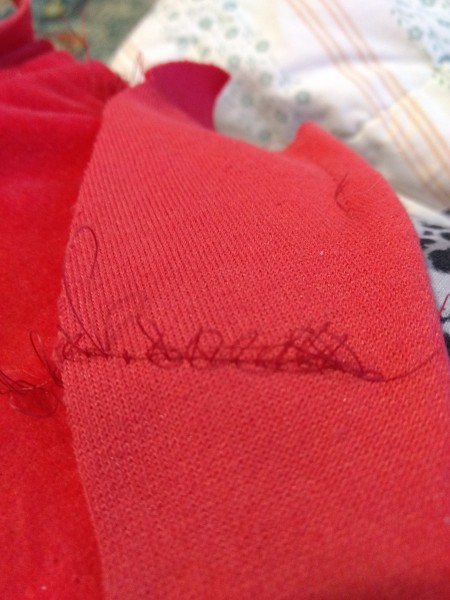
If this is the underside of the fabric, all those loops mean your upper thread is too loose, due to the machine not threaded right or the top tension is way too loose. Try re-threading the machine as your manual instructs. If that doesn't change the problem, then you will have to adjust your top tension. Do it in small steps and do some test stitching at each adjustment till you get the top and bottom threads to interlock like they should. Also, a sewing machine needs a good cleaning and oiling once in awhile as per your manual. Of course, how often depends on how often you sew and what type of fabric you're using. Fuzzy fabric leaves behind a lot of lint compared to cotton or denim. A machine full of thread and lint can have many problems, so keep it cleaned out inside, and oil it sparingly with sewing machine oil ONLY, as per the manual. Keeping it cleaned and oiled, changing the needle as needed, using a good thread, and adjusting the top and bobbin tensions to the fabric and thread size you use, will go a long way to problem-free sewing. Good luck !!!!!
The thread on the bottom of the fabric does not properly fit. What can be done with the sewing machine? The sewing machine is an Elna Opal.
make sure that the sewing machine top thread is correctly threaded from the thread spool on top of the machine down through the tension disks, down and up through the thread take-up mechanism and through the needle. Also make sure the bobbin compartment is working properly by opening it and removing the bobbin casing. If the bottom stitches are loose, turn the screw closest to the bobbin case centre an eighth turn to the right with a tiny screwdriver. However, if the bottom stitches are too tight, do the same thing but to the left.
Also this link provides further instructions www.fixya.com/
I have a Babylock sewing machine which doesn't seem to like even-feed feet. (I have tried three.) It will sew about one inch and then bunch up the stitches very tightly.
Should I change the tension when I put on this foot? Lengthen the stitch? I want to use this foot to quilt and am getting very frustrated. Thanks.Put tissue paper above and below the fabric and it will feed evenly.
I have a Singer 413 zig zag machine. What is the proper tension setting? How can I set it to a small stitch? There is no manual. Thank you!
By Linda H.
First of all - here's a link to a free download pdf from the Singer website for your machine:
www.singerco.com/
If the link doesn't take you straight to the download (my links usually go straight to the download but on occasion take you to the Singer support page instead), it will take you to the Singer page for finding the right manual - use the search feature and type in '413' (omit punctuation), then click on the free download. I always print these out and put them into a 3-ring binder for my sewing students and machine repair customers here in Scotland because it's so much easier to use the manual in a flat open configuration.
Now, the tension setting for zig-zag sewing should always be at least one number looser than for straight stitching, and depends on the fabric, thread, and needle you're using. It's not length that you need to determine and set for zig-zag sewing, too, it's width. That takes some experimenting using a test scrap of your fabric - Bonus, you'll also figure out your tension setting with the test swatch, too:)
The manual will tell you everything you need to know about setting the tension on your 413, and it will also show you how and when to adjust stitch length and width.
Happy sewing!
I have just bought one of the above machines at a yard sale. I don't know what all the dials mean. It worked at first, but is now making bad stitches. The front of the stitch is OK, but the back has loose loops, they are not gripping the fabric. If I pull one end of the thread the whole thing comes out. If anybody knows how to adjust this I would be very grateful.
Also, do you know where I can go to see what the dials on the machine are for?
Thanks so much.
Sally
I had brought a mini sewing machine, but the stitches are not being made properly. If I sewed any clothes in that, I can pull the thread very easily from the cloth.
Please help me in repairing my sewing machine.I have a problem with my sewing machines. I have 2 different brands, different ages, but the same problem with both so I'm sure it's me and not the machine.
Here's my problem. The tension keeps being so tight it breaks the thread. Also, the thread keeps getting all tangled up in the bobbin area. Can anybody tell me what I'm doing wrong?
Since I'm sure it's me and not the machine I refuse to buy a 3rd one. Plus I took both of them in last year for repair and the first time I went to use them I had the same problem. So, it's got to be me.
By Cricket from Parkton, NC
Make sure you hold the upper thread and bobbin thread toward the back when you begin to sew a seam. That might help with the boggled up mess of thread by the bobbin.
Make sure you have the machine threaded right. I was shown the wrong way, and finally figured it out myself. Once it was threaded right, no more broken or knots. If you get too much slack in the thread, it gets wrapped around where you can't see, and it breaks too.
Double check that you have the bobbin turning the correct direction. That was a problem a friend found out was causing her problem. Start from the beginning to make sure evrything is threaded right. Don't give up!
It definitely sounds like you have your machine threaded incorrectly. I do some sewing, and my parents own an upholstery business. This sounds like improper threading vs tension.
I have a Brother XL 2230 sewing machine. I always run into a problem with the stitch tension adjustment. When sewing a cotton suede upholstery fabric I was OK when I tested the stitch with a polyester thread.
When I decided to use the extra strong upholstery thread my stitches became loose on the wrong side of fabric. I tried decreasing and increasing the top dial, but it doesn't get better.I'm sewing on many different items and my white bobbin thread is showing onto my color thread on my item.
I have a Janome 423s. The bobbin thread runs along the bottom of the material. What is causing this? I have tried fixing it but with no luck.
By karen65ae from UAE
You can try www.retrevo.com and see if you can get any info. It's free.
The top tension is too loose. It may not be working correctly. Also check to see if the machine is threaded correctly. Sometimes the thread is not properly seated in the groove between the two disks.
I have a Kenmore 100 stitches sewing machine that was given to me after the service tech did not resolve the problem. When doing straight stitching the top thread loops on the bottom. It sounds like tension. Even with the tension on nine and the pressure foot down (I can't even pull the thread) it still it loops on the bottom.
I traced the top thread travel in the bobbin case and cannot find any obstruction. I am guessing it has to do with the take up on top. The tension spring "seems" to be okay. Also the bobbin tension is okay. I do not believe this has anything to do with top or bobbin tension, but with some kind of take up on the top.
I have a White sewing machine that is from the 1960s. I am trying to sew a sheer fabric and I am using a #11 needle and Talon size 50 thread. I have replaced the needle, rethreaded the bobbin, rethreaded the machine, and still the thread loops on the underside. I have adjusted the tension on the top. What else can I do?
By Rose
Check your bobbin. Is it wound properly, using same thread as top stitch, is the bobbin thread put in correctly and is it in the correct direction? This may clear up your problem.
I recently acquired a Singer 319W. I was sewing 2 pieces of fabric together and it worked fine. Then I doubled up the fabric, but when I started to sew, the needle stopped when it hit the fabric, but the wheel kept turning. When I went back to the original 2 pieces of fabric, it was fine. Help!
By Kris
Your machine may not be designed to sew through 4 layers of some fabrics. You can take the machine to a repair shop for an explanation of just what the machine is able to do and if a repair will help.
Hiya from Scotland, Kris, where I teach sewing and do some vintage machine repair for my students - mostly on Singers!
Your Singer 319W Swing-Needle machine should be able to take that thickness of fabric as it was built to handle everything from chiffon to farm weight (leathers, heavy duty feed sacks, etc) - since it isn't, there may be several reasons why it isn't:
Did you adjust the feed dogs for the extra thickness?
Did you adjust your upper tension?
Are you using the correct needle and thread for the weight of the quadrupled fabric?
*Solutions for all of the above are listed in the user guide (owner manual), here's a link to a free download if yours has gone walkabout:
www.singerco.com/
And here's a neat free download of an actual scan of an original (ignore the K designation, all it means is that machine the manual was printed for was built here in Scotland at the Clydesbank factory - have a look and you'll recognise all the same parts as on your W, depending on model year, the slight differences are mainly cosmetic only:)
ismacs.net/
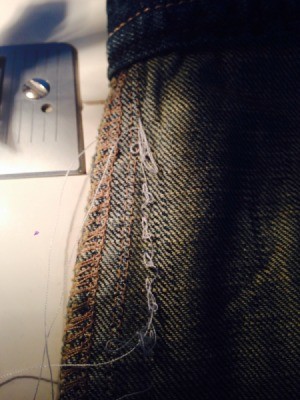 I have a brother LS 2125. During sewing the top side of fabric is nicely sewed, but bottom side is in a mess. It is not properly sewed and loose. The thread breaks very easily. It's really very irritating. Attached a bottom side image for your reference.
By Abel
I typed an answer out and lost it! Arggh! Here's a link to another answer though.
www.thriftyfun.com/
Hi Abel, hopefully the link MissRebecca posted helped you sort your problem:)
I'm guessing from the appearance of your loopy stitching that you have a side or front loading bobbin system, so to expand on the helps I've posted over the years (lol, see the link:), the problem you're having is stemming almost certainly from your bobbin loading technique.
If you have the manual for your machine, read through it carefully to be sure you're loading the bobbin case correctly into the machine. The front and side load bobbin systems are VERY tricky to place correctly and will always cause the problem you are experiencing if incorrectly loaded. If your machine hasn't been serviced recently, consider having it serviced by a qualified (factory trained is best, check the advert for those words) and ask him/her to check your loading skill. He/she can help you learn the best way for your specific machine to load the bobbin case into the machine.
If you have the money, consider a new sewing machine - the trouble you are having is very frustrating and can put a sewer off sewing altogether. I teach sewing here in the UK and try to steer my sewing students to top-drop in bobbin load systems. These systems are practically jam-proof and end 99.9% of all sewing frustrations.
Good luck, please update and let us know what turned up with your machine!
I have a Kenmore model 385 17630. My big problem is that when I try to back stitch it gets big loops on the top. I've cleaned it, changed the needle, and have tried to adjust the tension for the top and also tried to adjust the bobbin tension.
I am having problems adjusting the tension on my Janome mc9500. The upper is loose and I have tried everything that I can think of.
I have a Janome 7318 Magnolia sewing machine. The tension is off on my machine. The top stitches are very loose even when I make the tension tighter, up to 8. How do I fix this?